postN16.1

Week Ahead: Summer Begins with Questions Lurking for Traders

Week Ahead: Summer Begins with Questions Lurking for Traders

Monday, the 19th of June, China Foreign Direct Investment – data from China has been lackluster and last week’s announcement of a stimulus program from the government underscores economic concerns regarding growth.

Monday, the 19th of June, U.S banking holiday – for commemoration of Juneteenth.

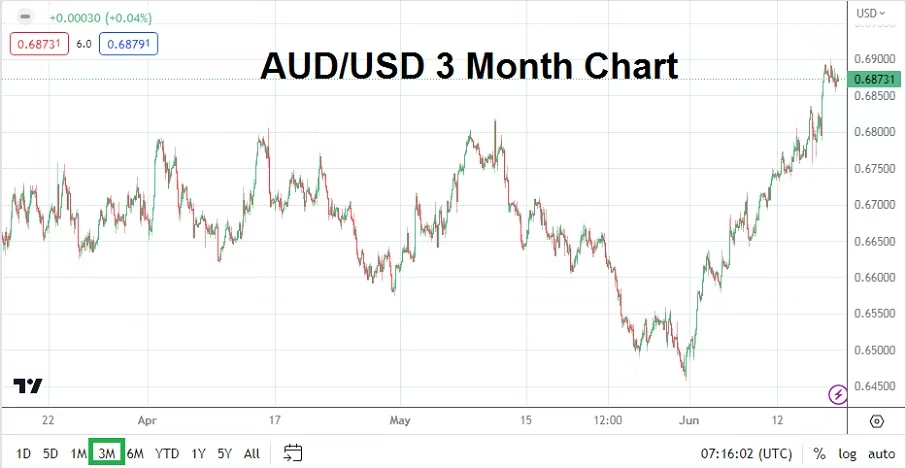
AUD/USD Three Month Chart as of 18th June 2023

Tuesday, the 20th of June, Australia Monetary Policy Meeting Minutes – report from the Reserve Bank of Australia will interest AUD traders and those with an interest in Asian Pacific economics.

Tuesday, the 20th of June, U.S FOMC member John Willliams – as the President of the New York Federal Reserve, Williams, is a key member regarding policy. Taking into consideration last week’s pause, traders may want to pay attention to the New York Fed Presidents’s remarks to see if the pause in Federal Funds Rates seen last week is looked upon as a halt or a ‘skip’ by Williams. The difference between a pause and a skip may appear to be semantics, but a skip would mean an interest rate hike is coming in July. Williams is not going to say what is going to happen at the next Federal Reserve meeting, but he may give a hint regarding his opinion on what should be done.

GBP/USD Three Month Chart as of 18th June 2023

Wednesday, the 21st of June, U.K Consumer Price Index – the data will be important regarding inflation insights for Britain. The Bank of England is expected to raise their Official Bank Rate on Thursday by 0.25%. Another report showing stubborn inflation could set the table for a rather hawkish Monetary Policy Statement from the BoE.

Wednesday, the 21st of June, U.S Federal Reserve Chairman Powell testimony – the Fed Chairman will begin two days of speaking and taking questions. The first day will be before the House of Representatives and the second day in front of the Senate. Because a major election is coming in the U.S in 2024, this will be an opportunity for politicians from both sides of the aisle to get airtime and take a ‘stance’ while bludgeoning Jerome Powell. The Fed Chairman’s remarks could stir the markets slightly, but Powell will be as careful as possible not to put a scare into the financial sector.

Thursday, the 22nd of June, U.K Bank of England – the Official Bank Rate, Monetary Policy Summary and vote count from the Monetary Policy Committee will be released. A hike has been widely expected by GBP traders and has been factored into the British Pound already.

Thursday, the 22nd of June, U.S Existing Home Sales – the housing report will cause a few murmurs in the marketplace because it is seen as an extension of consumer health and interest rate policy in the U.S regarding behavioral sentiment. Existing home sales numbers have been dropping as people with homes have decided to stay put in their current residences. ‘Locked in’ interest rates are more attractive, instead of taking on a higher rate via a new purchase due to costlier mortgages because of more expensive borrowing fees.

Friday, the 23rd of June, E.U Manufacturing and Services PMI – the flash reports from the likes of Germany, France and the U.K should be watched. Manufacturing readings have been producing recessionary readings while Services data is expected to show incremental decreases too.

Friday, the 23rd of June, U.S Manufacturing and Services PMI – the flash reports via the Purchasing Managers Index data need to be monitored too from the States. The readings give a rather good insight regarding outlook of U.S business sentiment.

postN11.1

Week Ahead: Inflation Followed by the U.S Federal Reserve

Week Ahead: Inflation Followed by the U.S Federal Reserve

Monday, 12th of June, U.S Federal Budget Balance – hold down the laughter and snickers please as you wonder why you should care, this as the report shows monthly income versus spending from the month before. Yes, the U.S ‘Debt Ceiling’ bill was passed recently. Very few people are going to pay attention to Budget Balance report, except economists and traders who have ‘skin in the game’ via hedge funds as an example – that make long-term bets, and U.S politicians who want to hoot and holler…….while nothing really gets done to limit wasteful spending in Washington D.C.

Tuesday, 13th of June, U.S Consumer Price Index reports – yes, this inflation data will be important per the monthly numbers showing what consumers are spending. A slight uptick is expected with an outcome of plus 0.2% via the broad statistics – last month’s number showed a gain of 0.4%. The outcome of the broad and core CPI statistics will give the Federal Reserve a sounding board for what will take place on Wednesday via the Federal Funds Rate announcement. Stronger than expected inflation numbers could cause a rupture and nervousness. A weaker result would calm Forex and perhaps make the USD slightly weaker.

EUR/USD One Month Chart as of 11th June 2023

Wednesday, 14th of June, U.S Producer Price Index – these numbers will be released early in the day and will be followed by the Federal Reserve five and half hours later. The inflation outcome via the PPI if stronger than anticipated would cause some caution before the Federal Reserve takes the stage.

Wednesday, 14th of June, U.S Federal Funds Rate, FOMC Statement and FOMC Press Conference – while many analysts seem convinced the Fed will not hike the interest rate this week, there are obviously no guarantees. The FOMC Statement will indicate the U.S central bank’s outlook. Traders who are intent on trading before the official interest rate announcement and statement are playing with fire. Speculators should keep in mind that other central banks have surprised folks with increases recently including Canada and Australia. A hike from the U.S Federal Reserve would surprise a lot of people and financial institutions, but stranger things have happened.

Thursday, 15th of June, New Zealand Gross Domestic Product – the growth numbers which will come out a handful of hours after the U.S Fed leaves the stage will be intriguing and provide NZD/USD traders more impetus into what will likely already be a volatile trading session taking place.

Thursday, 15th of June, China Industrial Production and Retail Sales – these two reports from the economic giant will be watched closely. China’s economy is struggling a bit, and weakness in the housing sector via values are starting to cause a reaction in domestic spending. Industrial Production numbers will give some insights regarding global demand. Economic problems in Europe and North America are certainly not helping matters in China because demand for goods are restrained and hurting the manufacturing sector.

Thursday, 15th of June, U.S Retail Sales – consumers in the U.S have been expected to start producing negative numbers via these statistics, will they begin to do it? A stronger number would be of interest to some, but after Wednesdays’ FOMC Statement and news that will be generated, it is questionable who will give full attention to this report and what affect it could have.

Thursday, 15th of June, E.U ECB Press Conference – this question and answer session could prove to be interesting depending on what the U.S Fed does the day before. Certainly the European Central Bank will give their opinions on monetary policy and economic circumstances in the European Union and abroad. The EUR/USD could be affected.

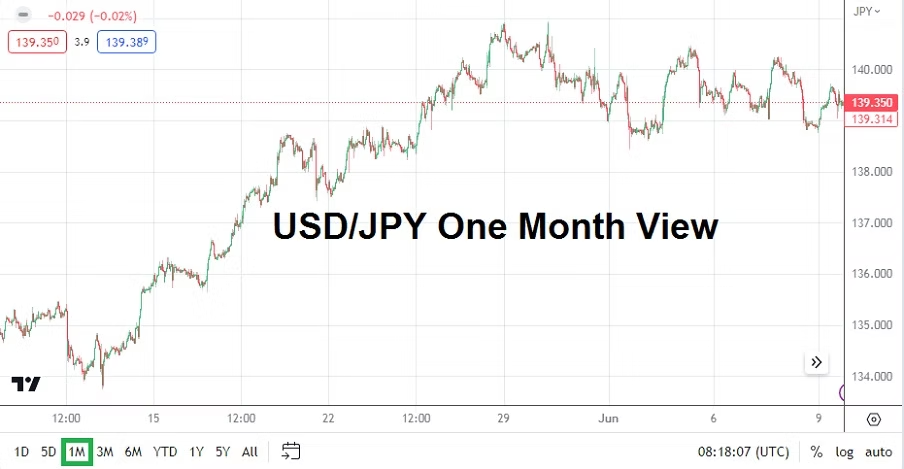
USD/JPY One Month Chart as of 11th June 2023

Friday, 16th of June, Japan BoJ Policy Rate and Monetary Policy Statement – no major changes are expected from the Bank of Japan. This is the one central bank unwilling to change its attitude regarding monetary policy because of the whims of others. Perhaps if the U.S Federal Reserve surprised everyone on Wednesday with a hike, this could change the quiet rhetoric from the BoJ – but even that is doubtful. USD/JPY traders should pay attention to the BoJ Press Conference just in case.

postN7

Risks Ahead: Tranquil Data Mixed with Loud Nervous Chatter

Risks Ahead: Tranquil Data Mixed with Loud Nervous Chatter

Last Friday finished with stronger than expected Non-Farm Employment Change numbers, which essentially collided with dovish rhetoric via two U.S Federal Reserve FOMC members from the middle of the week; this while inflation clearly remains stubborn in the U.S.

All of which sets up this coming week for nervous trading results and until the 14th of June, when the Federal Reserve’s Federal Funds Rate pronouncements will be brought forth. Plenty of talk about interest rates will be heard in the days ahead and traders should expect to hear debates as the chatter grows louder.

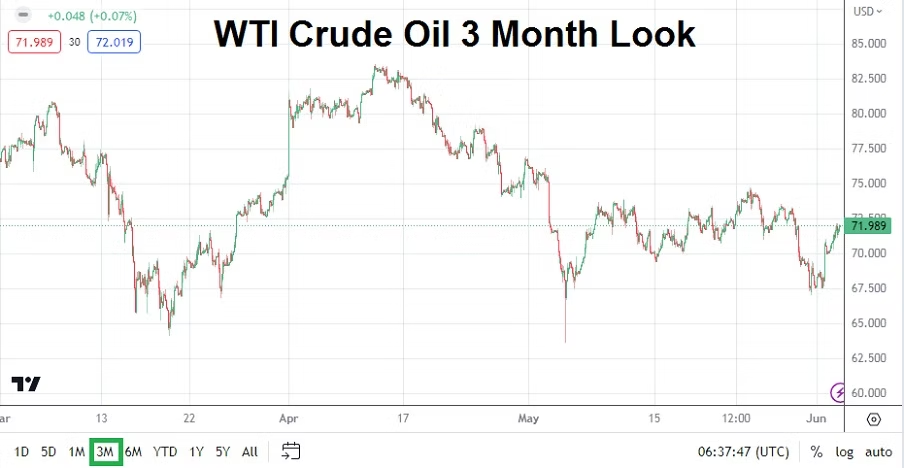
Commodity traders may be interested in the outcome of the OPEC+ meetings taking place this weekend. The cartel’s decisions regarding oil production will affect not only prices of Crude Oil futures, but is a direct reflection regarding global demand, which also tells us about the organization’s viewpoints regarding global economic conditions.

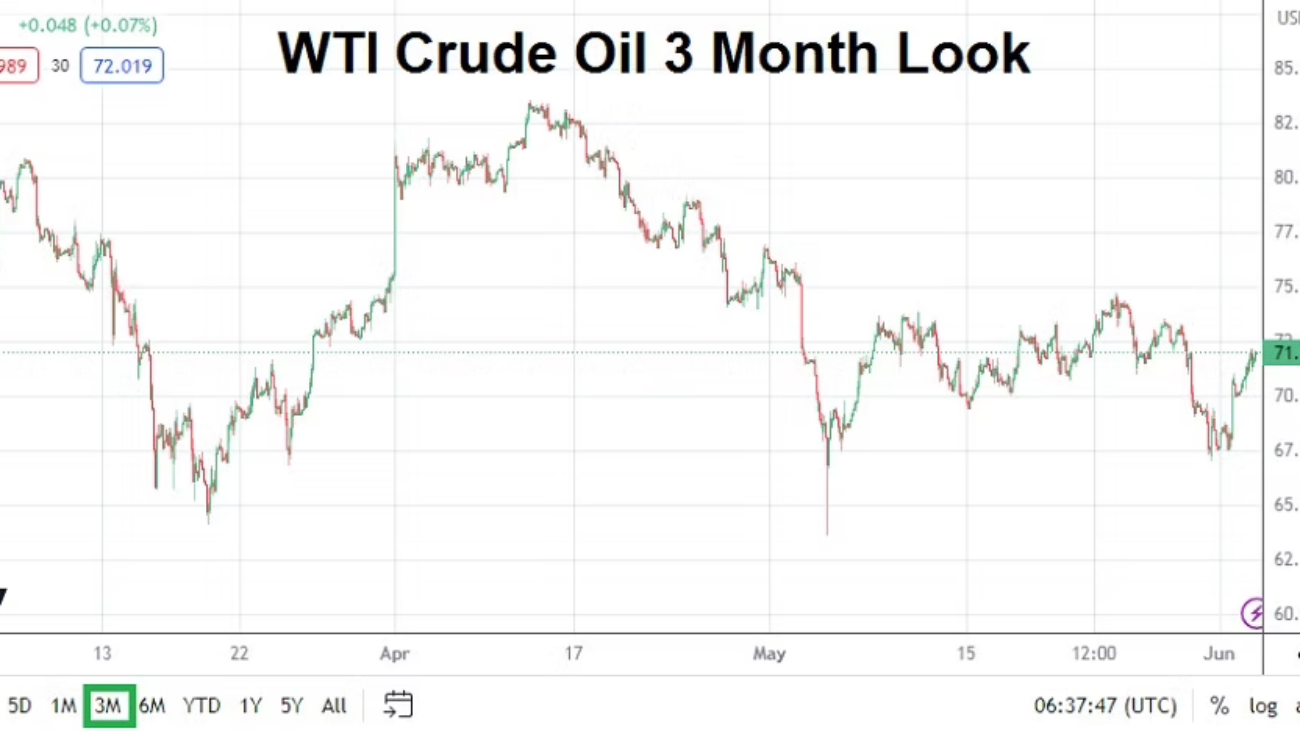
WTI Crude Oil Three Month Chart as of 4th of June 2023

Monday, the 5th of June, European Services PMI – Germany, France and Italy and will release their Purchasing Managers Index readings. The German outcome could prove interesting because the nation is suffering from recessionary pressures. The PMI results could affect the EUR/USD a bit. The U.K will also release their data too.

Monday, the 5th of June, U.S ISM Services PMI – this report will be of interest because some are expecting a better outcome compared to May’s results. A potentially strong reading could prove problematic and put more pressure on the Federal Reserve to raise interest rates next week.

Tuesday, the 6th of June, Australia RBA Rate Statement – the Reserve Bank of Australia surprised people with an increase of their Cash Rate last month. No increase is expected now, but the RBA’s rhetoric should be listened to as they comment about domestic and global economic conditions.

Wednesday, the 7th of June, Canada BoC Overnight Rate – Bank of Canada is expected to hold its borrowing costs in place, but inflation is still creeping into prices and the BoC’s Rate Statement may prove intriguing.

Thursday, the 8th of June, U.S Weekly Unemployment Claims – following in the footsteps of the stronger than expected jobs numbers last week, this report could get some media fanfare. However, it also may prove to be a lot of noise and have little real affect on market direction.

Friday, the 9th of June, China CPI and PPI – the inflation reports from China could prove interesting in wake of recent lackluster economic data from the nation. Last Thursday’s Caixin Manufacturing PMI results came in slightly better than expected, but data from China the week before was negative. The data from China gives investors and traders insights because of its importance as a global supplier of consumer products.

post34

Economic Data and Underlying Factors this Week

Economic Data and Underlying Factors this Week

Monday 15th of May, U.S Empire State Manufacturing – N.Y manufacturing sector report regarding business conditions, which serves as a sentiment reading. A lackluster outcome could put a bit more pressure on the Federal Reserve to lessen their aggressive stance, and certainly point out nervousness among U.S corporations regarding profits.

Monday 15th of May, U.S TIC Long-Term Purchases – report shows results from between domestic and international purchases of U.S Treasuries. While not considered a major data release, this one could give an impetus to investors in U.S banking sector who may find intriguing potential correlations. An increase in the number of domestic purchases compared to international buyers would be of interest. Large dark shadows on the U.S mid and small size banking sector still exists, pressures boil as depositors are still considering parking their money elsewhere, and corporate share values remain fragile.

Tuesday 16th of May, China Industrial Production and Retail Sales – China economic results are a barometer of global health due to the fact the nation is a large supplier of worldwide products. Industrial Production results if they are lagging in China, would indicate decreasing demand and global economic weakness. Retail Sales figures from China is an indicator of consumer sentiment within the nation.

Tuesday 16th of May, U.S Retail Sales – results indicate buying power and confidence among U.S consumers. Underlying numbers also focus on how Americans are spending, in other words – are they paying the full price being asked or are they looking for discounted goods as inflation continues to hit wallets.

Wednesday 17th of May, Japan Preliminary Gross Domestic Product – No real surprises expected from Japan’s growth numbers, but the results are always appealing to economists who debate the nation’s ability to remain among the wealthiest without any truly outstanding GDP numbers produced in years. In other words a lot of noise for traders without much real impact.

WTI Crude Oil – One Month Chart as of 14th May 2023

Wednesday 17th of May, U.S Crude Oil Inventories – another report that seems important for commodities traders, but without any real surprises has limited impact. Many times even among WTI Crude Oil speculators, they are often looking at other data they have gathered like production numbers from OPEC, Mexico and Canada. And also oil tanker movements around the globe.

Thursday 18th of May, Australia Employment Change and Unemployment Rate – outcome from these numbers could factor into AUD/USD momentarily, but without a major surprise will likely have little impact on global speculators for more than a couple of hours.

Thursday 18th of May, U.S Existing Home Sales – housing numbers are under some scrutiny as they reflect behavior of current U.S home owners as they react to growing interest rate pressures on mortgages and stay within their current homes to avoid higher borrowing costs.

post26.1

BRICS and a Potential New Currency Paradigm

BRICS and a Potential New Currency Paradigm

The BRICS nations are causing alarm in some ‘Western’ financial circles as they seek to strengthen their trading alliance reflecting their ability to be large producers and consumers. BRICS has a common goal of creating better trade and financial conditions for each other, and as a potential byproduct to possibly create an alternative to USD dominance.

While political crisis and global security concerns have grown the past few years and are causing uncertainty and instability, the strength of the USD has also caused inflationary problems for many nations including BRICS members. Cash reserve shortages of USD have become problematic and have been fueled measurably by decisions from the U.S government, Federal Reserve system and U.S Treasury. This has ignited many emerging market nations to seek dialogue about potential BRICS membership.

Alliance intrigue and concerns also shadow BRICS members often, the February 2023 naval exercise held between Russia, China and South Africa within waters near Cape Town raised anger in the United States and the European Union. The fact that the joint military exercise was held during the first anniversary of the Russian invasion of Ukraine did not go unnoticed. While no signed military alliance exists between these nations, it should be noted that Russia, China and South Africa also held a naval exercise in November 2019 also within proximity to Cape Town, South Africa.

USD/ZAR 1 Year Chart as of 28th April 2023

Formation and Agenda as Members Scoff at the ‘King Dollar.

The agenda of the BRICS nations often appears a desire to topple the dominance of the USD to those watching from outside, but is it realistic? Trading alliances are important certainly in order to create better economic stability. The BRICS potential effect on the USD is concerning, although not critically dangerous at this juncture the bloc needs to be monitored. In addition there are worries from some in the West that new military alliances could be formed, but historical and cultural differences within BRICS makes this rather questionable for the time being when contemplated in total.

BRIC was an acronym coined by then Goldman Sachs Chief Economist Jim O’Neill to identify potential opportunities for investors within emerging market nations. Members in this ‘bloc’ are countries that have begun to work in unison. About two months ago, Jim O’Neill reiterated the same refrain and alluded to the BRICS theme of suppressing USD strength and its reliance in global trade. BRIC (Brazil, Russia, India and China) was formed in 2009, and they added South Africa as a member in 2010 formally initiating BRICS. This coalition has met annually to discuss coordinated policies regarding trade, finance and investment opportunities. The next annual meeting will be held in August 2023 in South Africa. Vladimir Putin’s potential attendance at this year’s meeting is being monitored widely.

Plenty of discussions have already been articulated internationally about undermining USD dominance in global trade, but little effect has come to fruit in reality and the USD retains its moniker of ‘King Dollar’. However, countries being affected by the rise of inflation and the strength of the USD are becoming numerous and this has caused a diverse group of nations to seek conversations with BRICS leadership about being able to join the trading alliance. Iran, Algeria, Argentina, Mexico, Nigeria, Saudi Arabia, Indonesia, Pakistan, Egypt, Sudan, Syria, the United Arab Emirates, Bahrain, Turkey, Venezuela, Sri Lanka and Zimbabwe are some of the nations that have expressed interest in BRICS membership.

Impact of Sanctions on Russia and its Ability to Counter via BRICS

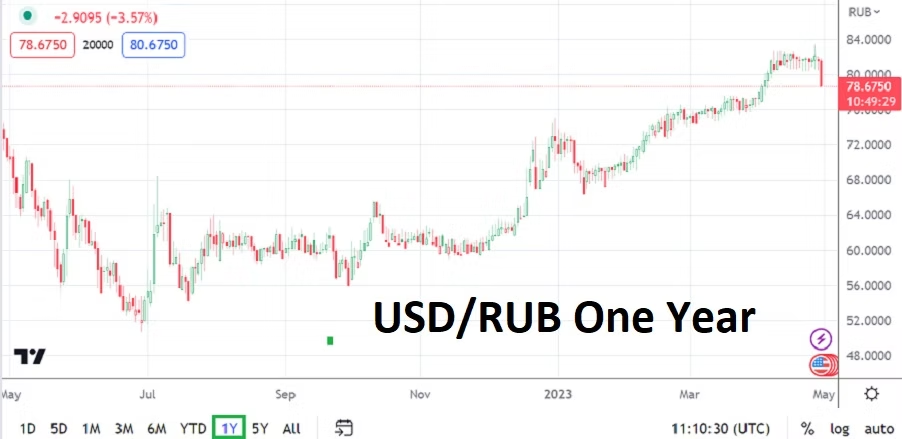
Russia has been waging a war with Ukraine for over a year and is currently under many Western sanctions. It’s been kicked out of the SWIFT banking system, which means it has limited opportunity to trade the RUB with Western countries. This in theory also limits the amount of USD that Russia can get its hands on.

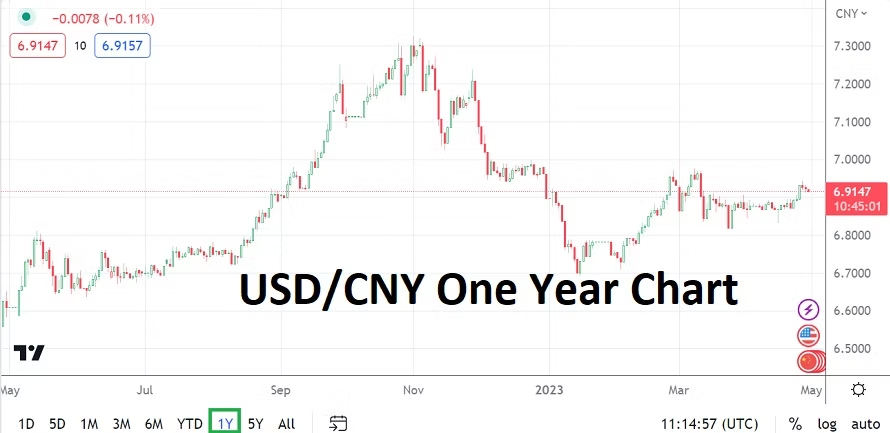
Russia last year asked to be paid in Rubles (RUB) for gas and other energy purchases when dealing with E.U countries, trying to play a game of chess which largely failed. This while China too, tries to make the Yuan (CNY), a more significant currency in order to suppress USD dominance. China certainly has plenty of political and economic reasons to have the CNY emerge as a global power.

Russia has supposedly wanted to get out of Western currencies and especially the USD, this to punish the West, but will it work out and is it pragmatic? No. Russia’s attempts are high on rhetoric, but low on quantified changes thus far. The USD is far too dominant within the global banking system, and while incremental challenges to the USD have been tested, chipping away at USD strength remains difficult at best. The Kremlin has tried to inoculate itself from the pain caused to its trade balance because of sanctions, and create problems respectively for countries that oppose its invasion of Ukraine by cutting off gas supplies which were used for heating and to generate power for industrial purposes. Threatening to not allow grain to flow from Ukraine has also been a rather constant noise made by Russia.

Prices were capped on Russian energy via the G7 beginning in 2022 as a retaliatory move to limit revenues for Russia, and alternative gas agreements were sought by many European nations creating a loss of momentum for the Kremlin’s chess game. The Nord Stream pipeline was also damaged via sabotage. Russia used to supply Europe with 50% of its energy until sometime in 2021, it now provides less than 20% after Western sanctions. Russia has moved its eye towards other nations hungry for energy, ones that are not obligated to make transactions in USD, which brings BRICS into focus.


USD/RUB 1 Year Chart as of 28th April 2023

Inflation and a Strong USD have Caused Harm Globally

Inflation has caused problems across the globe following the impact of the coronavirus epidemic. The Federal Reserve, BoE and ECB have raised rates to try and cool inflation in their respective economies. This has made the USD attractive against emerging market currencies and caused capital outflows. An economic nightmare has occurred in Sri Lanka which is suffering from staggering political and economic problems the past two years, and nations like Pakistan and Egypt have been hit hard too by inflation’s impact and debt. USD reserves dwindled in these nations and they found it difficult to service their USD denominated debt in 2022, and troubles persist in 2023. Import without any USD reserves is difficult and sometimes impossible.

Russia and China as Major Players in ‘Their’ Bipolar World with ‘Friends’

Global trade is still dominated by the “King Dollar”. Almost 88% of global trade happens with the USD. The USD accounted for more than 71% of currency reserves at central banks in 2000, but has now declined to slightly below 59%. Oil and gas exports are important for Russia as these revenues constitute nearly 45% of its Federal Budget and it’s already been in deficit since February 2023, because oil revenues have slumped by half. Russia has a growing dependence on BRICS and is actively trying to get other nations to join the trading coalition, this because it has few other places to turn, and there appears to be no end in sight regarding the war with Ukraine.

Trading with other nations and signing currency agreements which would not include USD transactions is a long term goal of Russia and China, this if monetary values via the other nations currencies can remain firm. And then there is a wished for and ‘feared’ long-term dream of creating an alternative ‘super’ currency to compete against the USD.

Even before the escalation of fighting in the Russia and Ukrainian War, Russia was strongly advocating an end to USD dominance in global trade via rhetoric, particularly during previous BRICS Summits. We need to understand the political implications and complexities within BRICS, when talk of a decoupling from USD dominance news flares up. The U.S certainly keeps an eye on BRICS and so do other Western nations. At this moment South Africa has a delegation in Washington, D.C regarding the questionable South African policy behavior, particularly in light of recent military exercises with Russia and China, to try and smooth its U.S relationship. South Africa membership in AGOA, the Africa Growth and Opportunity Act, which grants special trade benefits to the nation and other members is being questioned strongly by U.S politicians. Getting kicked out of AGOA would cost South Africa billions of dollars in aid.

China and Russia seemingly want to create a bipolar power sphere, one in which U.S dominance is not so easy. Chinese President Xi Jinping and Vladimir Putin have met several times recently and are certainly collaborating regarding trade and investments. The developing news regarding the potential of BRICS enlargement shows that China and Russia maybe preaching multi-polarities such as their involvement with South Africa, but may actually be working towards a bipolar constellation of forces in which they would lead a broad alliance of countries in countering the preponderance of Western economies and potentially military might.

USD/CNY 1 Year Chart as of 28th April 2023


By allowing membership of BRICS to expand, U.S influence and the dominance of the USD would be lessened incrementally. A long game seems to be in play and if that is the case, the game of chess being played by Russia and China together against the West is complex and the U.S and its allies will need to be ready with a response if they want to protect the USD.

From the China point of view, the internationalization of the CNY is a positive. It has recently brokered a peace deal between Saudi Arabia and Iran, long-term arch rivals which surprised many in the West and seemingly caught the U.S unaware. China has also lent close to 1 trillion in USD value to Ghana, Pakistan, Nigeria and other smaller African countries. China is wielding power via trade and investment leverage into these respective nations strategically, pushing its global trade agenda even as Washington quietly threatens to punish China for backing Russia in the war with Ukraine.

Changing Role of China on the World Stage and BRICS

China’s role today is very different than in 2009 when BRIC was founded, this as the nation has become more secure regarding its stature globally. In the initial stages of BRICS there were talks about challenging USD dominance in global trade by member countries, but China vehemently avoided discussing this proposition openly to avoid conflict. The game has changed significantly regarding rhetoric, this as U.S – China relations have worsened as global trade, military security and corporate surveillance issues become more troubling. Political tensions with Taiwan as China rattles swords is a drama that nations are also watching attentively.

For China, the developing alliance with Russia has been a complex and sometimes slowly evolving plan historically, but one that has grown amidst tensions with Washington since the Trump presidency. The Russia and Ukraine war has accelerated the desire to break U.S led global dominance, and that means trying to break the USD internationally when it is possible. It is a long game and BRICS is part of this equation.

China and Russia view themselves at the vanguard in the struggle against Western global predominance, and they are eager to bring others on board. At the last summit of BRICS in June 2022, both Chinese President Xi Jinping and Russian President Vladimir Putin argued in favor of expanding into BRICS Plus. Beijing has become particularly interested with developing BRICS as a counterweight to the G7. While it has been difficult to establish a consensus on expansion among the current BRICS members, it appears to be a certainty that expansion is coming and the summit in South Africa this August will provide insights.

China is promoting the CNY in exchange for getting oil from Russia. The CNY is now ranked fifth regarding global transactions according to many banking sources. From the Kremlin’s point of view accumulating CNY reserves is good for Putin in the short-term; this creates more buying power for goods from countries that are friendly to Russia and China collectively and creates strategic momentum.

Yes, there are long-term historical complexities between Russia and China which will likely prove difficult politically to solve, but for the moment money is helping grease their wheels of diplomacy. Differences of opinion between Russia and China cannot be ruled out in these kinds of power games. Putin is an astute politician and liable to act in a surprising manner, this while trying to help Russia and its place among nations. Russia is certainly not keen on becoming a puppet state of China.

Trust is Almost a Four Letter Word for Some Economically and Politically

In his acclaimed book ‘Trust: The Social Virtues and the Creation of Prosperity’, the political economist Francis Fukuyama illustrates how degrees of trust in a society and indeed in a company can be decisive for prosperity and the ability to compete. In “low-trust” societies such as China, Russia and Italy, you cannot assume that everyone is willing to follow the rules. Members of these societies must frequently renegotiate ‘asserted’ rules, and often have to go to court to decide on matters. Ironically, one can see that this also applies to trading of the CNY.

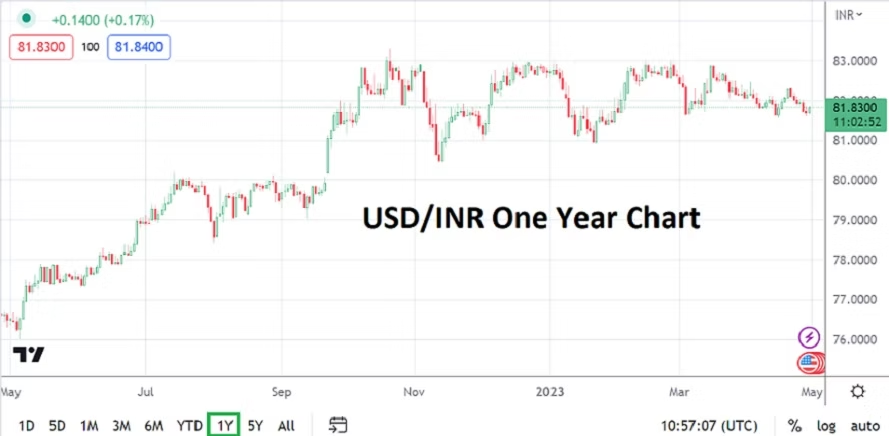
USD/INR 1 Year Chart as of 28th of April 2023

For instance, while China promotes the use of the CNY, countries like India are still using UAE Dirham (AED) for buying oil from Russia. BRICS still needs to sort out which currency they will use extensively for trade, this while many members try not to make enemies of other nations. South Africa exports are significantly more to the E.U, U.S and the U.K compared to Russia. Its share of exports to Russia are minuscule compared to the other three. Not only is South Africa risking free trade agreements with the U.S, E.U and U.K, but membership in key groups like AGOA as it tries to play on both sides of the fence politically is in jeopardy. Western observers are certainly watching South Africa and they will watch any other nation that joins BRICS. How long will the ANC led government of South Africa will be allowed to flirt with Russia and China militarily before it is stopped?

India has a Large Role in BRICS and is Growing in Stature

India is a vital member of BRICS, but also an important member of the QUAD alliance, the Quadrilateral Security Dialogue. Japan, Australia, the U.S and India are members and confer over trade and security. India is the largest democracy in Asia – and the world – and a Western advocate in South East Asia, even as China plays a dominant role in geopolitics. While BRICS wishes may be good for conducting bilateral trade among members, it is not necessarily good for global trade and political understandings. Complications from long-term political and historical disagreements between India and China cannot be discounted either.

Is the Indian Rupee (INR) or CNY more relevant for international trade? Use of the INR and the CNY needs coordination with other countries many times. Australia is a good example regarding the ability to trade INR internationally. If Australia and India agree to make their payments for exports and imports in their respective nation’s currencies, trade can be conducted rather well, but then Australia would have to find another nation for its ‘extra’ INR, because it would likely suffer due to trade imbalances. It would be important for another country outside of India to agree to take INR from Australia for other trades. Potentially some Gulf countries could be open to these types of INR transactions. A bigger group of BRICS nations would help India certainly.

Saudi Arabia has recently agreed to sell oil for CNY, but shoring up CNY in their coffers has long-term implications. This as Saudi Arabia wrangles politically with the U.S occasionally. Saudi Arabia has demonstrated a desire to take on a seemingly more neutral tone and perhaps wants to limit its exposure to the strength of the USD, particularly if the U.S tries to make a weapon of the USD via political policy. Thus, India as the most populated nation in the world and a growing economic sphere of importance, has to make careful considerations moving forward as it positions its economic stature for complexities that will develop. India and Saudi Arabia may have visions of becoming great ‘neutral’ economic powers moving into the next one hundred years.

The Indian Government has made economic deals with Egypt, Sri Lanka and Malaysia for bilateral INR trade, but still no pure INR trades of significance have materialized according to official banking data. There are multiple headwinds for BRICS nations to overcome USD dominance in international finance. Whenever exchanges of INR or CNY to other currencies for trade settlement are needed, they need to first change the base currency to USD to buy RUB or AED. Few exporting countries will accumulate CNY without a total need. Holders of these currencies would likely dump the INR and CNY for USD via Forex.

China Economic Transparency is Lacking and the Future of India in BRICS

China doesn’t make it easy for foreigners to own assets in their nation. The China government does not want massive trade deficits and free capital flows are restricted with force. Who would invest in China and risk having their money being stuck in the nation without guarantees? China continues to ramp up its oversight and aggressive tactics of supervision of foreign owned companies that have operations in the nation.

Now and into the foreseeable future, the Chinese government will control transactions of CNY with an iron fist. The United States will likely remain the predominant place for trade because of its huge economy, and as a nation that allows many other countries and foreign citizens to own and invest their assets within it boundaries. There is still something to be said for transparency. Any new nation or coalition trying to challenge U.S government debt instruments are likely to fail. The U.S continues to be a place where nations can hold ‘safe assets’ with a guaranteed return of interest for the long-term. No country equals the asset size and security of U.S Treasury Bonds. On that basis alone, there will be a no challenge to the USD in the near future.

Liquidity remains an issue for capital flows and convertibility within BRICS. A lot of hard work via transparent trade agreements will have to be signed to get these issues resolved. Plenty of questions exist regarding China’s economic data and its reliability because of a lack of oversight from ‘recognized’ outside agencies which are often forbidden.

India is still having border issues with China and these problems remain unresolved. India’s role of leadership in G20 is hard to ignore despite its alliance with BRICS. The Indian government has advised traders not to speculate in CNY. This shows that strained relationships between China and India remain and a lack of trust regarding clarity continues. In the U.S, New Delhi is considered an important partner, one that can be trusted regarding the growing rivalry between the U.S and China. Prime Minister Narendra Modi, said last year, “this is not an era for wars”, and this shows India wants stability and wants to play a global role in diplomacy.

There is a definite strategy for BRICS to grow with the nations of the Middle East and others. Using their currencies for mutual trade arrangements could eventually work out, but it will take a long time for this to change the dynamics of USD dependence and dominance.

However, we shouldn’t forget that almost 40% of the world’s population lives in Asia. Yet, even if oil producing nations will trade in a BRICS backed currency basket, which has been dreamed about for a long time, China’s leader Xi didn’t highlight this goal while in Moscow or in Saudi Arabia during recent summits. China is certainly playing a long game, but it also shows they remain cautious and vulnerable to the strength of the USD globally. If Xi wanted to cause the greatest pain to the United States, he would liberalize his financial sector and make the CNY a true competitor to the USD with complete economic transparency, but that would take him in the direction of free markets and levels of openness that are likely the opposite of China’s domestic ambitions. A strong due diligence of the Chinese economy, is something Chinese leadership likely wants to avoid for the foreseeable future.

BRICS: A Multi-Polar World and Avoiding Confrontation

Many developing countries will want to avoid a confrontation consisting of China and Russia on one side, and Western powers on the other side. India has overtaken China regarding population numbers, and will likely become the world’s third largest economy before the end of this decade. India will become a strong voice in favor of a multi-polar world. Arguably, ideas of a more multi-polar world are being worked towards in pragmatic ways, but the BRICS coalition will not develop their own asset backed common currency unless they can resolve issues regarding trade and monetary agreements with transparency. It is a matter of trust.

post25.1

Forex, Interest Rates, the Fed and Conspiracy Politics

Forex, Interest Rates, the Fed and Conspiracy Politics

If you have been looking for road signs regarding what the U.S Federal Reserve is going to do next week and trying to get a feel for its rhetoric which will be delivered in the FOMC Statement on the 3rd of May, this week’s U.S data outcomes should be monitored. And as of now the data might be suggesting the Fed will remain aggressive in June.

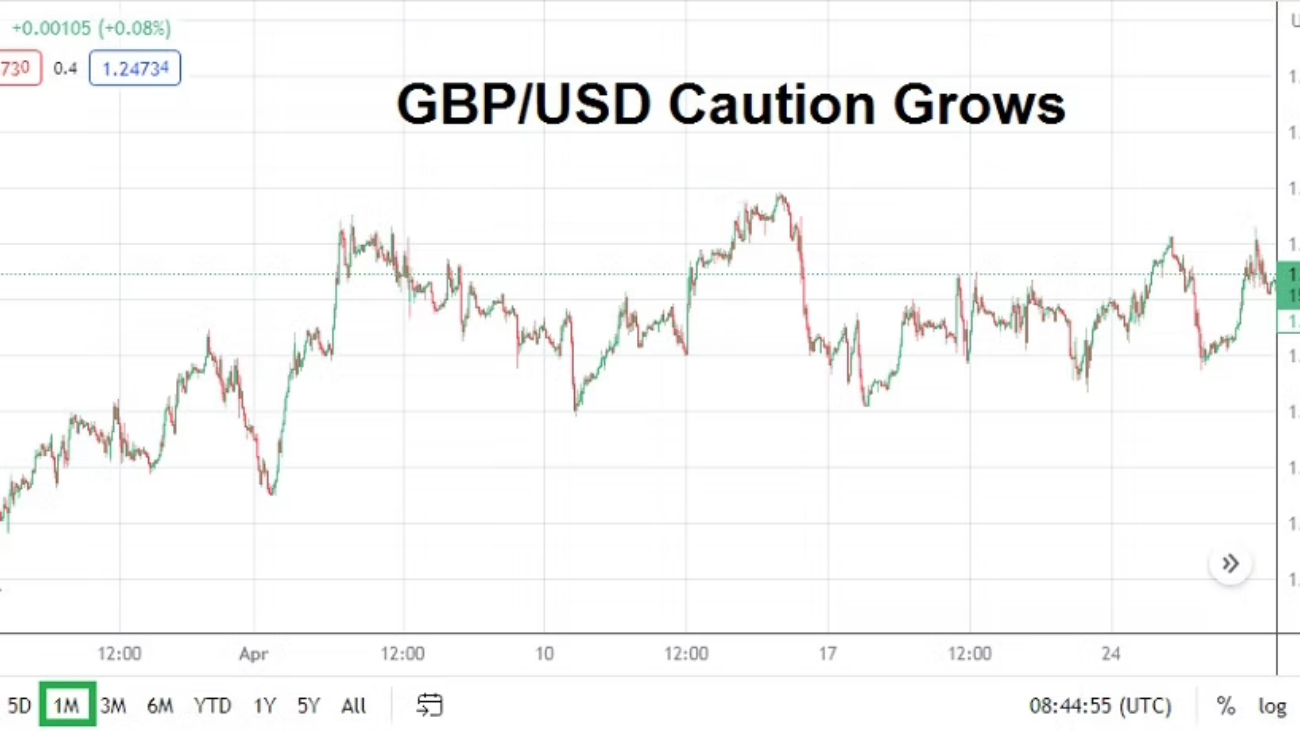
GBP/USD One Month Chart

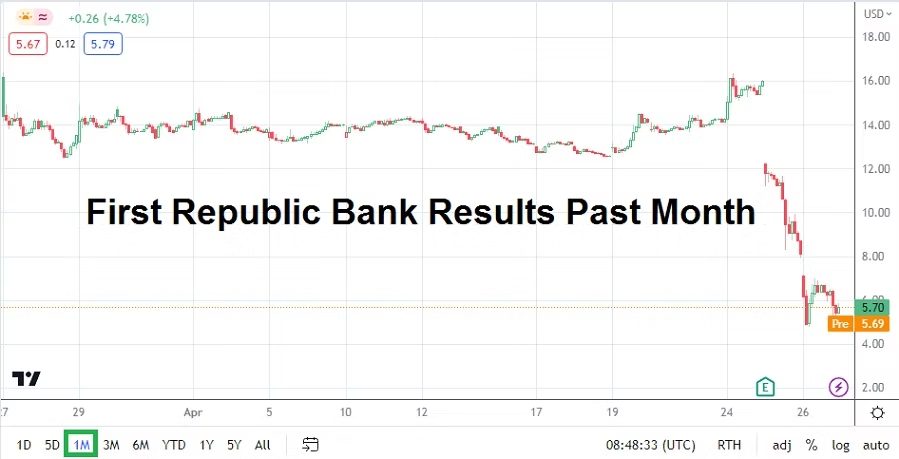
A Fed Funds Rate hike is going to happen on the 3rd of May unless there is a financial catastrophe that suddenly emerges that is nearly cataclysmic. While First Republic Bank wobbling is certainly a problem (Mark Zuckerberg is supposedly a rather large client of the bank), if this entity fails completely it may not cause massive bedlam. The stock has dropped violently, so a collapse should not be a surprise. No, it will not be welcome, but it should not be an unexpected calamity.

The question is how much the U.S government will protect depositors? The large clients who are not insured above the standard 250k USD ratio will want the same benefits that clients of Silicon Valley Bank received in March. Should they be rewarded the same way? The American public may not like the idea of another bailout for the deep pocketed, but there may not be much they can do about it, except to vote the politicians out, but who do you exactly punish?

First Republic Bank – One Month Chart as of 27th April 2023

What a collapse of First Republic Bank will do is hurt the corporate bond sector in banking again, because it is likely holders of these bonds will be put at the back of the line once again if the U.S government decides to protect big depositors of millions of dollars like Zuckerberg, before it protects bond holders.

U.S Data in Focus and the Allure of a Black Dress with Growth

But I digress, yesterday’s Core Durable Goods Orders statistics came in better than expected. Today Advance GDP will come from the U.S and if this number produces an increase instead of a downturn, the U.S Federal Reserve will have more ammunition to remain aggressive regarding interest rate hike rhetoric. An increase of 0.25% has been calculated into Forex for next week. The USD has done rather well recently, but what is of intrigue is the perception the USD is doing well after the financial markets have seemingly priced in a rate hike on the 3rd of May. Meaning, typically the USD would have started to ebb a bit lower after financial houses put their interest rate outlook into their Forex positions. Yesterday’s better than expected Core Durable Goods Orders leaves the door open for another hike on June the 14th to be precise.

While Core Durable Goods Orders isn’t a sexy statistic, GDP numbers frequently are, and if the growth numbers show up with a stunning black dress on with alluring ‘expansion’ it could send large speculators into a tizzy and make them believe the Fed could increase by another quarter of a point in June. The Fed during its FOMC Statement next week will certainly try to help financial institutions anticipate outlook. The Fed doesn’t need to hold the hand of investors, but it often treats them like children.

Financial houses had largely believed the Fed would hike in May and might raise in June. The notion that a June increase is certain would then put the focus back on the long-term again, and Forex could then break free of its rather consolidated incremental USD strength seen the past couple of weeks. Inflation remains a drum beat that is steady. And while today’s GDP numbers will be important. Tomorrow PCE inflation statistics will be the final nail in the coffin. If growth is stronger than expected today, and inflation numbers remain stubborn tomorrow, the Fed would certainly consider another June increase valid.

On the bright side for day traders is that the cautious choppy air which has circulated the past couple of weeks in Forex is almost done. While steady trends may not reappear for a while, at least near-term outlook will have more clarity by this time next week.

Big Institutions Have Long Term Outlooks and Treat Trading Conditions Differently

Long term outlook is another game as day traders should know and one they cannot easily participate. Long term investors have the money to specialize in assets which are not expecting profits today, but instead have a larger time frame for making money. Deep pockets, patience and the need for less leverage help financial institutions trade in a more stable manner, frequently putting the ‘odds’ in their favor.

The price of Crude Oil is actually behaving politely in recent trading, and its ability to find a mid 70.00’s USD price range is interesting and may help inflation move lower if it can be sustained. If supply of goods can adequately stabilize and global logistics costs come down, inflation could decrease. These factors are part of the long term perspective of financial institutions. Day traders may want to consider this because it could affect behavioral sentiment moving forward.

Higher interest rates from the Fed are causing other currencies to loss value and this has caused increased costs for international manufacturing companies located outside the U.S which frequently have to buy commodities in USD from their converted domestic currencies, this causes inflation. This is a factor not spoken about enough and traders need to consider this within their perspectives too.

The Fed and Perhaps a Conspiracy Theory

If the Fed actually starts to decrease its interest rates, it would help other currencies stabilize. And yes, if the Fed stops increasing interest rates it may actually help weaken global inflation. The Fed has caused import inflation to occur into the U.S. Are they aware of that? It is a good question. The likelihood is a yes, and it has been disregarded, but why? Perhaps there is another reason; does the U.S Fed and U.S government want to cause inflation globally to strike politically at some competitors? This is a different topic………kind of. Conspiracy theory.

While insight regarding the dialogues between the Federal Reserve and U.S government is certainly above my pay grade, one has to wonder about considerations regarding inflation and a stronger USD and its potential effect on China. The Fed increases may be a way of trying to inflict harm economically and in a subtle manner, but this cannot be proven. Perhaps the Fed is unaware of the global conflict being waged.

On another note, Gold remains near 2000.00 an ounce – almost steadily, displaying a certain amount of cautious behavior.

Gold One Month Chart

post11.1

The Yuan’s Slip is Showing and Troublesome

The Yuan’s Slip is Showing and Troublesome

Two and a half weeks from Xi Jinping’s expected and unprecedented 3rd term coronation as China’s president, the country is trying hard to tamp down any distractions in a year that has provided plenty of them: pandemic lockdowns; faltering economy; supply chain headaches; a reeling real estate bubble; you know the list.

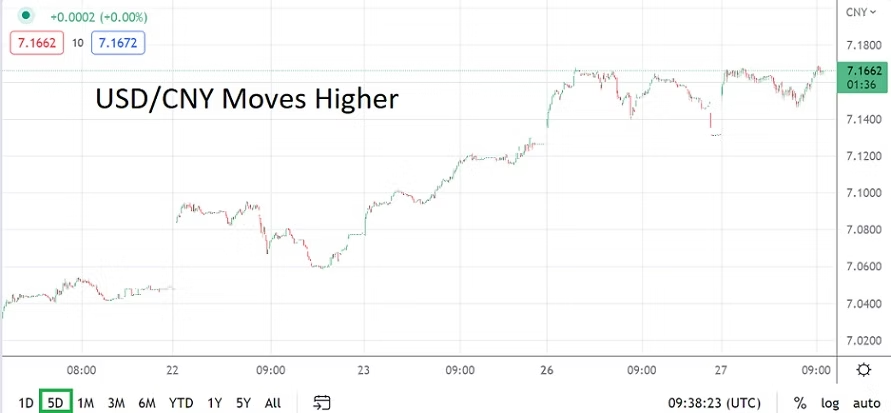
We can now add plunging currency to the usual suspects, as China’s Yuan — also known as renminbi (literally translated as the peoples’ currency) or simply RMB — weakened a further 3.7% against the dollar in the past month, and over 11% so far this year. That’s trending for its worst annual performance against the Greenback since 1994, which is the year China unified its currency market in an effort to modernize it. Not great for a basket currency its promotors aspire to be the world’s finest.

Monday’s mark of 7.1738 RMB to dollar is also its worst since 2008, back when global markets were collapsing. This is a psychologically meaningful level that all but guarantees aggressive pushback by the People’s Bank of China (PBOC). On Monday, the bank announced the imposition of a risk reserve requirement of 20% on currency forward sales by banks, starting on September 28.

China has adjusted the FX risk reserve ratio on occasion in recent years, starting in 2015, but stopped doing so in 2020. The goal is to deter short sellers betting on further depreciation, something government spokesmen have even come out and warned investors against in the past several weeks, including PBOC deputy governor Liu Guoqiang.

USD/CNY 5 Day Chart

It’s not the only move we’ll see. Other steps we can expect in the long term are delays in easing of monetary policy (a recent tool against recession); further cuts to foreign exchange reserve ratios; and pumping central bank bills into Hong Kong or elsewhere to stave off RMB liquidity. You can bet on a lot more firmer than usual midpoint fixings going forward as well.

Of course there’s not much they can do against the prime driver of the dollar’s recent surge: that would be the Federal Reserve, which has been aggressively raising rates to pump the brakes on inflation, resulting in part in bringing the trading strength of the dollar to a 20 year high, with all indications the policy will continue into next year. Other currencies, including the British pound and the South Korean won, have also struggled of late; the pound reaching a historic record low against the currency this week.

Look for more PBOC efforts to keep a lid on the problem, especially as the calendar draws nearer to the opening of the 20th Party Congress on October 16. While it has so far avoided more direct intervention, such moves are not off the table, should the slide persist or worsen significantly. Time will tell.

post9

Escalation of Rhetoric doesn’t create Calm Investors

Escalation of Rhetoric doesn't create Calm Investors

Putin and U.S Federal Reserve will Stir U.S Markets Today

An escalation of rhetoric via Russian President Vladimir Putin regarding his nation’s war with Ukraine took place this morning via a televised address to the Russian people. Putin has said Russia will call upon those with previous military training, and use a ‘limited’ call up of potential new troops. A claim of nearly 300,000 additional soldiers to be readied has been made by senior Russian officials shortly after Putin’s speech.

Making matters more intense, Putin said all military options are possible while Russia protects its sovereign territory. The land he was speaking about however, is not recognized Russian territory, it is Ukrainian soil. Putin’s ‘talk’ to Russia has firmly put him in a position which shows that results from the Ukrainian war have not had favorable results and that he is showing signs of frustration. An anxious Vladimir Putin is not about to calm down what are already nervous global markets.

China Urges a De-escalation in Ukraine while not naming Russia

China has already reacted to Putin’s speech by urging all sides active in the Ukrainian conflict to de-escalate the situation. China has its own economic worries presently and certainly doesn’t need another bad ingredient thrown into its midst as it deals with weaker demand for export products and a shaky real estate market as the global economy reacts to inflation and recessionary concerns.

International traders will hardly hear what China had to say today, not because it isn’t important, but because their attention will be on Putin and the U.S Federal Reserve. However, it is important to point out China did not condemn Russia, instead it asked that all sides involved in the Ukrainian sphere to lessen the dangers. China and its relationship with Russia remains an important aspect of global politics.

The U.S Federal Reserve will raise Interest Rates Today

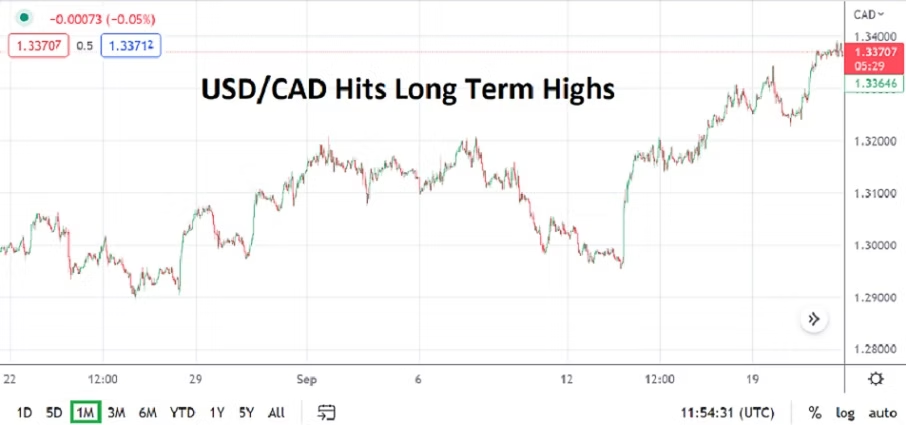
The U.S Fed will raise its interest rate by 0.75% today according to most financial houses which have already acted accordingly within Forex per interpreted price action. The USD has made new long term highs within the USD/ZAR and the USD/CAD. The EUR is below par as of this writing against the USD, and the JPY and GBP also continue to struggle near long term lows versus the USD.

USD/CAD One Month Chart

U.S equity indices which have been struggling are not showing a massive promise of a reversal upwards which will alleviate losses seen this year. Investors need to remain patient if they are invested in indices such as the S&P 500. Day traders looking to profit from the volatility ripping through the markets will continue to be challenged by choppy conditions, difficult perceptions of short term technical charts and a lack of positive behavioral sentiment among the larger players in the marketplace who actually drive the markets most of the time.

  • USD remains stronger against many major and emerging market currencies, day traders need to be very careful if they pursue Forex positions in the short term.

  • U.S equity indices traded lower yesterday, and if the Federal Reserve falters and doesn’t offer solid clarity regarding interest rates today, this could create more nervousness.

Optimism is not being heard far and wide. While it is always interesting to be a contrarian and sometimes the correct avenue to engage thinking, the notion that upwards trajectories will suddenly occur may be wishful thinking in the near and mid term. Many asset classes are under stress.

Today’s upcoming pronouncements from the Fed will be important for institutional investors as they try to gauge the U.S central bank’s outlook until early 2023. If the Fed gives clues they will remain hawkish into the winter and a Funds rate around 4.50 to 5.00%is a possibility, this could shake investors and cause more capitulation – meaning a stronger selloff via equity indices could ensue. Short term traders will need to be prepared for violent conditions if they are day traders of stocks or CFDs. The inverted U.S bond yields remains a sign investors are seeking short and mid-term safety via interest rates to preserve money.

The fact that most traders are typically buyers first, not sellers first makes trading in bear markets difficult. Psychologically humans want to be optimistic. Today’s speech by Vladimir Putin while it doesn’t change the conditions on the ground in the Ukraine immediately, will shake the confidence of some financial houses which may have become accustomed to a ‘polite war’ they could ‘forget’ about and make believe would not get loud again. Nervous behavior is likely to be seen later today as early risers in the States awake to the news of Putin’s speech and react.

In short global markets will be dynamic today and tomorrow, as financial houses position their portfolios according to their foresight regarding developments the next few months. Day traders are urged to be cautious, and the prospect of sitting on the sidelines and watching ‘the show’ may prove to be a solid choice.

post2

NASDAQ Composite: Bearish Trend Testing Trading Inexperience

NASDAQ Composite: Bearish Trend Testing Trading Inexperience

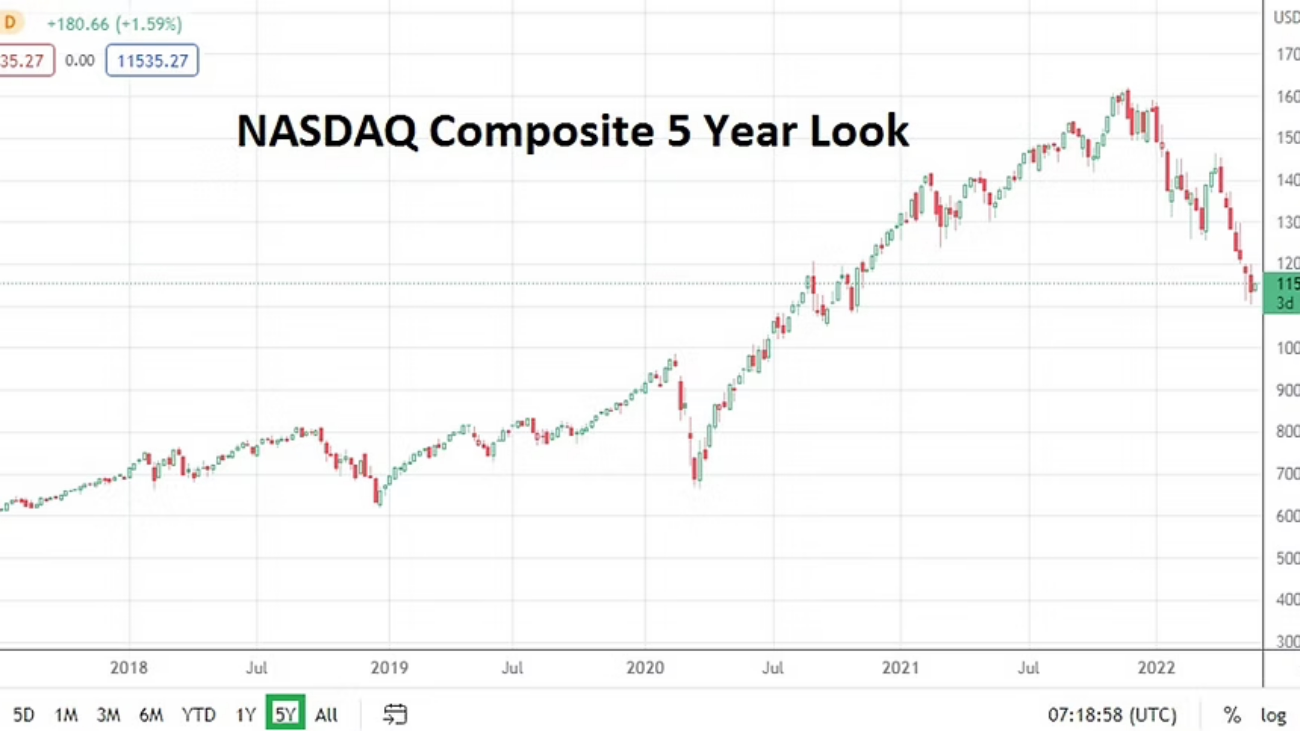
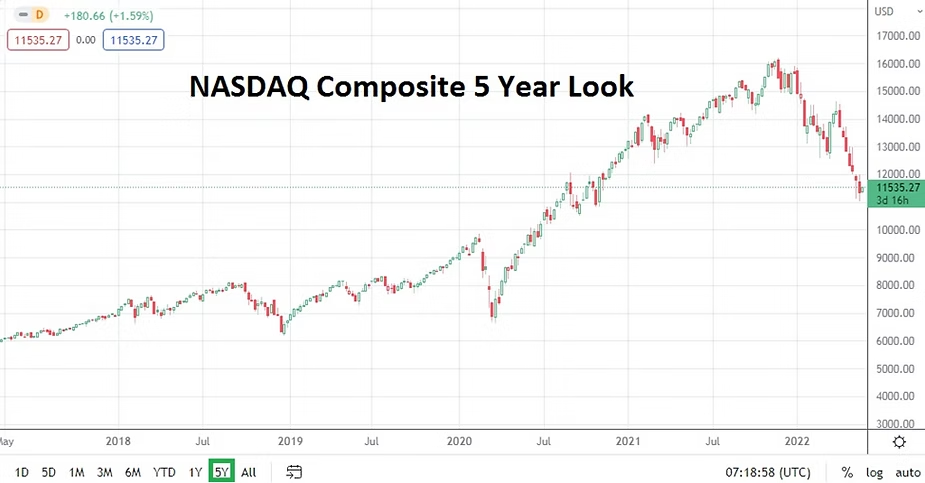
The NASDAQ Composite has been within the grasp of a selling trend since late November of 2021, and traders who feel the urge to buy should understand their goals and time frames clearly.

The NASDAQ Composite has seen a strong wave of selling take hold of its equities since the later stage of 2021. Investors have likely been spooked by inflation and high PE ratios which correlate into questionable values and fears of over exuberance and reactions. The combination of U.S Federal Reserve policy which is certainly having an effect on behavioral sentiment is problematic too. Investors are not fans of unclear outlooks and current economic conditions are definitely causing nervous sentiment.

Many traders and investors have not experienced a sincere bear market during their financial careers. Indices and their equities have produced a rather steady upwards vehicle for years. The thought that an equity index can actually go down for a long duration, without significant reversals higher following is troubling and new for many people. Timing new trends is exceptionally hard. An investor who has a ten year outlook certainly brings a different perspective to buying the NASDAQ Composite compared to a day trader who is likely maneuvering in the index with short term wagers using CFDs.

Current market conditions in the NASDAQ and other major global equity indices remain challenging and this will likely continue into early this summer. The U.S Federal Reserve will be conducting an FOMC meeting in mid-June and another interest rate hike is likely being considered. A potential rate hike of 0.50% may be seen. The potential of this additional hike to the current interest rate of 1.00% has likely been digested into the marketplace by financial institutions, but that is not the end of the troubling concerns.

Technical traders who watch the daily results of the NASDAQ Composite and other indices may attempt to speculate on the gyrations of their moves based on short term volatility. These traders should understand they are also battling large institutional traders who use complex algorithms to pursue their positions. The combination of nervous equity markets caused by uncertain economic outlooks, while it waits on the pronouncements of the U.S Federal Reserve are bound to deliver more nervous results in the NASDAQ Composite and other global equity indices.

While it may be accepted that the U.S Fed will raise interest rates again in June, the greater question that financial institutions want answered is what the U.S central bank’s outlook on additional interest rate hikes in the summer and fall will be. Inflation in the U.S remains troubling high. The rising costs of logistics, food and consumer goods are largely a manifestation of higher energy costs.

Yes, coronavirus has been a large ingredient too, regarding inflation and its current effect on employment and the resulting lack of workers is a component in the equation due to new perspectives among the workforce. The shortage of employable labor has also sparked concerns about demographics for the future. While the virus and its effects seem to have eroded in the West for the time being, unfortunately there are concerns regarding a potentially large problem in China if coronavirus infections continue to occur there. Shutdowns in China due to the virus can affect supply and commodities prices globally.

The costs of higher energy and commodity prices are something that companies and consumers will have to deal with in the months ahead. Disinflation is likely to come, but it may take a handful of months more. It is a complex puzzle and traders who want to bet on short term results will have to endure sudden storms of volatility which are likely to arise. Unanswered questions await and because of the shadows that hover over the economic landscape, clarity is not going to be delivered soon.