post256

Crude Oil: A Guess from the Underbelly On What Happens Next

Crude Oil: A Guess from the Underbelly On What Happens Next

Why has the WTI Crude Oil Spot price remained relatively calm? The war between Israel and Iran has been going on per this latest violent phase since Friday the 13th. While tensions have been high between the two nations from the 7th of October 2023 in a very outward manner, and missiles were fired from Iran towards Israel on two separate dates in 2024 which then featured Israeli retaliation, the past handful of days is a new escalation.
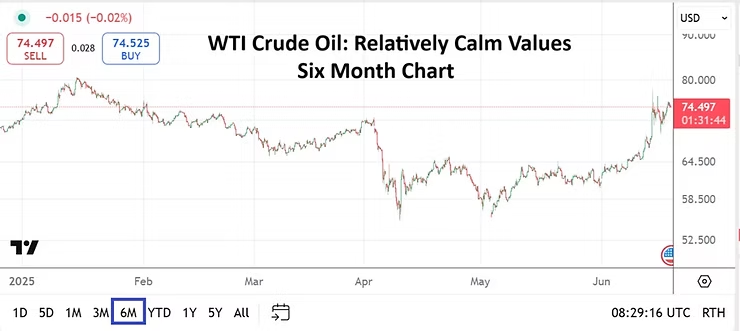
WTI Crude Oil Spot Price Six Month Chart as of 18 June 2025

Day traders of WTI Crude Oil need to understand that large players in the energy sector have a vast amount of experience and intel regarding production and supply worldwide when they make their buying and selling decisions. However, the biggest oil traders do not always share the same political viewpoints, except to say most large players in the energy sector practice the art of realpolitik. Day traders of WTI Crude Oil should try to get into the minds of the real movers of WTI Crude Oil via realpolitik considerations.

As of this writing the price for WTI Crude Oil is around 73.930 Spot, late yesterday it did move higher to within sight of the 75.750 USD mark – this when information that President Trump is considering a U.S military strike on Iran heightened. Traders need to understand Spot Crude Oil and Futures pricing can be different. The current value of WTI Spot is higher than the Futures pricing because of the short and near-term known risks.

However, volatility in WTI Crude Oil Spot has remained fairly muted, almost tame as Israel and Iran wage war. Other spot energy prices like Brent and Natural Gas are being affected directly too because of shifts in behavioral sentiment. But again, the prices within the energy sector have remained calm considering what is at stake for global economics. Here are points that may be affecting the WTI Crude Oil landscape and energy complex, which some large traders may be contemplating:

  • It is highly likely the U.S has told Israel not to harm Iranian Oil production or supply sites, including shipping.

  • The U.S does not want the price of WTI to jump rapidly because of the current war between Israel and Iran.

  • Inflation would be a scrouge for the global economy, not to mention President Trump’s ambitions.

  • Even though the U.S has its own energy supply, the price of WTI is affected by behavioral sentiment within the global Crude Oil complex.

  • Meaning conflicts in the Middle East and elsewhere always cause ripple affects, even if Crude Oil is flowing freely in the U.S via its own production.

  • The U.S doesn’t want China to be given a reason to consider becoming an open belligerent in the Middle East war.

  • China gets a lot of Crude Oil from Iran. The stated percentage is around 15% of its total supply, but it could be more if Iran sends oil to other locations and then reroutes supply to China afterwards.

The U.S not only wants to keep China calm about its energy supply, but also doesn’t want to give China an excuse to escalate political or military tensions elsewhere – read Taiwan.

As an aside there are a lot facts and rumors coming from China, highlighting that a powerplay is emerging between competing factions for leadership in China’s military, this may include the authority that Xi Jinping has too. China will be conducting Politburo meetings in the coming weeks that will get plenty of attention via Beijing analysts. If U.S intelligence knows an internal political fight is taking place in China, they will want to keep China calm regarding external considerations and not give China excuses to act. Concerns regarding the Middle East as a justification for more Chinese actions against Taiwan in some type of economic political/ military theatre is a threat.

By telling Israel not to attack Iranian oil infrastructure, this allows the U.S to placate China. Only if Iran were to attack U.S infrastructure – including military assets or interests in the Persian Gulf via attacks on Gulf States like the UAE, Bahrain or Saudi Arabia would the U.S consider retribution against Iranian Crude Oil.

While the U.S has an interest in global politics certainly, it also wants to maintain a stable global economic environment. President Trump knows this and so does his cabinet supposedly. The Federal Reserve meets later today and they will certainly speak about uncertainty regarding inflation. Whether or not they mention the Middle East war will be interesting.

Thus, it is likely the U.S will only allow an attack on Iranian Crude Oil production and supply if it has been directly threatened. And this is where it gets potentially more interesting for Crude Oil traders. It appears likely the U.S will get involved directly in Iran by hitting known Iranian nuclear facilities deep underground with heavy U.S ordinance. If the U.S does attack Iran via B2s using heavy bombs, how will Iran’s Revolutionary Guard Corps react?

Will the existing IRGC allow for the destruction of its nuclear ambitions and accept that it will have to prepare for a new political environment in which their power will likely be challenged by not reacting? Or will those in power of the IRGC double down on stupidity and attack U.S assets with some of the Iranian military weaponry that still remains? An attack on U.S ‘interests’ would risk aggravating the U.S more – giving the U.S reasons to attack Iranian economic infrastructure which is mostly Crude Oil, and likely close the door on the chances of the IRGC to survive after the war concludes.

Things often do not work out via political and military outlooks. The law of unintended consequences is always a danger. The end game is quickly approaching for Iran’s current leadership. The U.S and Israel also hopefully have taken this into account. Recent outcomes in Iraq and Afghanistan have not gone as planned for the U.S when seeking a serene endgame.

As an example, it might be better not to eliminate the current Ayatollah Khamenei, and allow the people of Iran an opportunity to remove him if they want. The Iranian Revolutionary Guard Corps and its various factions are probably eyeing what will come after a capitulation. There will be a fight for survival politically and a leadership vacuum.

The IRGC fiefdom gets most of its money from Crude Oil revenues. It is quite possible in a forward looking manner the IRGC may choose not to risk having the U.S ruin Iran’s one giant economic asset, thinking rightly or wrongly that they can continue to profit from Crude Oil the day after the war ends.
post255

Quick Hits: Inflation, USD, China and U.S Trade and WTI

Quick Hits: Inflation, USD, China and U.S Trade and WTI

Yesterday’s weaker than anticipated CPI data from the U.S cements the realization that inflation is eroding in the States statistically in a rather consistent fashion. Today’s PPI numbers will be watched, but yesterday’s results clearly show the Federal Reserve has been far too cautious.

Media reported yesterday’s inflation results differently showing bias as some pointed out that inflation rose, compared to some outlets that showed it came in less than expected. Bottom line – inflation has been below expectations consistently and tariff concerns as of yet have not killed the U.S economy with higher prices. The Fed’s insistence on being cautious are comparable to the instincts of an overly protective parent. Day traders need to understand their perceptions are in danger of being affected by folks with confirmation bias.

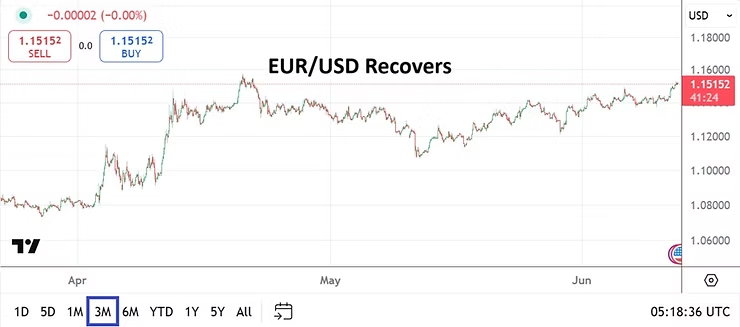
EUR/USD Three Month Chart as of 12th June 2025

The EUR/USD climbed above the 1.15000 level again yesterday confirming mid-term outlook for a weaker USD based on the notion the Federal Reserve will have to lower the Federal Funds Rate exists. While perhaps kicking and screaming against their desires to remain hawkish, the Fed will start feeling the heat to act. Next week’s FOMC meeting is unlikely to be the actual date. However, financial institutions have certainly been leaning into a weaker USD since April, and the upwards trajectory in values by major currencies against the USD may prove to be a solid baseline via support prices moving forward.

Certainly, day traders should consider the notion that larger traders have bet against the USD already, thus leaving the door open to the potential of reversals. Yet, mid-term price levels are what financial institutions are gearing their outlooks towards via cash forward transactions for commercial companies. If financial institutions believe the Fed will have to indicate the potential of a rate cut not only in July, but another one in September this could spur on additional USD weakness. Folks should also consider the notion that the White House won’t be against a somewhat weaker USD in order to help U.S manufacturers and producers export.

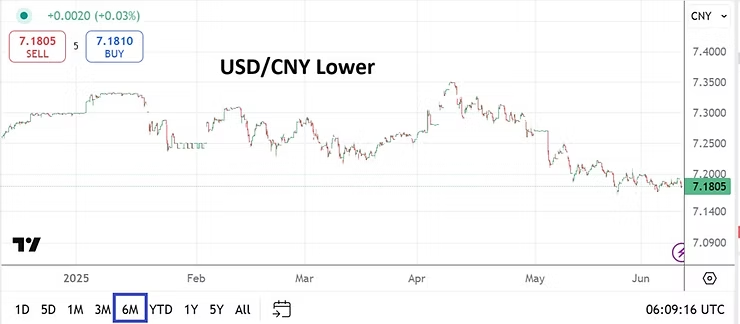
USD/CNY Six Month Chart as of 12th June 2025

U.S stock indices didn’t climb on the results of the China tariff news proclaiming a working agreement has been attained over the past two days. Perhaps markets are inclined to believe there will be more fireworks regarding rhetoric from the U.S and China over the coming months – which appears logical given the circumstances between the two nations.

While rare earth metals got the headlines, there appears to be plenty of line items in the tariff negotiations that still must be worked on. The announcement that the deadline has been pushed back again, this time until the 9th of August shows that talks are making progress – but slowly. Red lines keep getting erased.

Financial markets reacted rather passively to the U.S and China news, seemingly indicating larger players are now focused on other matters, and funds have played most of their cards regarding the China and U.S saga via their existing trading positions. Noteworthy, is the fact, the USD/CNY has reacted in a rather correlated fashion with the broad Forex market the past six months. For all the talk about a catastrophe for China and U.S trade, the USD/CYN has behaved quite well, showing the Chinese government is playing a long game against President Trump and doesn’t want to create a huge firefight via currency manipulation accusations.

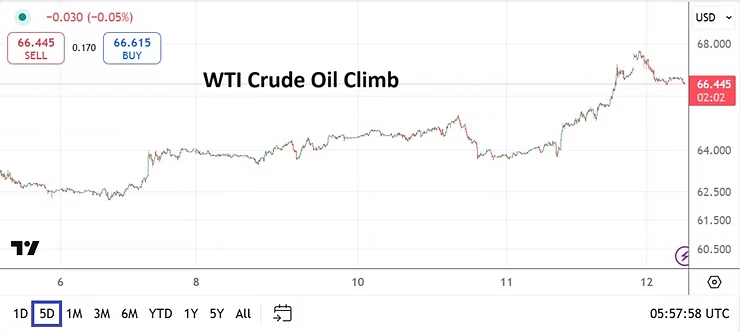
WTI Crude Oil Five Day Chart as of 12 June 2025

Middle East Escalation: WTI Crude Oil jumped late yesterday as news quickly filtered through social circles of embassy evacuations in various proximities within reach of Iran. The loud whispers certainly caused the price of the commodity to surge to almost $67.75 last night, but this morning’s values suggest some deep breaths have been taken as WTI trades near $66.45.

For options traders who want to buy cheap calls on WTI, they will likely have to look several months out and speculate on military escalation under rather speculative circumstances. If traders want an idea of what larger players are doing in options they can use CME (Chicago Mercantile Exchange) info to get some thoughts on positioning pattens in WTI Crude Oil calls and puts. The call options did get more expensive last night – meaning that some large traders are hedging against the threat of higher WTI Crude Oil prices because they are likely leaning into cheaper oil for the time being, or they are betting on the price of the commodity to rise if chaos breaks out in the Middle East.

post252

No Chance of a Nimble U.S Fed as Entitled Investors Served

No Chance of a Nimble U.S Fed as Entitled Investors Served

On Wednesday of this week Consumer Price Index numbers will be published, followed by Producer Price Index data on Thursday. Inflation statistics from the U.S for several months have been coming in rather tame and sometimes below forecasted results. Fed Chairman Powell and his team of FOMC members continue to plead uncertainty as the main reason for a lack of Federal Fund Rate cuts because of tariff concerns. The next meeting by the Fed finishes on Wednesday the 18th of June.

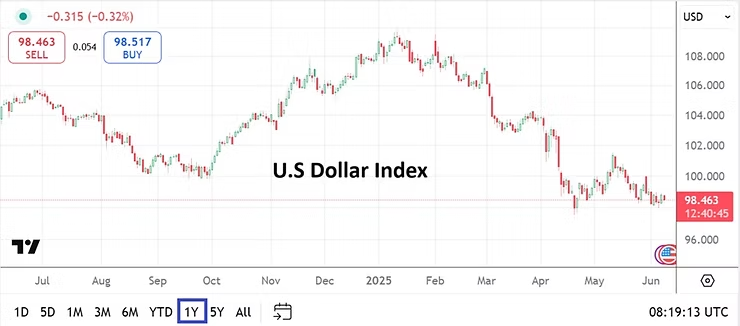
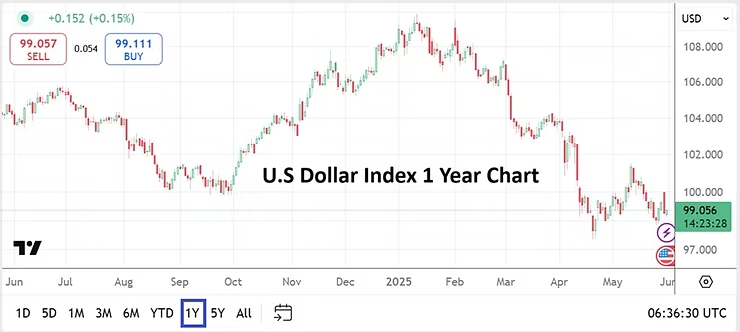
U.S Dollar Index One Year Chart as of 9th June 2025

Even if the inflation numbers come in as anticipated in the next few days, the Federal Reserve is unlikely to cut interest rates next week. President Trump and some in his cabinet have spoken about the need for rate cuts. Not only would it help consumers via mortgage rates, borrowing costs to buy autos and other high ticket items, but it would help the U.S government pay less on interest rate expenditures generated by inflamed Treasury yields.

The Fed continues to stay passive about its outlook, but if inflation data via the CPI and PPI are near forecasts this week, why would the U.S central bank continue to take such a stubborn stance? Interest rate decisions are not supposed to be political. The Fed has pointed to the potential of sudden inflation occurring due to tariff implications. This is a genuine concern. However, why can’t the Federal Reserve be more nimble? Inflation has not shown signs of immediate upwards pressure.

Perhaps it is because the Fed serves large U.S and foreign financial institutions, and has gotten into the habit of telling important folks not only what it anticipates, but handing out its interest rate plans on a silver platter so large players can position themselves beforehand like entitled elites. The Fed is very unlikely to cut interest rates the middle of next week, but it is probable they will open the door to a 25 basis point cut in July. However, July’s meeting is scheduled for the end of that month, in essence this is the middle of the summer, which is a long time to wait for action.

Day traders hoping to ride the trends that flow through the marketplace as they pursue speculative wagers remain in a difficult spot. Intraday volatility remains dangerous. Mid-term outlooks are certainly taking hold in Forex and equity indices, but sudden reversals for those using too much leverage continues to cause harm. Short-term speculators need to remain patient and vigilant, it is important to remember day traders are seen as second class citizens in the big scheme of the financial world, and this is not going to change for the moment.

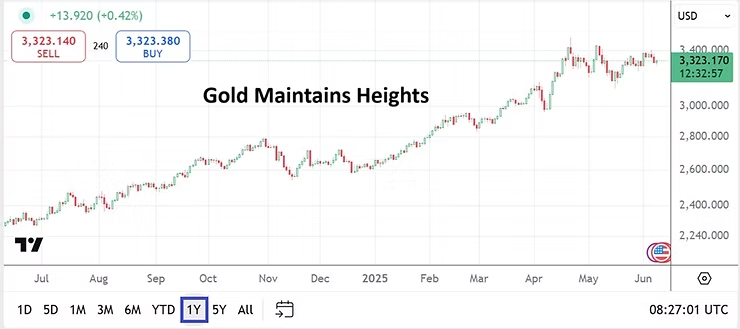
Gold One Year Chart as of 9th June 2025

A lack of clarity has spooked large players in the financial markets the past handful of months, but it does appear many institutions are becoming more comfortable. Though not at all-time highs, the major stock indices are within sight of important values. Behavioral sentiment seems to be leaning into a more positive outlook. Large investors appear to have concluded that while President Trump talks a tough game and often presents a strong stance, that ultimately he allows for tactical maneuvering to achieve deals. Trump is not big on being polite and this occasionally inflames markets. Bullish sentiment is growing on the hope President Trump’s characteristics are understood.

The Fed and the White House are likely to continue locking horns for the next few weeks. Perhaps if Jerome Powell tries to placate Donald Trump with a solid hint of an interest rate cut in July this will smooth things over. However, waiting for an interest rate cut in late July seems like a road too far, particularly when inflation levels the past couple of months avail the U.S economy to proactive actions from a Federal Reserve now.

Let’s remember, there is no law that says the Fed cannot cut or raise interest rates only during the conclusion of FOMC meetings. The U.S central bank has the ability to make changes to the Federal Funds Rate whenever it deems needed. Yet, the Fed refuses to be nimble in an age when technology allows data to be attained faster, this is a detriment.

The inability of the Fed to show it can be agile is another reason why investors are nervous about U.S policy regarding fiscal matters. The U.S government’s bureaucracy is too slow and bloated. The U.S is still a golden place to invest, but it is becoming problematic and this is leading to changes which effect long-term financial decisions.

post250

AMT Top Ten Miscellaneous Ruminations for the 31st of May

AMT Top Ten Miscellaneous Ruminations for the 31st of May

Western Cape, South Africa

10. Absence: Apologies for the truancy of AMT’s Top 10 the past handful of months. The staff has offered a myriad of poor excuses, but it accepts responsibility and has promised to try and meet the standards of our readers with timely publication once more. More coffee has been promised to the staff as a negotiation tactic by management, even though the price of the beverage is obscene.

9. Dim the Lights: President Cyril Ramaphosa, his staff and well known South African golfers attended a highly publicized meeting in the White House with President Trump. After surprisingly dimming the lights, a video mainly consisting of EFF radical Julius Malema’s threatening escapades was shown while Trump voiced concern about attacks on farmers. Not a lot is known about the outcome of talks which went on behind closed doors afterwards, but speculation abounds. The USD/ZAR is near 17.97000.

8. Anduril Industries: An aviation company, cofounded by Palmer Luckey who at a young age created Oculus VR, is receiving important attention. Anduril is a privately held company intent on building pilotless jet fighters, among other innovative technologies. Palmer Luckey is now 32 years old and appears ready to become a transformative tech entrepreneur perhaps in the vein of Elon Musk.

7. Bitcoin: Value of BTC/USD is near $103,600.00 at this moment. GameStop has announced it has purchased Bitcoin as a form of corporate treasury, apparently following the path of MicroStrategy’s foray as a Bitcoin proxy to the dismay of some and delight of others. The price of the world’s biggest digital asset was nearly $75,000 on the 7th of April 2025.

6. TACO: An acronym meaning ‘Trump always chickens out’, created by Robert Armstrong of the Financial Times, has caught the attention of many, including President Trump. While an amusing and pointed term, the context should be considered as a way to monitor the thinking of behavioral sentiment of anxious investors. Trump’s tough rhetoric and tendency to then issue a softer toned stance has been noted before by his backers as well as critics. As a means of accumulation while seeking value in assets perceived to be oversold, TACO may be a useful tool for those who agree with Armstrong’s thinking.

5. Values: Gold went into this weekend near $3,288.00. After achieving an apex around the vicinity of $3,500.00 on the 22nd of April, speculative fever has subsided a bit, but the commodity remains stubbornly in demand. Inflation in the U.S appears to be under control. Yesterday’s Core PCE Price Index met expectations with a monthly outcome of 0.1%. WTI Crude Oil’s spot price finished near $61.05 on Friday showing large traders remain convinced supply is strong.

4. Paralysis: The Fed remains steadfast and scared. While using the word ‘uncertainty’ repetitively – as if part of a rave song, Federal Reserve Chairman Jerome Powell must contend with official U.S inflation data which is starkly lower and a discontent Donald Trump, this while trying to explain the comatose behavior of the U.S central bank. The Fed should cut the Federal Funds Rate asap. And a 50 basis point cut by the end of this summer should be the discussed target.

3. Leviathan: The White House’s goal of reducing the deficit is running into tough political realities as budget cutting hopes clash with entrenched bureaucracy that swallows money like a hungry sea monster. U.S Treasuries yields remain elevated. The U.S has been cautioned again via rating services – highlighted by Moody’s recent downgrade of U.S bonds. To the chagrin of many fiscal conservatives, U.S government spending remains problematic.

2. Intimidation: Apocalyptic economic headlines attract viewers. Proclaiming global catastrophe creates attention and reactions in global financial markets. However, after the fierce selling seen in equities over the past few months, there has also been plenty of resilience and indices are now showing signs of coalescing as outlooks improve. Value and yields remain a prime motivator for experienced investors.

1. Pundits: Day traders have been battling volatile market storms since the election of Donald Trump, this as financial institutions have shown a tendency to shift outlooks as they react to pandemonium and cause whipsaw price action. Many speculators have experienced costly losses. Listening to self-anointed experts has not helped. Be wary of anyone who claims to be a market guru, and remember some call themselves gurus simply because spelling charlatan takes too long.

post249

Taco Trade Consideration: All about Accumulation Not Ego

Taco Trade Consideration: All about Accumulation Not Ego

Taco Friday is upon us. Fair or not the newly coined expression TACO – Trump always chickens out – is a rather savvy way of looking at current market perspectives. Day traders have run into a buzzsaw trying to speculate on daily gyrations, but investors who have the ability to accumulate based on valuations in equities, Forex and perhaps even commodities such as gold and WTI Crude Oil have likely enjoyed the choppy ride the past handful of months.

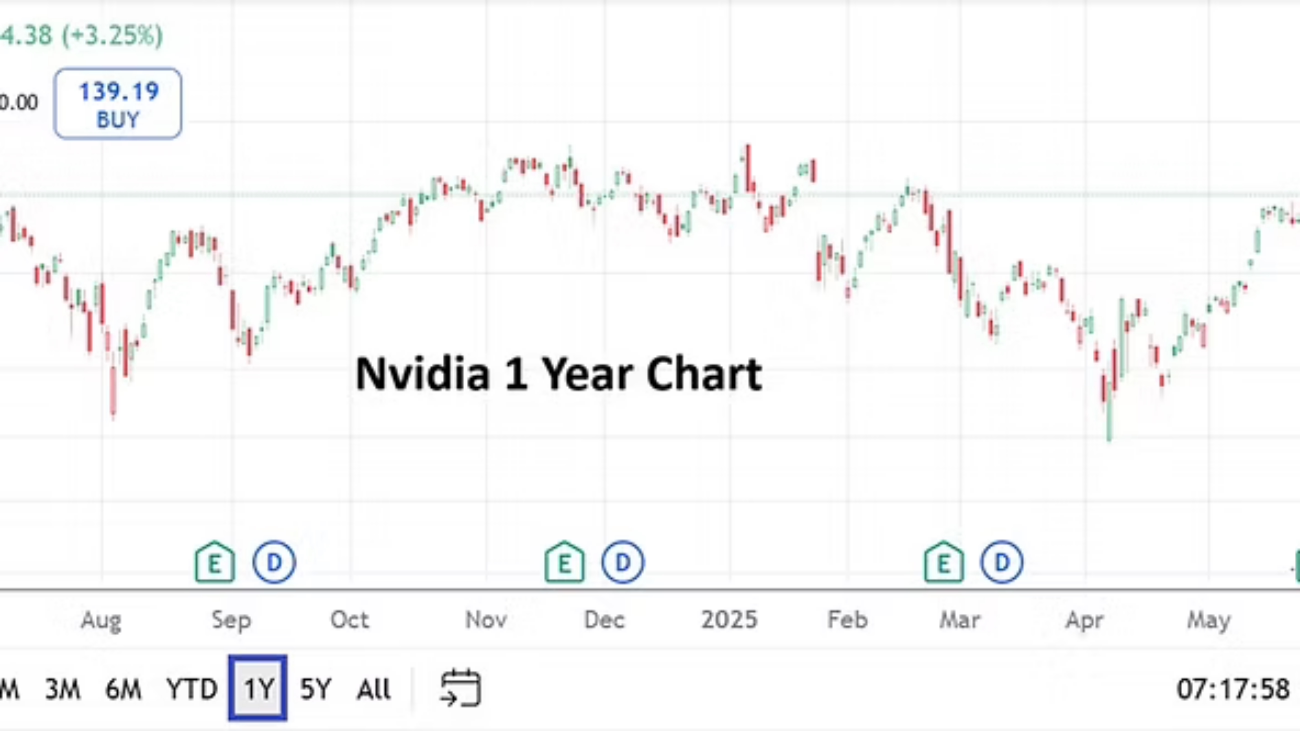
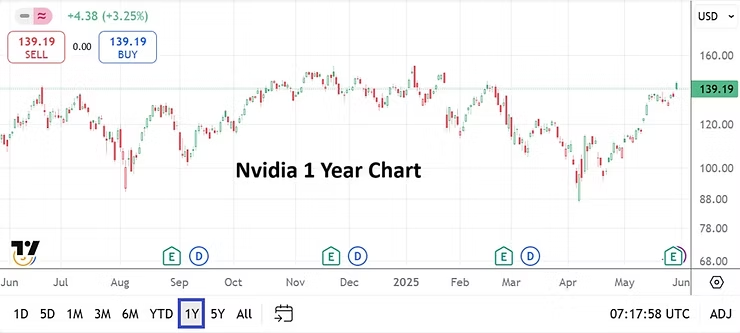
Nvidia One Year Chart as of 30th May 2025

Day traders who are betting on the daily whims of Forex or the stock markets have been participating in assets being stirred by a constant storm via behavioral sentiment shifts caused by White House rhetoric. President Trump has said the expression is mean. And in fact the Taco statement may be wrong all together, because what has gone down and back up, has also gone down again followed by additional reversals. But let’s put ego and wrong notions to the side for a moment. Because the important point about the Taco expression is actually about finding value.

Let’s consider that financial institutions have experience and skin in the game. The ability to buy stocks on lows and accumulate them based on a long-term mindset is likely going to prove correct. Consider Nvidia, it has suffered pratfalls, but continues to recover and pick itself off the floor and is now challenging highs again. Yes, the SP500, Nasdaq and Dow30 have all seen what can be described as whipsaw results. However, the optimistic notion that common sense rules and quality will prevail is a feature of investing. Blood on the streets as Warren Buffet has often said, is not a bad thing, it is an opportunity.

Nasdaq 100 One Year Chart as of 30th May 2025

Day traders attempting to time the markets have always experienced a great deal of pain when speculating on notions that ‘now is the time’. Patience often proves to be worthwhile in trading and investing. Anyone who claims they are constantly buying exactly on lows and selling on apex values should be treated suspiciously. Attempting to time highs and lows is a bit like gambling on sports without any inside knowledge, sometimes you win and sometimes you lose.

U.S Dollar Index as of 30th May 2025

In Forex the USD has been battered but continues to produce sudden violent price action. Today’s Core PCE Price Index from the U.S is expected to produce a 0.1% increase – which would be considered negligible by the markets. Fed Chairman Jerome Powell recently met with the President for the first time since Trump took control of the White House this term. The President is on the record as saying the Fed should cut interest rates now, this while Powell repeats the word ‘uncertainty’ repetitively.

Today’s inflation report is a vital statistical report for the Federal Reserve and will stir Forex. Perhaps, Jerome Powell should consider the Taco expression and understand that while talking tough Trump often is only expressing a strong stance to achieve a middle ground. If inflation numbers are near the forecasted outlook, the Fed should certainly cut interest rates sooner rather than later.

In the meantime, investors who have been accumulating stock on lower values and are playing a long game, may also be counting on ignition fuel being poured upon the markets to create a dynamic bullish run via positive impetus. Yet, even if profits are not achieved in the short-term, investors also understand they are being given an opportunity via the occasional outbursts from President Trump to take advantage of a rather delicious tactic.

post240

Market Volatility Shelf Life Doesn’t Have an Expiration Date

Market Volatility Shelf Life Doesn't Have an Expiration Date

Updated: Apr 11

An associate in the financial world just wrote to me that “all bets are off”. Perhaps that is a solid way to think about the present speculative and investment situation. The tumultuous wave of hysteria in equity indices, Forex, commodities and U.S Treasuries are evident to everyone. President Trump’s tariff policies released last week lacked precision via perspectives for many investment institutions who suddenly had their mirage of calm destroyed. The realization that President Trump was undertaking what he had promised caught many by surprise who thought he was bluffing. Trump’s ‘Art of the Deal’ tactics are now being confronted by middlegame chess strategies from opponents.

While the broad markets have boiled and folks look for calm to return, the prospect that current volatility has the potential to carry a long shelf life with no expiration date has to be considered. Yes, the financial world will become serene again. The return of semi-tranquil trading has been seen in the Nasdaq, S&P 500 and Dow 30 the past couple of days – only because the losses and gains depending on the index have been moderate compared to last Thursday’s and Friday’s results.

Yet the shadow of more violent trading remains crystal clear. China and the U.S are now exchanging loud threats which include higher tariffs and retaliatory measures. The USD/CNY is under scrutiny as devaluation by China appears an evident threat. And U.S Treasuries are being watched as some contemplate that China is undertaking a selloff of U.S bonds. Higher U.S yields on long-term Treasuries will create pressure via the amount of debt the U.S will be obligated to pay.

Vice President J.D Vance’s peasant comments about China were not helpful on Tuesday. Why must a hornets nest must be stirred up? China has now been hit with a 104% tariff from the U.S, this while China has vowed to ‘fight till the end’ in its media. Asian markets are selling off cautiously this morning as tensions reignite. Forex pairs such as the USD/SGD, USD/ZAR and USD/BRL should be watched as a barometer not only by currency traders, but by those who want metrics regarding how global economic sentiment and credibility of policies are being contemplated. Risk adverse trading in emerging markets will cause harm and has the earmarks of looking like a stiff penalty for nations trying to develop and raise their standards of living.

While the start of this week has been smoother in relative terms compared to last week, the lack of a comprehensive end game is still missing. There is merit to treat current circumstances with cautious respect. The mid-term outlook remains highly questionable as President Trump and his negotiation gambits are tested publicly.

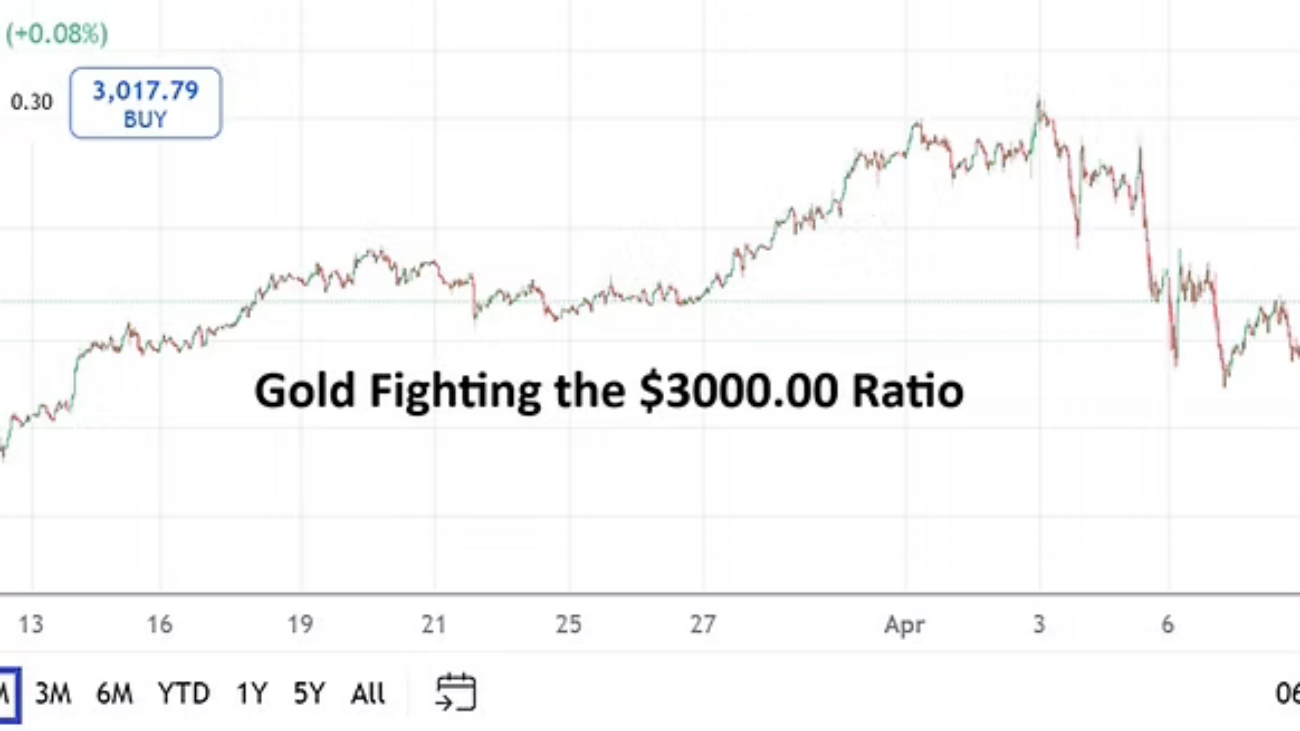
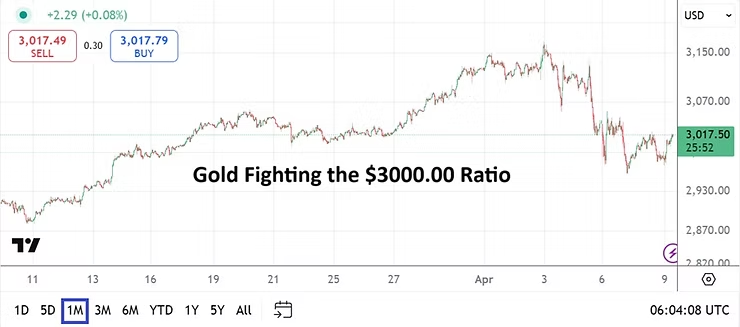
Gold One Month Chart as of 9th April 2025

Gold has stumbled back to the 3000.00 USD level, WTI Crude Oil is down and these two commodities are intriguing as a looking glass into the hearts of large players. Are people selling gold short-term because they believe inflation will lessen because of a recession which some are forecasting, or is it merely a speculative move? Gold certainly carries an important risk adverse power and its lower move showed be looked upon skeptically.

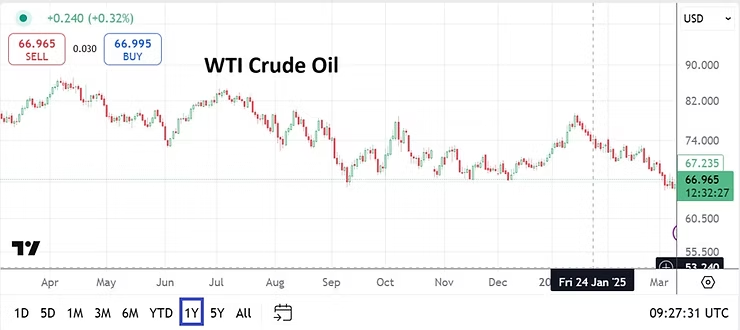
WTI Crude Oil One Month Chart as of 9th April 2025

Is WTI Crude Oil selling off because there is a belief there will be less demand due to fear tariff policies will influence a stumbling global economy? This viewpoint is plausible, the price of the commodity falling below 60.00 USD is a warning that large players are not comfortable with their outlooks and view downside risks as legitimate. The energy selloff in the past couple of hours is a negative barometer for what potentially is in store the remainder of the day in the broad markets.

The lack of finesse exhibited during these tariff negotiations is not palatable, the taste in the mouths of financial institutions has them worried. And outlooks via talking heads and analysts must be treated carefully by traders, this as they try to digest the onslaught of information and complex economic scenarios. Importantly, day traders should avoid getting caught up in the deleveraging talks surrounding the notion that large financial institutions will now pull money out of their U.S based investments in companies via stocks and Treasuries. Traders need to consider the bias of the people they are listening to and reading, and consider the scope and might of the U.S economy mid and long-term. There will be value found after the massive selloffs.

As a side note Warren Buffett has let it be known for a while he is sitting on a large amount of cash via Berkshire Hathaway. And folks should note that the annual meeting for Berkshire Hathaway is on Saturday the 3rd of May, which means people should get ready for insights from Buffett and his legions of admirers in the coming weeks. Certainly, Buffett’s comments and potential actions will be watched carefully.

The U.S Federal Reserve has taken a wait and see approach to the Trump tariff implications. Calls for an immediate cut of the Federal Funds Rate have not caused Fed Chairman Jerome Powell to shift his cautious stance yet. The coming days could bring a different attitude from the Fed if equity markets and U.S Treasuries perform badly. In the meantime some central banks have said they might become more proactive – the Reserve Bank of New Zealand cut its interest rate by 25 basis points this morning to 3.50% and said it will continue to cut their Official Cash Rate if tariff policies create more negativity.

The consideration by financial institutions regarding the beginning of a paradigm shift of the global economy is justified. However, the ramifications of the Trump tariff policies have a long way to go before these present days will be able to be pointed to as the moment the world decided that it no longer wants to participate in the U.S marketplace. That notion seems farfetched. The USD remains the world’s reserve currency, its corporations remain extraordinarily large and valuable, and U.S Treasuries as they absorb current volatility and see yields moving higher in the 30 Year bonds cannot be viewed as an economic apocalypse – yet. Yes, the warning signs are meaningful and the Trump White House will need to respond diligently.

Again, the past week of trading has seen vast disarray, but we have been here before. It is important to recognize that current circumstances however do remain dangerous, this because we are still in the midst of the crisis. At some point, egos will have to be put to the side. The Trump White House will have to negotiate with China. China may be vulnerable, but so is the U.S. Why be belligerent and show no respect to each other? The remainder of this week’s trading will produce more whipsaw results. Selling looks to be in vogue once again this morning. Behavioral sentiment and understanding its power need to be contemplated as folks await sunnier days.

post235

Predicting the Federal Reserve and President Trump’s Rhetoric

Predicting the Federal Reserve and President Trump's Rhetoric

Financial institutions have grown accustomed to the rather fierce rhetoric from President Trump in the early days of his second term. Financial institutions have also become quite used to the recent overly cautious statements from the Federal Reserve. This Wednesday the Fed’s FOMC Statement will be delivered and there will be no change to the Federal Funds Rate. The current ‘main’ borrowing rate offered by the Fed is 4.50%.

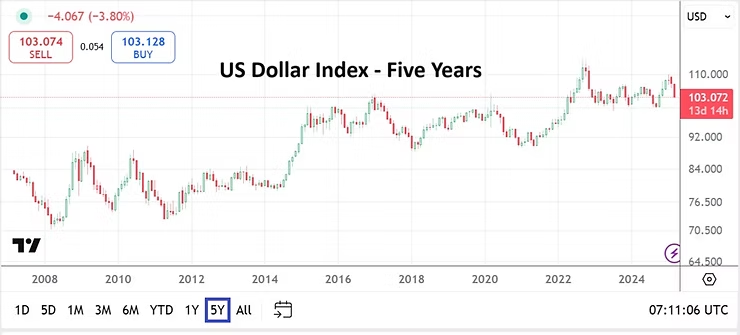
US Dollar Index Five Year Chart as of 18th March 2025

This Wednesday Fed Chairman Jerome Powell will speak about the recent CPI and PPI numbers which came in below expectations. This typically would be a good signal regarding weaker inflation. And Powell might also mention that energy prices in the U.S have started to erode. WTI Crude Oil is now trading in a sustained manner below the 70.00 USD threshold, and this will influence the potential of less inflation. It is a good development for the U.S and Federal Reserve.

However, Powell is unlikely to express the unease and anxiousness the Federal Reserve has regarding President Trump, this because the Fed certainly doesn’t want to get into an open confrontation with the White House.

The U.S Treasury is now being run Scott Bessent who was selected by President Trump. Bessent ran the Key Square Group and is well respected in financial circles, which includes vast experience in top financial institutions. Powell though perceived as pragmatic by many analysts, may not be within President Trump’s trusted inner circle like Bessent and Commerce Secretary Howard Lutnick, the former Chairman and CEO of Cantor Fitzgerald. Lutnick is perceived as a workhorse who get things done and is smart.

The Fed’s likely cautious FOMC Statement will not be enough to appease President Trump this week. While some may think Trump’s attention will be elsewhere, those who have come to understand Trump know his capability to react quickly to events should be taken seriously.

What will Bessent and Lutnick think about the Fed’s FOMC Statement and stance? Powell is not a trained economist, do Bessent and Lutnick trust Powell? One thing for certain is that Janet Yellen who served as the Fed Chairwoman before Powell, and the Treasury Secretary before Bessent is not part of the inner circle in the White House.

Powell’s loyalties may be questioned, and eyes should be kept on Trump later this week to see how the President responds to the rather cautious Federal Reserve. The Fed will certainly not want to say aloud it is waiting like everyone else regarding the effects of tariff negotiations and their implications. Powell wants to keep his job. Trump certainly wants lower interest rates. Bessent and Lutnick certainly want lower interest rates too, but like Powell these two may prove pragmatic and know inflation needs to erode further. The Treasury and Commerce secretaries may want to test chicken and egg questions. Will these two gentlemen push Trump to proactively push for lower interest rates in a louder fashion?

Day traders will have to wait to see how financial institutions react to tomorrow’s FOMC Statement – which has already been accepted as being a ‘no interest rate cut event’. And it is probably being discussed in the White House that the Fed may want to wait until early this summer – June? – to consider another interest rate cut. Which means the Fed may not be cutting interest rates mid-term, while the ECB and BoE may have to be more dovish and remain active via interest rate cuts if their economies continue to show recessionary trends.

Meaning that risk premium which was factored into the stronger USD centric buying since the Trump election on the 5th of November until the peaks in mid-January and early February, and have now reversed lower – needs to be watched technically and weighed in combination with behavioral sentiment.

Intriguingly the US Dollar Index is around levels it stood at on the 5th of November (Election Day 2024). It is also near values seen on the 15th of October. (Did financial institutions start to bet on a stronger USD around this time because of a more cautious Fed outlook and the potential Trump was going to win the election?) Raising the question, if financial institutions envision the USD can technically be weaker and attain values seen in late September and early October when the US Dollar Index was testing support levels which have held since April of 2022. The US Cash Index which stands around the 103.070 level now, was trading near 90.00 in the spring of 2021.

Trump wants lower interest rates, the Fed wants to wait on cutting the Federal Funds Rate until they have clarity regarding the results of tariff negotiations. There will be a collision between Jerome Powell and Donald Trump, the only question is when it will happen. The US Dollar Index has been lower historically. Trump, Bessent and Lutnick may not want to say it out loud, but a weaker USD in the global economy would help U.S exporters. A weaker USD may not convey the strong populist rhetoric of MAGA, but it may be economic hardware the Trump administration actually seeks. To sustain a weaker USD, inflation levels will have to erode, and interest rates will have to be lower (and another myriad of complex events have to happen), until then rhetoric and risk premium will factor into USD Forex trading for financial institutions and speculators.

post233

Stock Market Narrative and Looking for a Trump Silver Lining

Stock Market Narrative and Looking for a Trump Silver Lining

S&P 500 One Year Chart as of 14th March 2025

U.S stock markets have been hit on the nose in recent weeks, the major indices have put in rather consistent declines since the 19th of February, and the selling frenzy and particularly noise have grown worse since the start of March. Narrative regarding tariffs and a lack of clarity have certainly had a negative effect. The notion that there is a part of the media that wants to see a downturn in the markets and blame President Trump could also be factoring into concerns and fragile sentiment among indices participants. I am not blaming the media for the downturn, just pointing out that there are some entities which are not unhappy about the recent selling in the stock markets, this because it fits comfortably into their narratives.

While the bearish decline on the S&P 500, Nasdaq 100, and Dow 30 have all been easy to see, defining the dynamics of the downturn, and reactions from day traders and investors are complicated. The stock markets are not guaranteed to always go higher. This may sound naive, but people have gotten so used to the notion that U.S indices always go up that they forget about the potential for downturns. Yes, the stock markets have turned negative, but a one month decline is not uncommon historically. And some of the folks rooting against Donald Trump may want to take that into consideration.

Risk premium has certainly been factored into the markets which has influenced equities, but has created forceful moves in Forex too. Risk adverse tension because of persistent rhetoric about tariffs and their impact on behavioral sentiment cannot be discounted. However, the stock markets are still higher over the past year.

The Trump Effect is certainly being pointed at by many as the cause for the sudden downturn, but it should be remembered that all-time highs occurred after Trump won the election. Yes, the selloff has definitely happened too, and stock markets are now traversing values seen before the election. And support levels are being looked at with caution and more selling could lead to a test of psychological ratios which pressure market confidence further. Yet, it should also be remembered the S&P 500 at this time last year was around the 5,150 ratio compared to its current mark near 5,565.

Day traders have been hard pressed to find momentum with solid wagering opportunities, particularly if they have been in search of a bullish trend in recent weeks. The belief that U.S indices always go up eventually is a solid reference, but in the short-term can cause expensive losses for stubborn betters. Investors certainly have an easier time with stock indices if they practice the long-game and do not worry about the daily and monthly gyrations when their money is parked in indices. The use of leverage when betting on the daily results of stock markets can become ultra expensive for speculators, particularly when upside bias is being counted upon.

WTI Crude Oil One Year Chart as of 14th March 2015

Data this week from the U.S has actually been positive regarding lower inflation, both the CPI and PPI reports released the past two days has shown a slow down in costs. Yet, these results have little to do with President Trump, since he has only been in power less than two months. However, the lower WTI Crude Oil prices being achieved at this moment will start to factor into weaker inflation and will benefit the U.S economy.

The U.S Federal Reserve will have to be watched, because Fed officials seemingly continue to be among the crowd worried about tariff knock-on repercussions. But it should be remembered during Trump’s first term in office, there were tariff concerns too and inflation was tame. It will take a few months to still see results via inflation under this Trump administration, but if energy prices remain stable and low, this can mitigate circumstances while the tariff winds blow and their effects are waited upon. Interest rates from the Federal Reserve, U.S taxes on the public will continue to come under scrutiny. The likelihood of Trump and the Federal Reserve locking horns regarding interest rates seems to be a certainty in the coming months.

U.S stock markets have proven dangerous for bullish perspectives the past handful of weeks, but the viewpoint that markets have been too discounted will certainly start getting the attention of large players. U.S Treasury yields remain a barometer, but short-term results do not always correlate. Speculators without deep pockets may want to continue to watch from the sidelines.

Traders should also remember there is the ability to short U.S indices, but this brings up the healthy question about when will price support start to become a factor. It is nearly impossible to pick the precise moment financial assets will stage a turnaround for day traders, but history does indicate that bullish sentiment will start to be seen. Betting on a continued downturn could prove more expensive in the end, compared to speculating on upside.

Trading is not easy. It takes a lot of stamina to endure price movements that do not go according to plans. The financial markets are proving difficult for many. We are likely not out of the woods yet because clarity remains problematic, investors who have longer timeframes are likely anxious too. Price velocity needs to be given attention, markets can certainly go lower. However, at some juncture equities will start to look cheap to important long-term players. Behavioral sentiment among investors will likely also start to acclimate to the Trump Effect.

post223

USD/CAD Risk Premium Shifts from Ultra to Prudent Nervousness

USD/CAD Risk Premium Shifts from Ultra to Prudent Nervousness

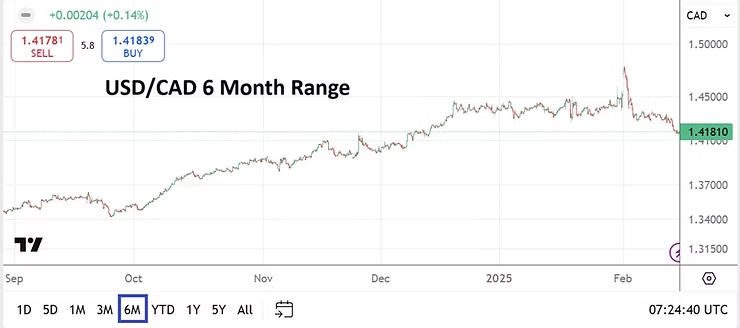
USD/CAD Six Month Chart as of 16th February 2025

The USD/CAD has experienced a bullish trend the past six months which has seen risk premium factor into the highs seen on the 3rd of February when the 1.48000 vicinity briefly witnessed a flirtation. The currency pair will enter this week near the 1.41800 area. It appears financial institutions are shifting from being ultra nervous about the rhetoric between the U.S and Canada to merely prudent.

On the 5th of November the USD/CAD was around 1.39000. The currency pair is now traversing values seen on the 10th of December. Economic data certainly factors into the USD/CAD value, but the move higher has definitely been a product of the rather raucous relationship between President Trump and Prime Minister Trudeau. The drama is not completely over and Forex traders who are looking for a sustained downturn in the USD/CAD should remain cautious regarding their wagers.

Consumer Price Index data will come from Canada this Tuesday. U.S inflation data released last week showed prices remain stubbornly above the target the Federal Reserve uses as a benchmark. Canadian inflation will likely demonstrate the same type of price pressures upward. However, these forecasted results from the Canadian CPI have likely been priced into the USD/CAD already by large players.

Which leaves us with the Trump/ Trudeau saga. And while Canada may feel like it is being unfairly pointed to as a villain by the White House, the problem for financial institutions is that Trump is firmly in power and Trudeau is about to vacate his office. The Canada Federal Election will be held on or before the 20th of October, and it is worthwhile to take into consideration the Liberal party is probably going to lose its leadership role to the Conservatives and Pierre Poilievre will be at the helm. Rest assured that financial institutions are taking this into consideration as they consider their mid-term outlooks.

The USD has shown some signs of less strength in recent trading across Forex. Financial institutions are perhaps factoring less risk premium into currencies as they anticipate tariff negotiations to provide answers and somewhat calmer conditions. Somewhat being the keyword. USD/CAD traders looking to target support levels in the near-term may try to anticipate the 1.41100 ratio as a goal. Looking for the USD/CAD to go below the 1.41000 level may be too much wishful thinking for the moment. Reversals higher in the currency pair will still be seen.

The USD/CAD will likely start to show a downturn, the question is when. Timing a sustained bearish trend in the USD/CAD for the moment remains gambling. The notion that the USD/CAD will see lower values in the mid-term however may be the right conviction, but deep pockets and patience will be needed.

post213

Federal Reserve Expected to Sound Guardedly Cautious Tmrw

Federal Reserve Expected to Sound Guardedly Cautious Tmrw

EUR/USD Five Day Chart as of 17th December 2024

Large traders are clearly bracing for the Fed tmrw as Forex produces volatile tight ranges. A rate cut is expected, but cautious Fed rhetoric will likely follow.

Forex has been a dangerous wagering ground for retail traders since the end of September. Financial institutions which clearly were betting on a more dovish Federal Reserve starting in early summer becoming a central theme into 2025 have been proven half right, this as the Fed has cut interest rates and is expected to do so tomorrow. However, being half right leaves the door open to also being half wrong, and financial institutions have reacted to this by becoming aggressive buyers of the USD since late September as perspectives have changed. The strong USD trend the past two months plus has hit some speculators hard.

The election of Donald Trump added a strong dose of impetus for USD buyers, this as the President-elect’s tough rhetoric regarding tariffs caused reactions and fear of unknown consequences. In the past couple of weeks more tranquil Forex trading has emerged and the USD finally started to give back some of its gains, yet the USD versus most major currencies, like the EUR/USD, remains within the the stronger elements of it range. While the Fed is expected to lower its Federal Funds Rate tomorrow by 0.25 to 4.50% tomorrow, traders need to remember this has been priced into Forex already. Tranquil trading the past two weeks indicates financial institutions have readjusted their outlooks to the incoming White House administration.

Now it is time to see if the U.S Federal Reserve has started to adjust their outlooks to what a Trump Presidency means. And financial institutions are keen to better understand the outlook of the U.S central bank. Inflation numbers while traversing lower are still rather stubborn and this may will not help the Fed’s mid-term mindset regarding interest rate cuts. GDP in the U.S has remained steady, and there is the potential the economy in the States will improve under Trump. Unemployment numbers while showing signs of weakness have not been terrible either. So while the Fed’s current Federal Funds Rate is higher than normal taking into consideration the historic average the past ten years, they still may not feel they have enough ability to cut interest rates too much more without sparking inflation.

A January rate cut seems unlikely at this time. If the Fed does sound guardedly cautious tomorrow, retail traders may see the USD get initially weaker due to the Fed rate cut, but then see a storm emerge and USD centric strength reappear all in the same day – perhaps in the span of minutes. Speculators need to understand that financial institutions have already baked tomorrow’s interest rate cut into the cake. So it isn’t the rate cut tomorrow that is important if it happens (if it doesn’t then that’s another story); it is what the Fed says and traders should expect them to be very cautious – because per the recent trading of the USD and a barometer it appears financial institutions are bracing for a more vigilant Fed.

Just like he has with many folks he views as uncompromising before, Donald Trump may begin to feel Federal Reserve Chairman Jerome Powell is not on his side regarding interest rate policy. If the Federal Reserve chooses to sound hesitant to cut interest rates in early 2025, it will be rather intriguing to see President-elect Trump’s response. Could a confrontation between the White House and Federal Reserve be in the cards over the next six months?

postR197.1

Return to Normal Market Conditions and a Trump Outlook

Return to Normal Market Conditions and a Trump Outlook

Retail speculators can now expect a return to calm and clear financial market outlooks, knowing that potential influences from new U.S policies will start to be considered. With the U.S elections in the rear view mirror and a Trump mandate delivered by many U.S voters, global financial institutions and traders will again be able to focus on a combination of technical perspectives, current behavioral sentiment and outlook.

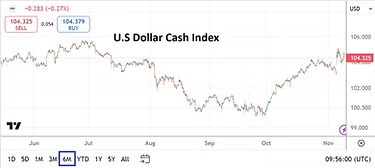
USD Cash Index Six Month Chart as of 10 November 2024

Some technical traders may believe behavioral sentiment has nothing to do with the long-term prospects of studying charts, but price action last week in FX and equities clearly showed why traders must be attuned to storms created by human emotions. Risk adverse trading has been prevalent since the end of September. A glance at the six month USD Cash Index demonstrates the extent of behavioral sentiment causing volatility the past handful of months. After believing the U.S Federal Reserve was going to become dovish which propelled the USD lower in many Forex pairs in early July, financial institutions expressed concerns about political outlook the past handful of weeks as a lack of clarity started to shroud their perspectives. USD centric positions have powered Forex.

And now that there is a Trump administration coming, and the U.S Fed has remained cautiously dovish this past Thursday, financial institutions may exhale with relief. The election on November the 5th has delivered a clear message regarding the potential for changes to U.S administration mandates regarding trade. Whether a stronger U.S economy is attained because of these hopes is not the question, it is the perception new policies will be initiated which try to deliver results which have been promised. Yes, promises can be broken.

However, the ability to believe changes are coming will affect behavioral sentiment. The Trump soundbites may prove to be rather weak in the future, but there is a chance he will also get things done regarding stronger trade agreements which protect U.S business enterprise and manufacturing. Folks can argue until they are blue in the face regarding the prospects of all things, but the U.S major equity indices rising like a rocket ride in the middle of last week is clear evidence that many believe the prospects for U.S corporations is better. No matter if it is only hopes about tax laws changing, less regulation, and better U.S trade agreements, investors are clearly betting on optimistic outlooks for the mid-term.

Dow Jones 30 One Month Chart as of 10 November 2024

Improved attitudes are great for the prospect of financial institutions, but traders still have to certainly protect their positions against volatility developing. Markets should start to return to tranquil conditions in the days ahead. U.S data will come this week which will be important via the CPI numbers on Wednesday and PPI figures this Thursday – the combination of these inflation reports will be important. Friday will see Retail Sales from the States.

The return to data as a guideline for financial institutions teamed with the Fed’s rate cut this past Thursday may be an ointment for retail traders who seek a return to normal conditions. Nervous behavioral sentiment could remain a factor in the coming days as people adjust their outlooks to a Trump White House, but the coming week should be relatively quiet regarding surprises.

It isn’t a question of liking or disliking the outcome of the U.S election, it is a question about how behavioral sentiment will now be affected. While some bring up potential tariffs as a major risk for the U.S and global economy, we have been down this road before with Trump. The risk of inflation if trade disagreements flourish should be taken seriously, but Trump has dealt with China in the past and both sides did find a way to do business in many respects. China is probably worried about Trump being in the White House again, but they likely have a gameplan for the tough business discussions ahead. The experience of having dealt with President Trump before allows China and others to know what they may face this time and empower them to be prepared.

It should be noted that Trump has shown in the past a tendency to enter negotiations with a difficult offer and permitting the other side to counter. Trump then might turn down a proposal, but often shows he is open to discussing things further and reaching a compromise. And that is the crucial word – compromise. It is about business and geopolitics. Financial institutions have dealt with a Trump White House before. This time around there is a hope Trump’s naming of a White House cabinet will not be as messy an affair as it was the first time.

The naming of Susie Wiles as the White House Chief of Staff last week looks like a good first step, also having strong Republican leadership in the Senate and House of Representatives may make things easier. While some are worried about a slew of loud rhetorical stances by Trump, perhaps pragmaticism will be practiced. And based on that rather optimistic viewpoint, retail traders may also feel businesslike conditions are ahead and that the financial markets will be a safer place to pursue speculative wagers again in the near and mid-term.

postR190.1

Interest Rate Cuts and Cautious USD Centric Gusts in Forex

Interest Rate Cuts and Cautious USD Centric Gusts in Forex

U.K inflation data this morning came in well below estimates, which almost assures the Bank of England will cut their Official Bank Rate on the 7th of November by at least 0.25 basis points. Tomorrow the European Central Bank will announce its Main Refinancing Rate and it is widely anticipated a 0.25 cut will be made official.

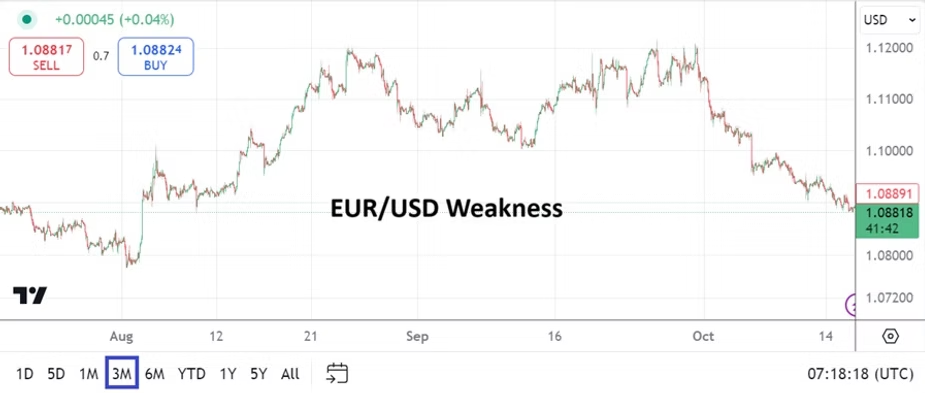
The downturns in the EUR/USD and GBP/USD are easy to see via three month technical charts, but both pairs remain above lows seen over the mid-term. However, the choppy and consistent selling in both currency pairs the past few weeks have likely caused pain for any day trader who has remained stubbornly bullish.

EUR/USD Three Month Chart as of 16th October 2024

Questions surrounding the Federal Reserve remain murky and this is creating USD strength and cautious selling in other currencies. After a rather dovish sounding round of rhetoric from Jerome Powell and a 0.50% basis point decrease in mid-September, financial institutions clearly have become more guarded about the ability of the Fed to remain aggressively dovish. Will the Fed will cut by another 0.25 on the 7th of November and then say they believe they are done being dovish until additional data backs up their stance? Is there a capability the Fed will still cut the Federal Funds Rate by 0.50 over the next handful of month as once envisioned?

GBP/USD Three Month Chart as of 16th October 2024

However, there is a chance the Fed will not cut in November and some analysts have banged their drums regarding this idea. But the Producer Price Index results last Friday did show that inflation remains under control. So I hold to the notion the Fed will cut by another 0.25 in November. Let’s see.

On Thursday the 10th of October the U.S Consumer Price Index statistics were slightly hotter than hoped for and this certainly caused some of the USD centric storms now thrashing financial institutions and day traders. It should also be mentioned that on the 4th of October the Non-Farm Employment Change numbers came in better than expected. But revisions lower in the jobs data the past handful of months needs to be remembered, and, yes, there will be another jobs report on the 1st of November. Which will be followed on the 5th by this little thing known as the U.S Presidential Election. So caution will be a solid instrument for day traders and possibly financial institutions over the next three weeks. The stronger move by the USD since the end of September has caught many folks off guard.

Gold Three Month Chart as of 16 October 2024

Gold is trading near record high levels this morning, but intriguingly WTI Crude Oil has calmed down and is challenging near-term lows. U.S Treasury yields have come down slightly to start this week. The point being that while Forex and gold have seen volatility because of interest rates uncertainty, risk taking actually appears rather solid. Yesterday did see selling in U.S equity indices, but there is no denying U.S stocks remain within sight of ultra-highs. And I might be about to sound contradictory soon, and my own personal bias needs to be carefully given consideration by myself and you the reader. Because while I feel rather comfortable about the higher values in the major U.S indices, I do not feel the same way about Chinese equities currently.

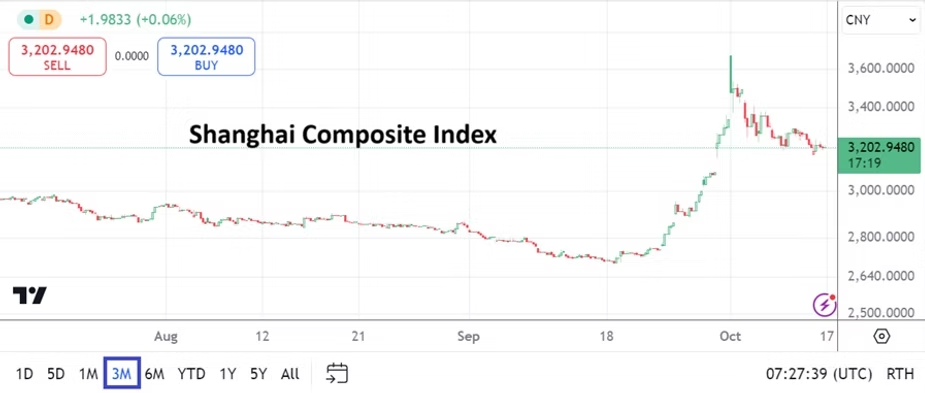
Shanghai Composite Index (SSE) Three Month Chart as of 16th October 2024

The Shanghai Composite Index has traded a little lower again, but this follows a massive swing upwards after Chinese stimulus intervention. But the U.S equity indices and the Chinese markets are not correlated. Perhaps mentioning the Shanghai Composite Index here is wrong, but the stimulus the Chinese government provided may prove to be window dressing on a storefront that suffers from poor economic infrastructure. Day traders in Asia and elsewhere who are betting on upside in Chinese equities need to be very careful, in fact they should be quite suspicious. Economic data from China to start this week has remained lackluster. On Friday GDP, Industrial Production, Retail Sales and New Home Prices data will come from China.

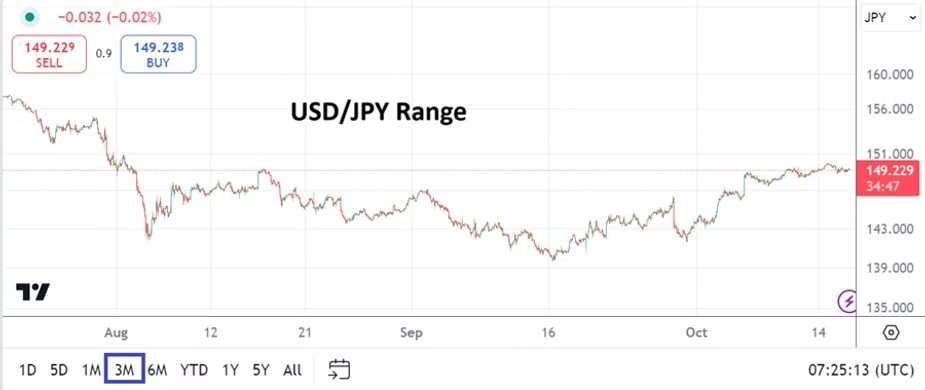
Major currencies which did very well against the USD since July have struggled the past few weeks as clouds have emerged regarding U.S interest rate outlooks. However, at some point day traders and financial institutions may believe the USD has sold off too much during this wave of caution. The JPY, GBP, and EUR have all lost value during this time. As always day traders need to remember they will find it hard to pick the correct time a strong reversal starts to take place. And it should be remembered because of the risk events lined up Forex volatility may rage a while longer. Certainly the outcome of the U.S election will be a factor in the days ahead and may create sideways trading outcomes in many assets until a winner is known.

USD/JPY Three Month Chart as of 16th October 2024

But the global markets will remain open and trade. While shouts of danger should be listened to and given heed, tomorrow’s ECB meeting and outcome will be a good start to the parade. If the ECB plays the expected song and cuts the Main Refinancing Rate by 0.25 this will prove interesting, because financial institutions have already priced in the rate cut in most cases and they will wonder if their outlooks regarding the Fed and BoE are correct. The U.S will release data tomorrow with Retail Sales and weekly Unemployment Claims. On Friday housing sector results will come from the U.S also. These reports will provide USD impetus into the markets as the near-term is considered and wagered upon.