postN26.1

USD/INR: Bounce Higher Ignites a Return to High Water Values

USD/INR: Bounce Higher Ignites a Return to High Water Values

The USD/INR is trading near 82.4350 as of this writing, which is a value the currency pair has not touched since the second week of June. While some analysts may say the move to higher ground yesterday and early this morning is based on the U.S FOMC Meeting Minutes, Wednesday’s report from the Federal Reserve likely only reinforced the bullish momentum which started earlier this week. The world of Forex can feel fickle, particularly when so many of the internal dynamics are hidden from a large segment of people who are trying to speculate on the results.

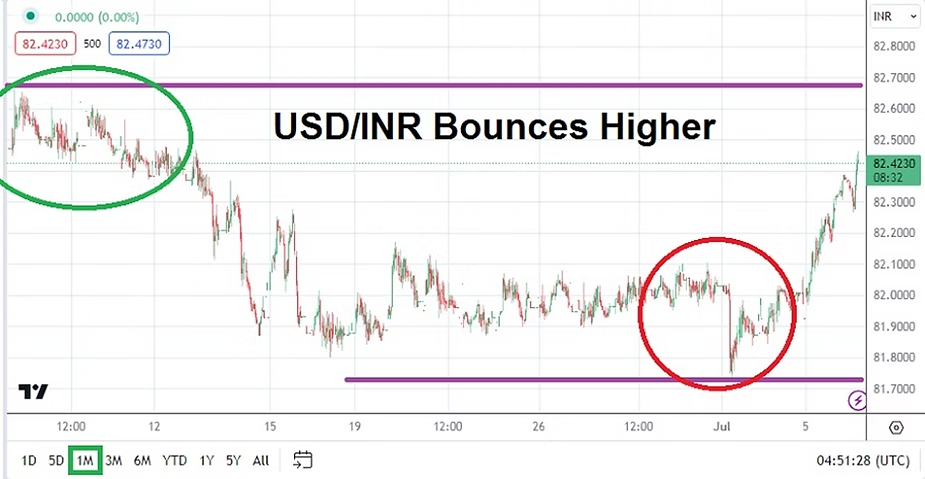
If the mechanics of the move higher which started on Monday are examined a couple of points should be considered closely, the low of the USD/INR was around 81.7300 on the 3rd of July. This low took place as most U.S financial institutions were on holiday in preparation for Tuesday’s 4th of July celebrations.

Fears of U.S Economic Prospects: Behavioral Sentiment and Stagflation Potential

The reversal higher since the 3rd of July has been pronounced, but before going into last weekend the USD/INR was largely trading within a consolidated manner near the 82.0000 level with a test of this mark having been displayed forcefully since the middle of June. A range of nearly 81.8500 to about 82.1500 largely has played out the past three weeks of Forex trading.

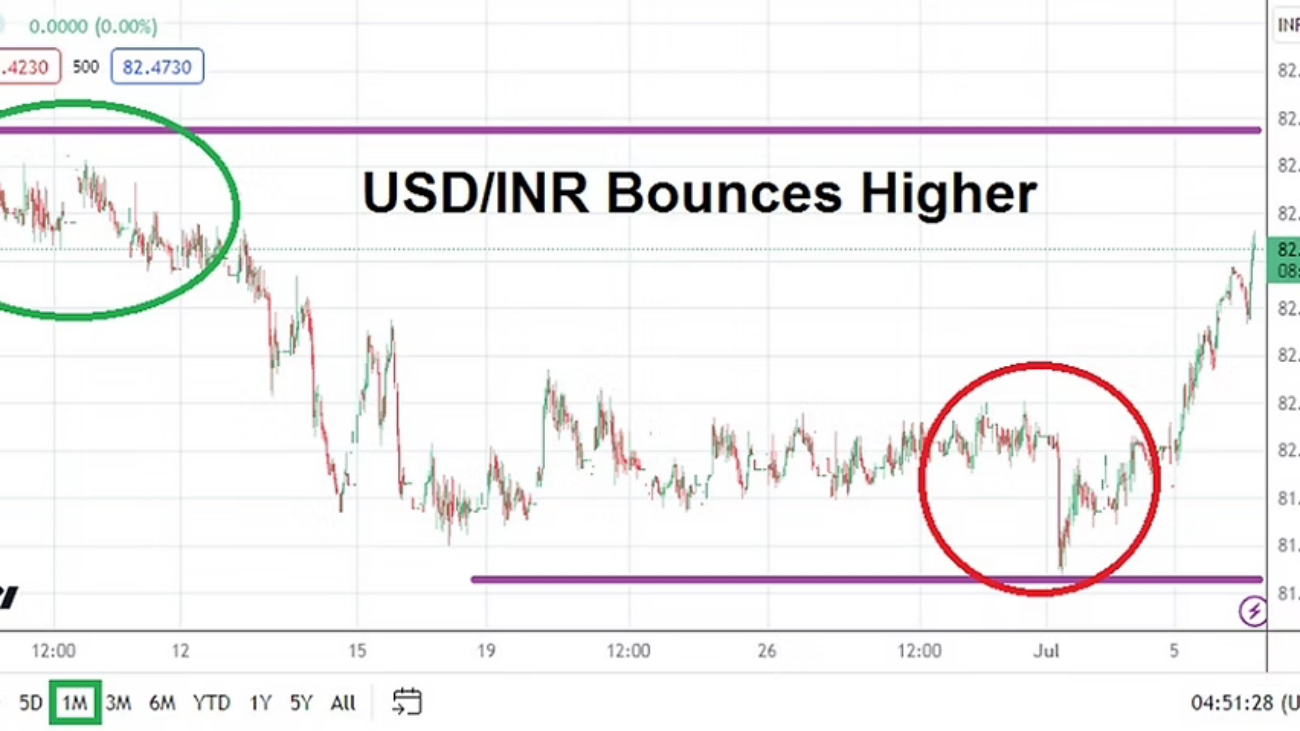
USD/INR One Month Chart as of 6th July 2023

Monday’s dip in value to lows around 81.7300 took place when there was very little volume in the USD/INR market. The depths challenged marks not seen since the first week of May.

The reversal higher the past few days is certainly part of more transactional volume starting to be pumped into the USD/INR as U.S financial institutions have returned, but they are also likely being caused by an underlying nervousness within the Forex markets which may be factoring in the notion the U.S Federal Reserve seems to be on a path which will increase the Federal Funds Rate on the 26th of July.

The behavioral sentiment being generated regarding a Federal Reserve which stays in an aggressive stance started before yesterday’s release of the FOMC Meeting Minutes. Nervous conditions have been on the surface of the broad markets because U.S inflation remains rather resilient – but also importantly because last week’s Gross Domestic Product numbers published on the 29th of June, came in stronger than anticipated. From a troubling perspective some analysts could point to the moderately improved growth and combination of stubborn inflation as a sign stagflation is starting to shadow the U.S, which would certainly be a troubling predicament.

USD/INR Move to New Highs this Morning could Ignite more Nervous Reactions

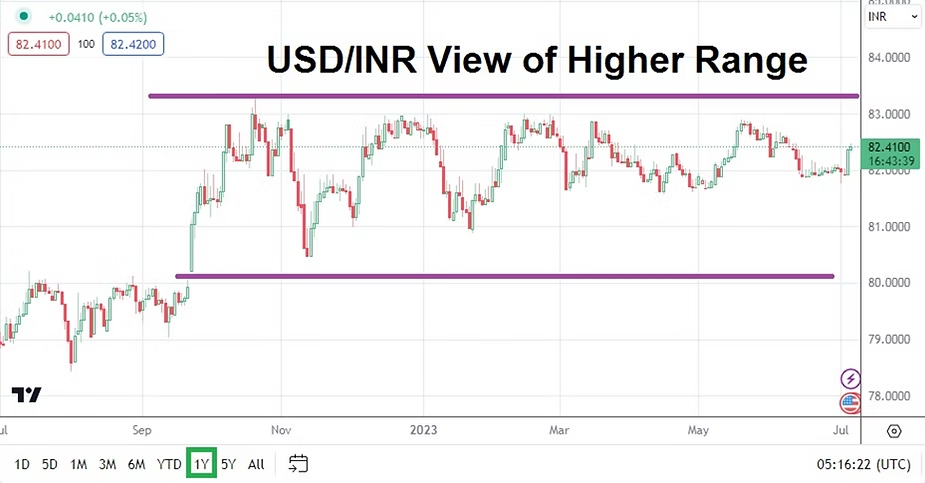
USD/INR speculators may believe the move higher in the currency pair is overdone and that values need to be lower. However, the current price of the USD/INR is one that has been experienced quite a bit since October of 2022. A look at a one year chart shows the USD/INR has returned to higher ratios of its price range which it has experienced since breaking upwards in the middle of September 2022. And to make things more interesting for technical traders, the USD/INR has actually produced a rather stable range between 81.6000 and 82.9000 since February of this year.

USD/INR One Year Chart as of 6th July 2023

While traders are certainly trying to anticipate what will happen next in the USD/INR to gain an advantage, they should remember the currency markets are almost impossible to time on a daily basis, but a look at mid-term prices does offer plenty of insights. If the USD/INR climbs too high, perhaps to the 82.5000 level the Reserve Bank of India could get a bit nervous and consider some type of intervention which it supposedly has done a few times over the past handful of months – but perhaps at higher price ratios.

USD/INR Mid-Term Considerations and the Current Price Range

However it is more cost efficient and reputably less damaging for central banks to not intervene if they do not have to, and simply let market dynamics effectively create a price for the USD/INR based on supply and demand. Meaning the current prices of the USD/INR look to be rather high, but taking into consideration the range of the Forex pair the past five months the values are not new. The prices in fact have been rather established, meaning the USD/INR may trade slightly higher, but then a lower wave of downward momentum could be anticipated.

Day traders who are gamblers may be tempted to sell the USD/INR if the currency pair finds more upwards mobility in the near-term. Trading volumes should be back to normal now that U.S financial institutions have returned from their holidays, and traders should be ready for the potential of fast price velocity developing. Risk management on wagers regarding the USD/INR are essential as always.

postN18

USD/INR: Correlation to Broad Forex Market Intriguing Signal

USD/INR: Correlation to Broad Forex Market Intriguing Signal

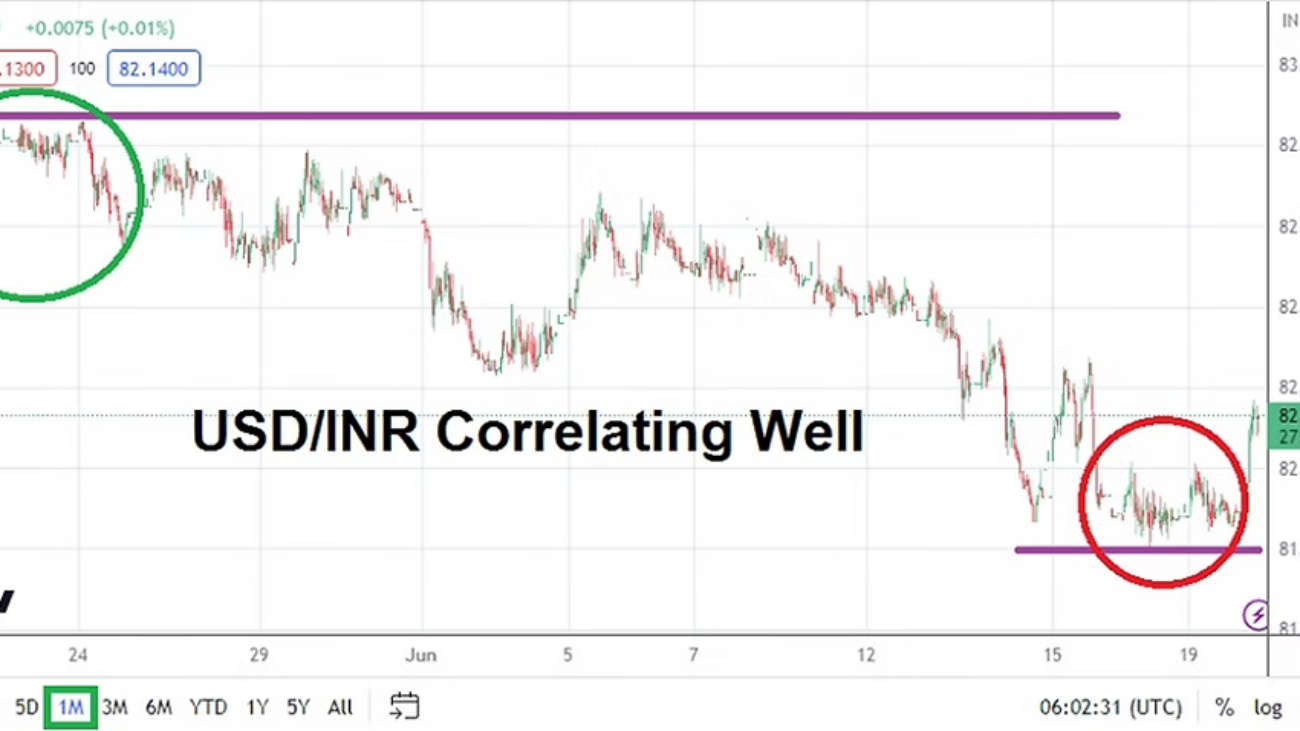
The USD/INR is near the 82.1200 price as of this writing. On Friday the USD/INR hit a low near the 81.8000 ratio. The ability to touch depths in the USD/INR before going into the weekend correlated well with the broad Forex markets, as the USD was showing signs of weakness globally. Yesterday’s trading volumes were weak because of a U.S banking holiday being observed and only in the next handful of hours will U.S financial institutions return from their long weekend, meaning an increase in volatility could arise.

The lows seen in the USD/INR on Friday challenged values not seen since the 10th and 11th of May. Interestingly support seems to have held technically, and the USD/INR was not able to test lower values seen in the middle of April and the first week of May. However, the trading conditions in the USD/INR appear to be healthy and performing in a manner that can be compared to the broad currency markets, and that is important because it may be a sign that interventions have not been necessary from the Reserve Bank of India the past few weeks.

USD/INR One Month Chart as of 20th of June

Was the Federal Reserve Decision a Pause or a Skip Regarding Interest Rates?

While the U.S Federal Reserve behaved as anticipated last Wednesday and did not raise its Federal Funds Rate, the central bank is still rattling its ‘inflation’ sword and has let it be known it can raise interest rates in July. The decision to not hike borrowing rates in June has been described widely as a pause by U.S Federal Reserve watchers, but if the Fed were to raise interest rates in July the pause would then have to be described as mere ‘skip’.

However, if broad Forex market price action is being interpreted correctly, it does appear many financial institutions are seemingly betting on a less aggressive Federal Reserve over the long-term. The question is if this is the correct outlook. Inflation remains problematic and until consistently solid drops in the costs of goods takes place, the Federal Reserve will remain rather unclear regarding its rhetoric and will likely bang on its higher interest rates ‘drum’ as a warning.

Here Comes More U.S Federal Reserve Rhetoric: Today and Tomorrow

Something USD/INR traders should pay attention to later today and tomorrow are the spoken words and gestures from Federal Reserve officials. New York Fed President John William will be speaking later today and he will certainly be asked about his outlook regarding interest rates. Because he is in charge of the New York Federal Reserve Bank, Williams remarks are watched carefully by the financial markets and his comments will certainly affect Forex and equity indices.

And then leaning into the microphone tomorrow will be Federal Reserve Chairman Jerome Powell. He will present his viewpoints and be asked questions regarding monetary policy in the House of Representatives by the Financial Services Committee on Wednesday. On Thursday, Powell will remain in Washington and perform the same show for the Senate Banking Committee. The Fed Chairman is a trained D.C insider and he will try not to inflame the financial markets with any surprises.

Outlook for the USD/INR is Choppy in the Near-Term

A reversal higher in the USD/INR early this morning has also correlated to the broad Forex market. It is likely the USD has been viewed as potentially oversold in the short-term. However, the slight moves higher might also be a natural cautious reaction to the coming rhetoric from John Williams and Jerome Powell. Because of this USD/INR traders should expect rather choppy conditions to flourish near-term.

Friday’s trading for the USD/INR will get important U.S economic data via the Flash Manufacturing and Services PMI reports. If the USD/INR remains below resistance levels of 82.1500 and 82.2000 consistently over the next few days leading into Friday’s trading, this could mean the broad Forex market remains bearish regarding its outlook for the USD. Speculators should be careful over the next 24 hours. It should also be mentioned that if Jerome Powell doesn’t surprise the marketplace tomorrow, he will not be likely to offer any new information the following day in Washington, meaning tomorrow’s comments from the Fed Chairman are the words likely to cause volatility if this happens.

postN10.1

USD/INR: Elevated Range as Questions about Values Persists

USD/INR: Elevated Range as Questions about Values Persists

The USD/INR has traded the past week approximately between the 82.2200 and 82.7000 ratios. Plenty of discussion regarding what the Reserve Bank of India has been doing as they battle the strong USD has been whispered openly, and is being questioned from financial institutions and speculators. Day traders who have been trying to wager on the value of the Indian Rupee have likely found the waters difficult to swim. As of this writing the USD/INR is near 82.5200.

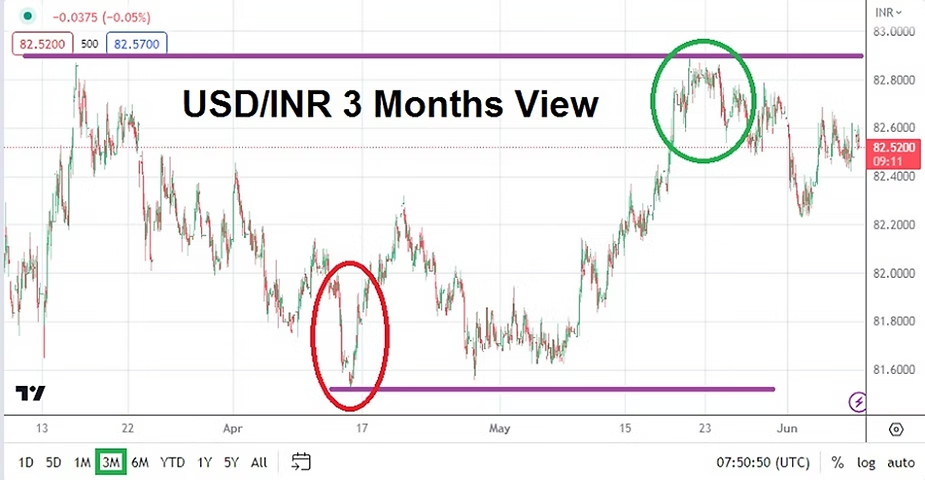
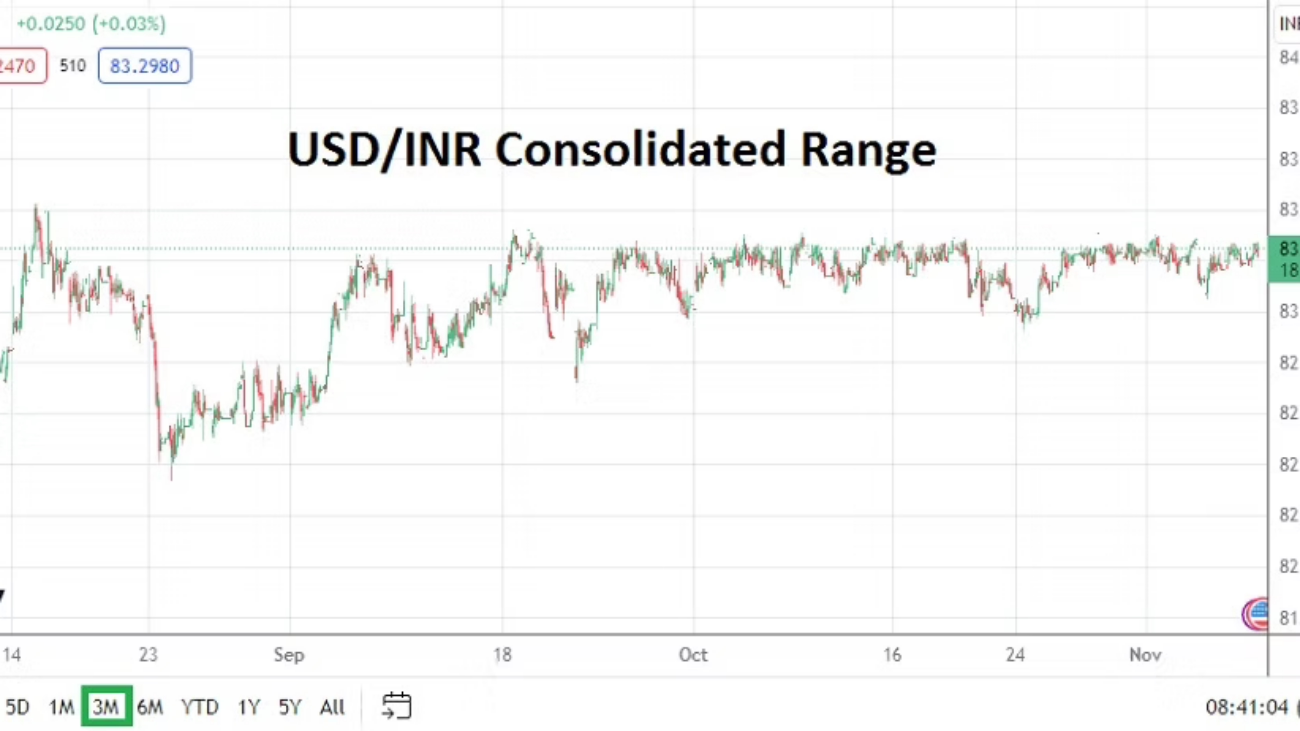
USD/INR Three Month Chart as of 8th June 2023

Last Wednesday’s sudden rhetoric, from two U.S Federal Reserve officials caused mayhem briefly within the USD/INR. The currency pair got hit after India’s official trading hours closed, and essentially moved in overseas accounts based on the spoken words from the two Fed members stating the U.S central bank should not raise the Federal Funds Rate on the 14th of June. These sudden Forex moves hurt many USD/INR speculators. After this rhetoric from the two well-regarded FOMC members, like clockwork U.S economic data provided a counter punch last Friday with better than anticipated Non-Farm Employment Change numbers, this while inflation results also remained persistent.

Three Month View of the USD/INR offers Sentiment Insights and perhaps Clues

The past three months of trading in the USD/INR have produced a rather rocky price trend. A low of nearly 81.5200 was seen on the 14th of April, which turned into a high of approximately 82.9000 on the 19th of May. Intriguingly while many USD/INR speculators may be looking at the U.S Federal Reserve and casting blame, questioning the potential interventions by the Reserve Bank of India remains relevant. The Reserve Bank of India has actually been rather tranquil regarding its use of interest rate hikes; it has not raised the key lending rate aggressively in India like many of its major global counterparts. Why is this?

Is there a potential the Reserve Bank of India and the government has wanted the Indian Rupee to get weaker? Deflating the Indian Rupee’s value in order to potentially create an unseen tax is considered an old trick by economists. This because some believe inflation is a way to tax people without actually raising interest rates, the deflated value of a currency makes it easier for governments to sometimes repay debt, based on the notion the money they are now using is cheaper compared to when the Indian Rupee’s value was better.

Where is the USD/INR Going to Go Next?

I am no economist; my specialty tends to be risk analysis. There is an old joke, ‘why did god create economists? To make weathermen look good.’ The point is that economists often get their outlooks wrong, but we cannot blame only economists for getting their outlooks wrong, many of us do. The USD/INR has a tough few days ahead, it must deal with nervous market sentiment generated from a lack of clarity via the U.S Federal Reserve. Looking for correlations in the Forex market is proving difficult for the moment for all short-term speculators. Choppy trading in the USD/INR has been noticeable the past few days, this Monday’s upwards trend has turned into near-term consolidated day trading. Other major currency pairs are turning in rather turbulent results also without a firm technical stance.

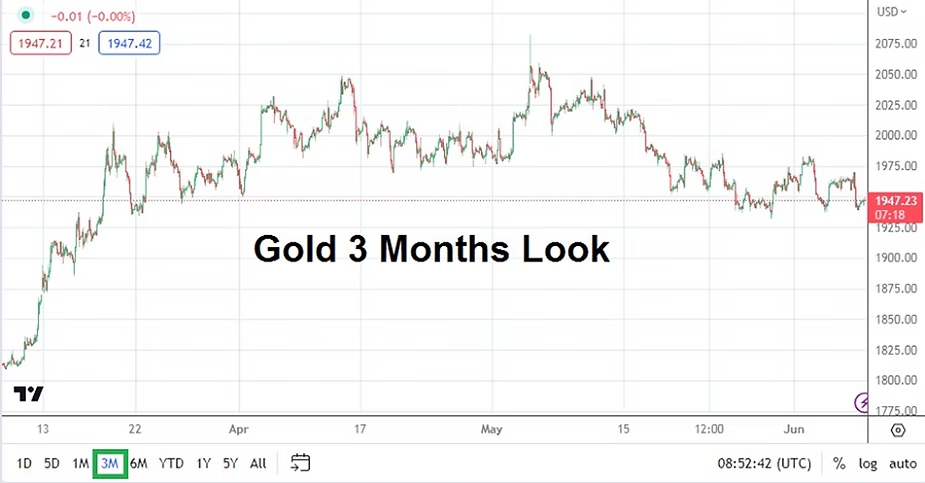
Gold Three Month Chart as of 8th of June 2023

After speaking with many associates in the financial sector the past week, it appears many people believe the Fed should stop raising interest rates for the time being. Some financial institutions seem to be leaning in this direction, but there are caution signs all over that warn about potential surprises from the U.S Federal Reserve.

Yesterday the Bank of Canada raised its Overnight Rate by another 0.25%, when most analysts believed they would pause. Another interesting sign is the current price of Gold near 1950.00. The recent lower price could indicate some financial houses believe the Federal Reserve may actually remain active regarding further interest rate hikes, this because the price of Gold has tended to rise when the perception existed the Federal Reserve is going to be dovish. Gold’s downward price action should raise suspicious eyebrows.

But then again, I am not an economist; I am merely a risk analyst. So my words to you are, be careful if you are wagering on the USD/INR before the U.S Federal Reserve’s pronouncements next Wednesday on the 14th of June.

post40

USD/INR: Narrow Price Range as Nervous Sentiment Exhibited

USD/INR: Narrow Price Range as Nervous Sentiment Exhibited

The USD/INR has delivered a rather narrow price range the past four days of trading as the currency pair awaits impetus from crucial U.S risk events.

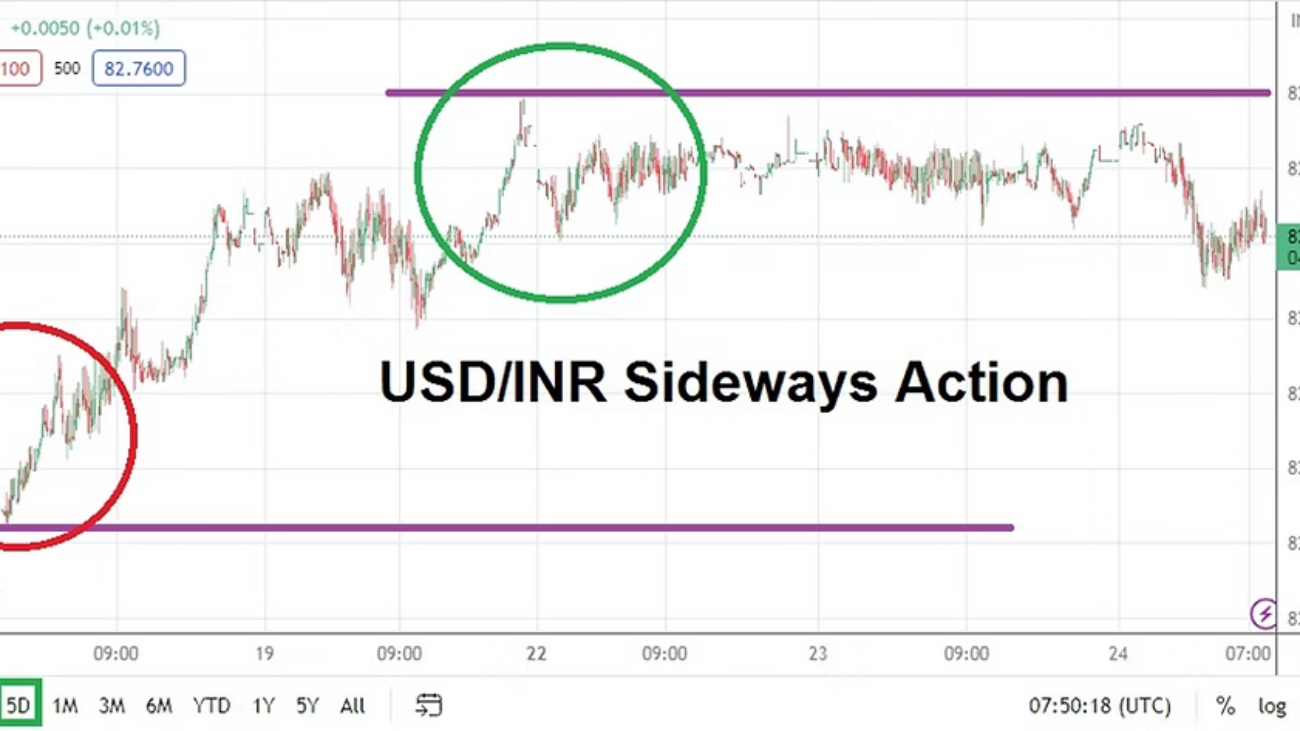
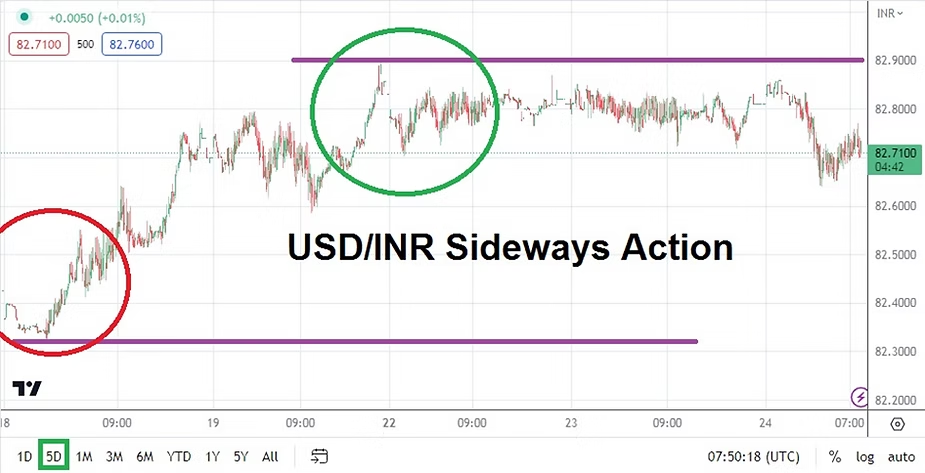
The USD/INR is trading near the 82.7000 ratio as of this writing. While the currency pair over the past month has seen a rather incremental climb higher, the past handful of days has seen rather sideways price range emerge. Talk about Reserve Bank of India intervention has been discussed widely and this has caused speculative caution too. However, risk events from the U.S which will be delivered soon are also a catalyst for conservative trading in the USD/INR and broad Forex markets globally.

Trading Tip Regarding Bias that Forex Speculators should try to Avoid

A very important aspect for USD/INR traders to consider is that they should remove any bias they may feel personally regarding the Indian Rupee. Traders closely connected to the currency they are trading, particularly if they are citizens of the nation; tend to believe their national currency should always be stronger no matter the circumstances. This notion of bias does not always work out well for traders with a nationalist leaning.

The Indian Rupee is no different regarding its ability to maneuver against the USD like many other major currencies. While the Indian Rupee certainly has its own financial capabilities, the USD remains the dominant currency on the block and affects most outcomes. If a trader can remove their bias and love of their nation from their trading sentiment, this often makes it easier to have a more realistic viewpoint about potential price direction in the short-term and long-term. The Indian Rupee is an important global currency, one that will grow in stature, but traders should remember current circumstances too.

USD/INR Five Day Chart as of 24th May 2023

U.S Debt Ceiling Concerns and the Upwards Drift of the USD/INR Causing Problems

Concerns are being voiced regarding the failure of U.S debt ceiling talks, the inability to not find an agreement in the U.S Congress is problematic. June 1st is supposedly the date the U.S government must reach a conclusion. The past week has seen signs from Democrats and Republicans acknowledging the importance of finding a settlement, but political rancor still is making a mess of the situation. Trading institutions are certainly not happy about the loud debate and could ‘punish’ financial assets more over the short-term until a debt ceiling compromise is reached.

The move higher in the USD/INR has likely caught many speculators by surprise the past month. However, the drift upwards has correlated to the broad Forex markets the past couple of weeks, this as the USD has turned stronger against many major currencies. The USD/INR essentially went from 82.1200 to its current price since the 15th of May. The Forex pair was trading near 81.6000 on the 4th of May. The temptation to sell the USD/INR the past couple of weeks has likely been strong as traders flirted with the notion technically that the currency would have to reignite its downwards path, but that clearly has not happened.

Today and the remainder of the week, the U.S has important risk events on the calendar. U.S Treasury Secretary Janet Yellen will be speaking and will certainly be asked to state her opinion on the debt ceiling talks. She will likely try to offer a neutral tone and not scare the financial markets. However, she can certainly be counted upon to say it is important to reach an agreement so the U.S can continue paying its financial obligations.

Perhaps more important than Treasury Yellen’s talk this afternoon, will be the U.S Federal Reserve’s FOMC Meeting Minutes publication later in the day. Financial institutions globally are nervous about the Fed’s interest rate outlook regarding its June Federal Funds Rate decision. Many analysts have predicted the U.S central bank will halt interest rate hikes and not increase on the 14th of June. Yet inflation data from the U.S remains problematic. Today’s FOMC Meeting Minutes text will provide insights regarding the Federal Reserve’s last meeting and give an inside look towards its leanings for a potential hike or pause.

USD/INR traders should also be aware that important Gross Domestic Product data will come tomorrow which will offer details regarding U.S growth. On Friday the U.S will release Core Personal Consumption Expenditure statistics and this will provide inflation results, and the outcome will certainly influence the U.S Federal Reserve’s June interest rate decision.