India Rupee 20260416

Progression Upwards for Indian Rupee and Catalysts

USD/INR Persistent Trajectory Remains in Force and Mid-Term Concerns

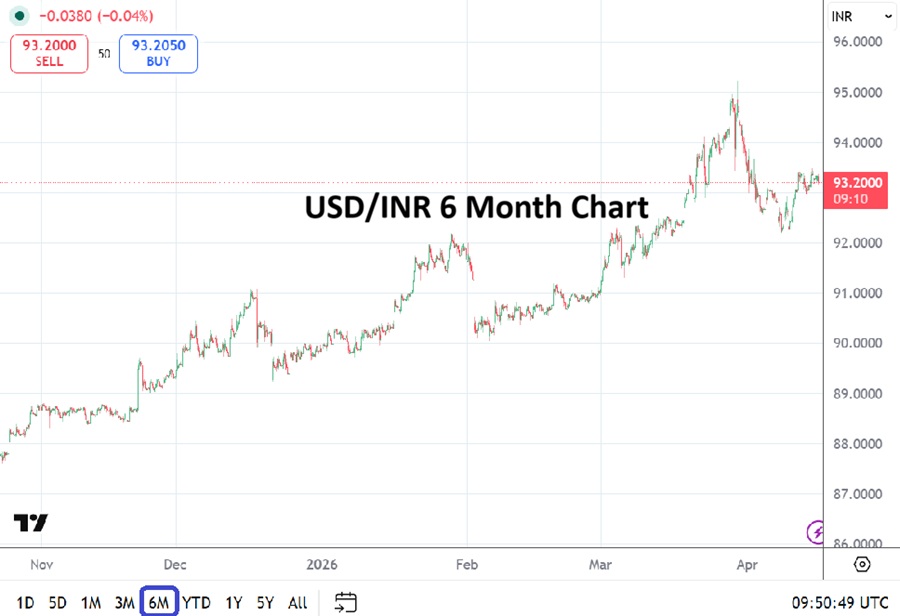
As of this writing the USD/INR is within the 93.2000 vicinity. The price of Gold is around $4,810.00 and Silver close to 79.50. Importantly, WTI Crude Oil is trading around $89.25. Global markets have turned in solid performances the past two weeks, this has been a two step progression for most investors. 

Indian financial institutions began to digest their worries regarding the Iranian war late in March – perhaps acknowledging the risks and ramifications, while adjusting outlooks. Then on Tuesday the 7th of April the establishment of a ceasefire was announced. However, after hitting a low of around the 92.2200 realm on the 8th of April, the USD/INR is back within higher ratios.

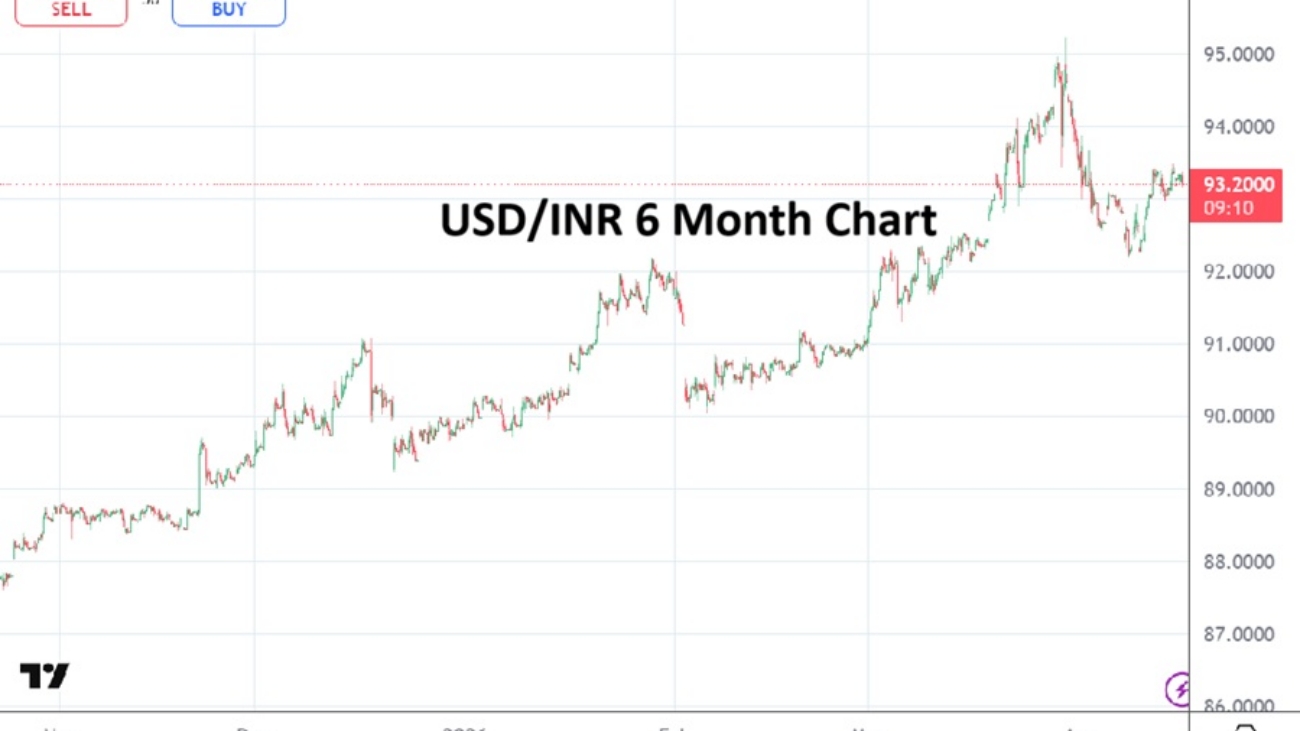
USD/INR Six Month Price Chart as of 16th April 2026

Yes, the USD/INR had been traversing above the 95.0000 ratio late in March, so it can be said the Indian Rupee has gotten stronger. Yet, there will not be many willing participants who will join a parade with the belief this lower trend can be sustained. The bullish trajectory of the USD/INR is not going to vanish.

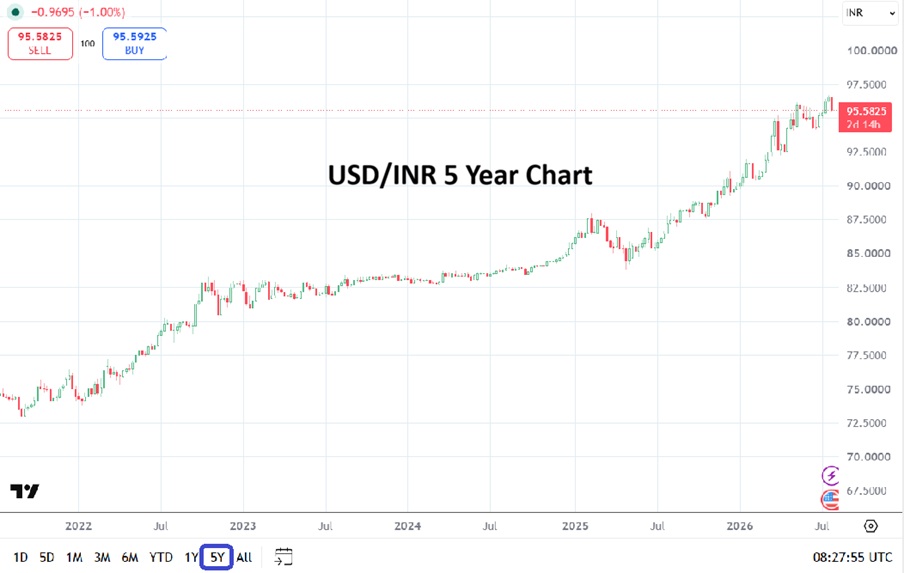
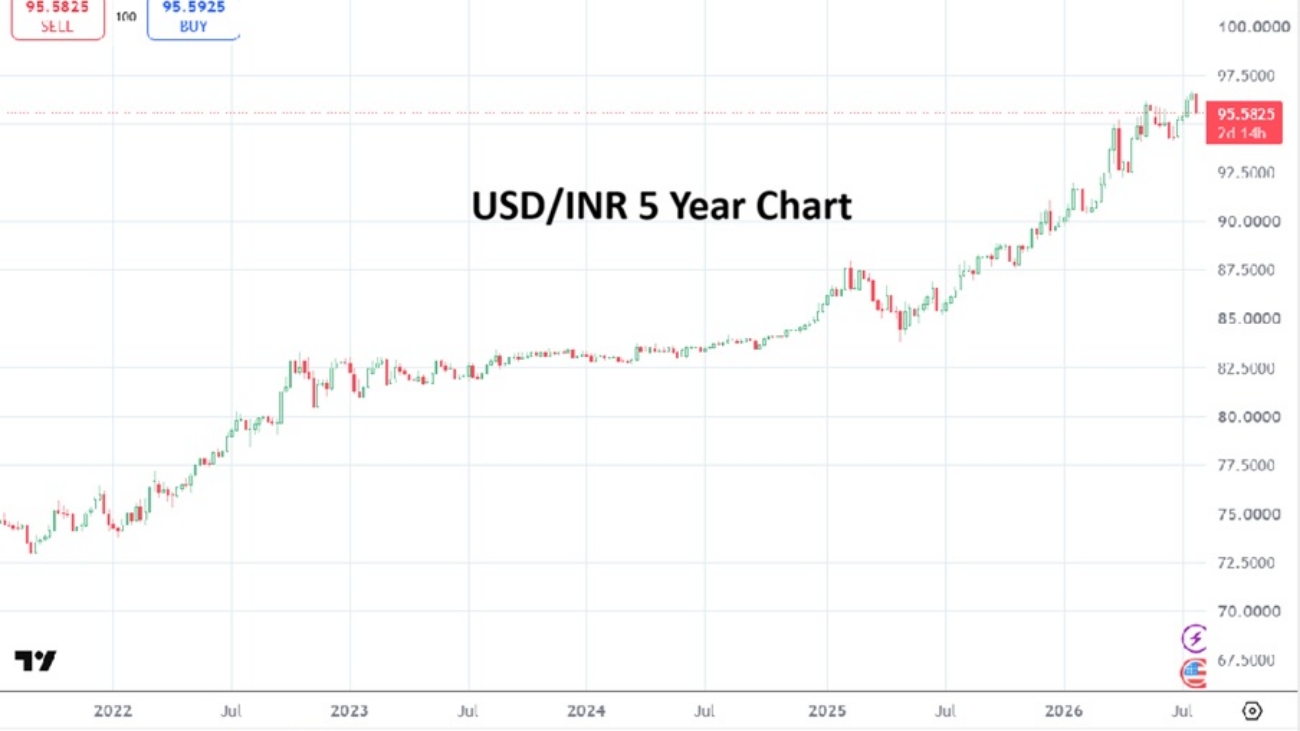
On the 24th of October 2025, the USD/INR was near 87.7500. At this time last year the currency pair was close to 85.5000. A persistent and long-term move higher has been the theme in the USD/INR. Weakness in the Indian Rupee has been part of India’s economic story rather consistently for a handful of years. 

Narendra Modi has been in power since 2014, he is serving his third term as Prime Minister. His political party the BJP clearly has its chosen people within the Reserve Bank of India.

The government’s position of allowing the Indian Rupee to be weaker is not something they will want to state out loud as part of their mandate, but it is clearly not bothering them.

The pursuit of creating a stronger industrial and manufacturing base for India, including IT and software via good exchange rates for international clients is seen as a cornerstone to build demand. The quality of work and technology provided by the Indian workforce is good and this allows global clients to foster solid relationships with Indian companies.

However, the rise of the USD/INR to above the 95.0000 level in late March was a warning sign, that sometimes price velocity in Forex can become dangerous. And the Iranian war although enjoying a week and half of less noise, still could escalate into a problematic scenario for India that could cause additional concerns in Indian financial institutions who are trying to gauge their mid-term outlooks.

The USD/INR is an important part of this economic math and the prospect that higher energy costs, or in a worst case scenario – shortages incur hardship for Indian citizens and companies is an actual concern.

The current situation in the Hormuz Strait and availability of Crude Oil is significantly important for India. So is supply of LNG (liquefied natural gas) which Qatar, Oman and the UAE play a role. The supply of energy presents a glaring dark shadow for the prospects of the Indian economy should there be shortfalls. 

The 93.5000 resistance level has been durable since early April in the USD/INR. Stability of the exchange rate is crucial for a wide range of business in India, including banking and financial institutions active in the Bombay stock market – particularly since a weaker India Rupee opens the door to Forex concerns for foreign investors who do not have the ability to hedge if they are exposed via the INR too much. Foreign investors are needed in the Nifty indices to help values.

The near-term is likely going to remain a difficult path for the USD/INR and its outlook. The positive sentiment which has prevailed the past couple of weeks has been welcome and certainly stable conditions are hoped for so equilibrium can be kept. However, if the Iranian situation manifests into open military conflict again, or if there is a disruption of supply of energy that cannot be easily solved by India – then the USD/INR could once again face price velocity upwards that is uncomfortable.

While China may be getting the headlines regarding potential ramifications of its Crude Oil supply being threatened, India is estimated to have consumption that is ranked as the 3rd biggest globally. India’s ability to get a supply of energy from a diversified stable of sources is a key for the nation moving forward. 

The USD/INR will continue to move higher, the question is how fast? A slow steady rise in the currency pair – again, this will not be a spoken mandate by the Indian government – will continue. The fear of a rapid debasement is a concern. Financial institutions in India need steady emotions and are certainly hoping for the Iranian war to conclude with a sliver of optimism. 

Copy and paste the text from AMT that you want to share

Post306

India Insider: Reserve Bank of India Intervention is Limited

India Insider: Reserve Bank of India Intervention is Limited

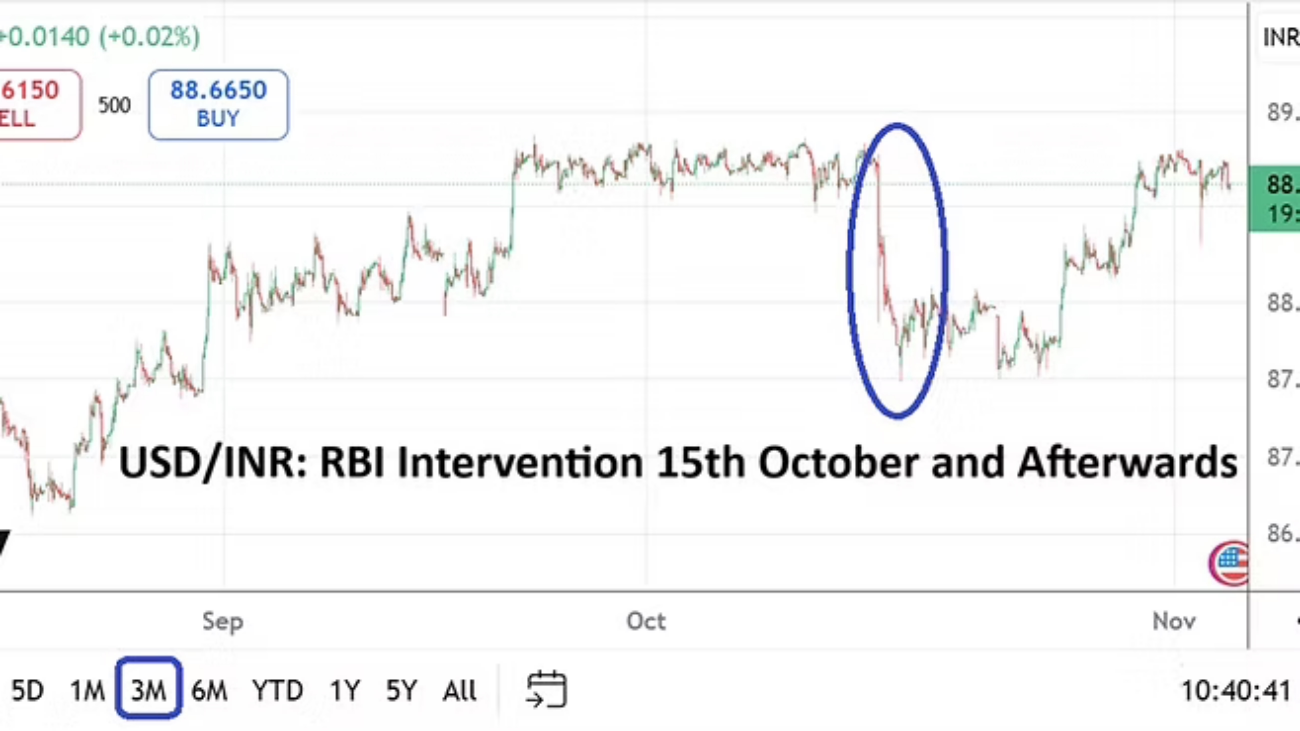
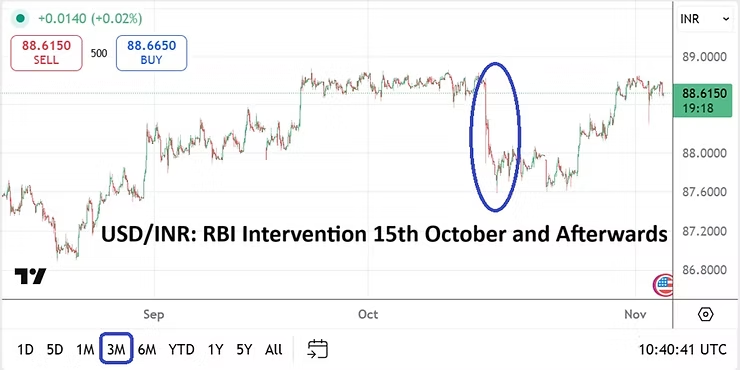
After weeks of steady appreciation due to Reserve Bank of India intervention on the 15th of October, the Indian Rupee has now returned to the same 88.72 levels against the USD before the policy action was enacted. The RBI’s recent offensive against speculators may have calmed the market temporarily, but it reflects a reactionary and short-term approach to deeper structural pressures facing India’s external administrative policies regarding the USD/INR.

USD/INR Three Month Chart as of 5th November 2025

Despite the Reserve Bank of India’s efforts to influence the cash forward market, where Dollar shorts rose by 6 billion USD in September to $59 billion, fundamentals suggest that Rupee weakness is not purely speculative. It is a rational market adjustment due to rising trade barriers amid U.S tariffs on India’s merchandise exports. The added uncertainty regarding trade caused the Rupee to naturally absorb external shocks. Merchandise exports to the U.S fell 12% in September year on year, according to official India data, prompting some calls for government relief.

India’s Foreign Remittances & H1-B Visa Fee Hike

According to World Bank data, India received about 137.7 billion USD in personal remittances from abroad in 2024. From that amount, around $40 billion is coming from the United States. The Trump administration raised the cost of H1-B visa fees from below 10,000 USD to nearly $100,000. And there is now also an increased likelihood of measures aimed at limiting digitally delivered software services to the U.S from India. These combined measures would substantially reduce Dollar receipts via exports of technology driven software and IT services, as well as remittances from a reduction of workers on temporary U.S visas providing on site services to U.S clients. USD inflow has been crucial for India’s balance of payment’s stability.

Reduction of USD reserves when the trade deficit is already rising because of hikes caused by tariffs on India’s exports would widen the current account deficit. Concerns about a decrease in remittances leading to a potentially significant decline of India’s USD reserve ability is possibly discouraging the India Reserve Bank to voluntarily expend reserves to support the Rupee.

Service Exports Cushion India’s Balance of Payments:

India’s total service exports touched 400 Billion USD over the past year with a predominant amount coming from the U.S. In other words, India has had a $202 billion in services trade surplus over the last 12 months, which covered almost 114% of India’s merchandise trade deficit in 2024-25.

India’s goods trade deficit is matched by a services surplus, plus net foreign personal remittances. This USD equation is under threat because of prolonged paralysis from stubborn US and India trade negotiations debating Russian Oil usage and the U.S demand to allow agricultural products into India.

Foreign Investors Selling Indian Equities

In addition, the Indian Rupee is not getting support from investment portfolio inflows. A shortfall of AI related avenues in the nation’s tech sector, and perhaps because of valuations considered too rich, foreign Investors have pulled 17 billion USD so far this year. This sum is more than any other emerging market, which is eating away at the Reserve Bank of India’s FX reserves too.

Global and India-specific uncertainties spurred by the Trump administration’s actions are setting off a retreat of footloose portfolio capital invested into India’s equity and bond markets. If the Reserve Bank of India was confident that inflows of foreign capital would replenish reserves it would likely help the Indian Rupee, and thus investor confidence coming from abroad.

Policy Irony and the Limits of Intervention

The U.S. remains India’s largest export market, but new levies of 50% tariffs are hurting labor-intensive sectors such as textiles, leather, footwear, and gems & jewelry.

While concerns about imported inflation are valid, the benefits of a weaker Rupee should not be overlooked. A mild depreciation could boost India’s service exports, improve the balance of payments, and partly offset the effects of U.S. tariffs on merchandise exports.

A material improvement in U.S and India trade relations is needed. Until a restoration is achieved in relations and a merchandise surplus is possible, alongside healthy services and remittance inflows occurring again, the Rupee’s weakness is likely to persist. In the meantime, Reserve Bank of India interventions could prove to be a short term tactic that proves vulnerable mid-term to the influence of market forces known and unexpected.

postN69.1

USD/INR and the 83.3000 Resistance Level is Not an Illusion

USD/INR and the 83.3000 Resistance Level is Not an Illusion

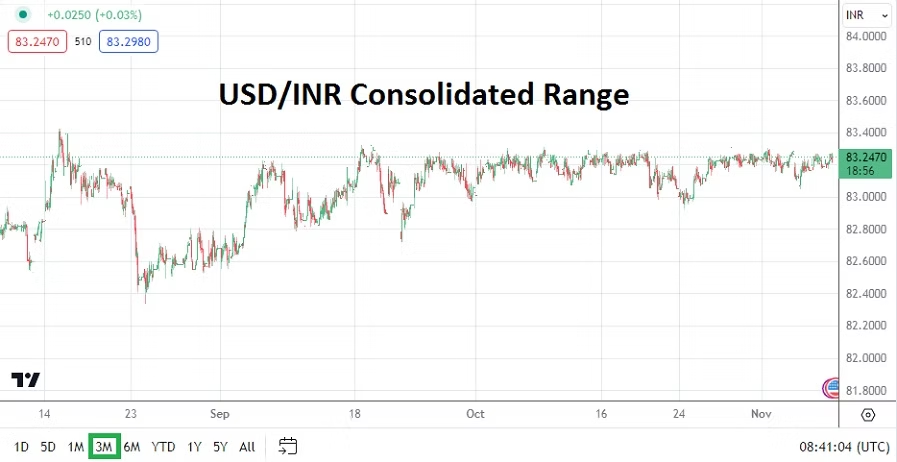
Traders of the USD/INR for those who remain short-term speculators of the currency pair, as opposed to financial institutions which position holdings for corporations and large investors, may be perplexed about values and momentum over the past three months. It is abundantly clear the USD/INR faces a rather strong force when it approaches the 83.3000 mark. Yes, sometimes the Forex pair has traversed above this level, but the moves have been momentary and have been pushed back.

USD/INR Three Month Chart as of 8th of November 2023

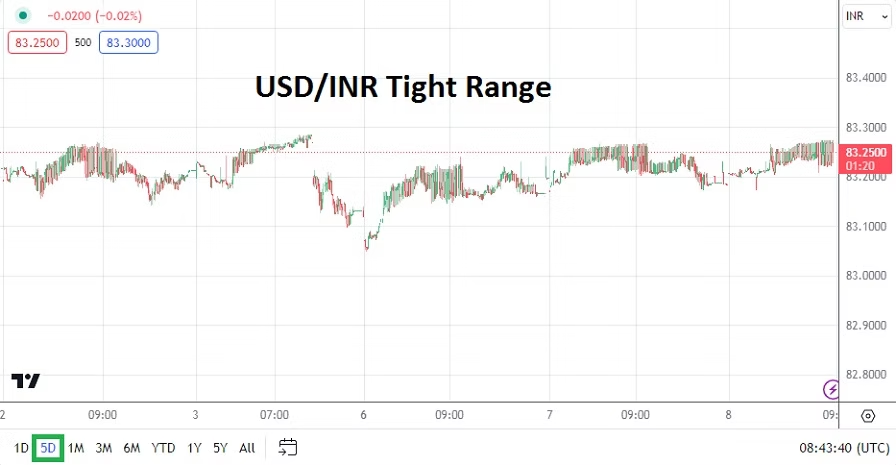
It is not a conspiratorial thought to simply look at the three month chart of the USD/INR and see that when the 83.3000 level has come into play that selling pressure mounts. And it is not news the Reserve Bank of India is involved in the durability of this resistance level. Simply put the USD/INR doesn’t trade in a ‘free’ market manner, the constraints and persistence of the Reserve Bank of India to maintain a structured resistance value for the USD/INR is evident. The past month, and last five days of trading via technical charts shows the same dynamic. And it is important to point out the resistance level of 83.3000 has been sustained over the mid-term when global risk adverse trading has seen the USD gain strength against many other major currency pairs, meaning the USD/INR should have traded at higher levels.

USD/INR Five Day Chart as of 8th of November 2023

The Indian government is managing the USD/INR with a philosophy which allows the currency pair to remain within its weaker elements regarding the Indian Rupee, but not allow it to lose too much value. And it must be pointed out that the USD/INR does show an ability to trade lower and the Reserve Bank of India doesn’t appear to mind if this happens. The 83.0000 was challenged from about the 20th to the 24th of October rather consistently and even traded at a low of 82.9300 very briefly.

As global risk conditions remain fragile the USD has shown an ability to remain strong against most major currency pairs, but risk appetite has picked up over the past handful of days. The 83.2000 to 83.2500 range of the USD/INR has been tested with momentary bursts lower. Last week’s U.S Federal Funds Rate was held in place as expected at 5.50%, and financial institutions are starting to believe the Fed has reached the end of its interest rate cycle which has seen consistent hikes. Yes, the U.S is likely to keep its higher interest rates in place over the mid-term, but U.S Treasuries yields are starting to show signs of an incremental decline. If U.S bonds start to decrease via their yields this will help soften the USD.

Gold One Month Chart as of 8th November 2023

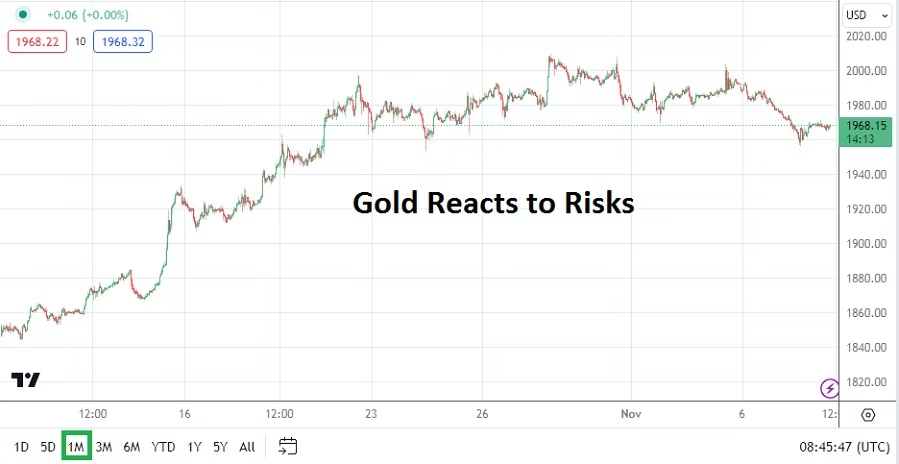
Gold has started to come of its highs, but still remains within an elevated range per its one month chart. If the precious metal continues to trade around its current values, this can be taken as a sign risk sentiment wants to shift. The key word is ‘wants’ and there are no guarantees. While financial institutions have shown the ability to digest the escalated concerns because of the Middle East crisis there is always the possibility developing news can escalate quickly. But will it?

Unfortunately, the media and pundits largely control the narrative that is given to the public. Most traders are not privy to the inner workings of the ‘temples’ in which governments work. The Reserve Bank of India doesn’t issue a statement every time it makes a move within the USD/INR. Nor do the governments of the world which may say one thing publicly and say something else behind closed doors.

Day traders want to be told what to do and how they should react. First off risk management is essential, entry orders are crucial so fills meet expectations. However, achieving the direction desired and wagered upon is a gamble. Take profit and stop losses orders are urged as protection.

If the Reserve Bank of India had not intervened in the USD/INR it is likely the currency pair would have reached the 84.0000 level and higher over the past three months. The question is if risks will decrease now that the U.S Federal Reserve seems prepared to potentially take a less aggressive stance. While it seems logical the USD/INR should have been trading at higher values, the control the government of India has practiced has kept the currency pair within a ‘safe place’ while risks were heightened.

If behavioral sentiment conditions start to turn more tranquil and risk appetite increases it is possible the USD/INR could actually continue to show some selling momentum. However, traders looking for declines in the USD/INR need to be conservative and they might want to wait for the currency pair to come within sight of resistance levels to wager on short and near-term movements lower. Overly ambitious selling is likely to remain an expensive mistake until the U.S equity markets show sustained buying and U.S Treasury yields are no longer threatening long-term highs. Until there is a legitimate shift in behavioral sentiment, looking for quick hitting changes of value in the USD/INR needs to remain the focus for day traders.

postN52

Risks: Short Term Market Chaos and Long Term Viewpoints

Risks: Short Term Market Chaos and Long Term Viewpoints

Today I got the date wrong, I thought it was Friday the 9th of September, turns out that I caught the error and managed to hide some of the wrong usage. In another calendar gone wrong saga, a couple of years ago I believed there would be a 31st of April on a following day.

I couldn’t understand why my significant other was giving me an odd look when I asked her several times to confirm an event we were scheduled to attend that Sunday, which turned out to be the 1st of May. She thought I was playing a late April Fools’ Day joke, but no I simply did not know there wasn’t a 31st of April. I learned to accept I was wrong.

I don’t know everything. This summer has produced wicked results in Forex and the affects have been hard to swallow for many speculators. The strength of the USD has been steadfast in many cases. The upwards path of U.S Treasury yields have certainly shadowed the markets. The slight downhill slope of U.S stock indices this week has added some loud chatter, this as media pundits clamor for the next apocalypse to gain ratings.

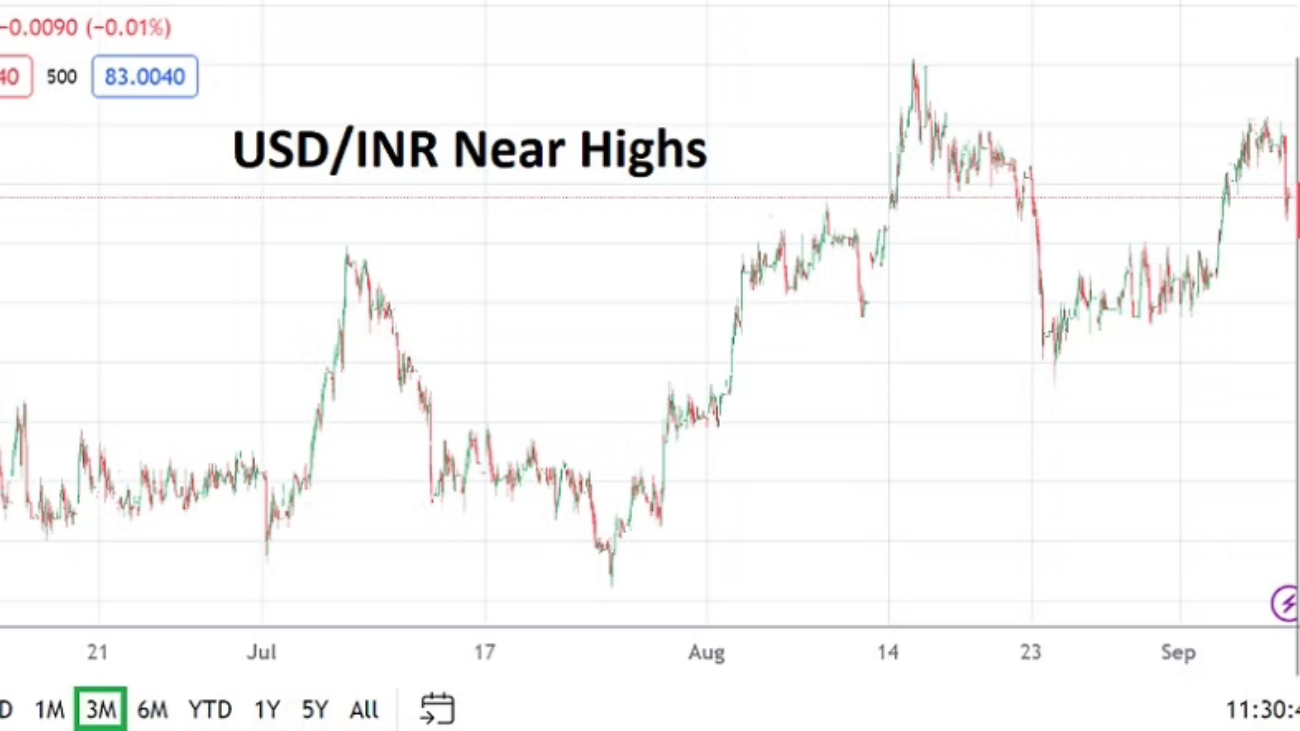
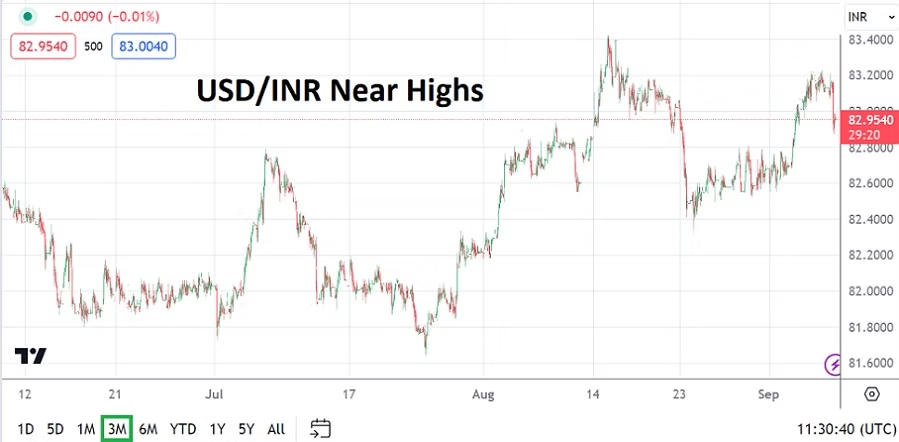
USD/INR Three Months Chart as of 8th Sept. 2023

I do not know what will happen today in the stock markets or next week. I also do not know what will happen at the G20 this weekend in India, except I will bet Joe Biden makes an error to two regarding context as he speaks. The broad financial markets are showing signs of nervousness certainly, but it is hard to time when there will be an optimistic turnaround or a bone crushing downturn, or if things will simply remain unclear over the mid-term.

Risk analysis is a bit like forecasting the weather, most of the time you can look up at the sky and and tell what the next 12 and hopefully 24 hours will bring. Within the trading world you can often tell by volumes and price velocity if a potential storm is building. I certainly do not want to be someone known as a scaremonger. I prefer to warn and remind traders to use entry points, stop losses, take profits, and to know how to navigate potential ill winds, while searching for smooth sailing.

The trend in the USD has been strong and while I tend to believe that a ‘downturn’ is due, the ability of the ‘greenback’ to continue adding value in Forex cannot be denied. The drop in value of the EUR and GBP the past month and a half is not only interesting, but creates the gut instinct that something is ‘not right’ in the markets. Yes, I can take a look at U.S Treasuries and try to correlate all results to the higher yields, and economic data, but it feels like something else is amiss. I see ‘oversold’ and ‘overbought’ signals aplenty, but the market prices are real, even if my sentiment tells me something is wrong, and until the markets reverse I have to remain cautious regarding my outlooks.

Short-term market outlook looks chaotic . Nervous results continue to filter into view. During these type of conditions I prefer to trust my long-term vision. One insight that has grown on me in the past year is that I am ‘long’ India. I believe the development and progress we are witnessing within India is important and that the nation will continue to make great strides if it remains stable and democratic. Understanding short-term conditions are rough and need to be dealt with carefully is crucial, and having a long-term plan to work towards provides a solid path to improve.

postN42.1

Day and Institutional Traders Suffering Nervous Conditions

Day and Institutional Traders Suffering Nervous Conditions

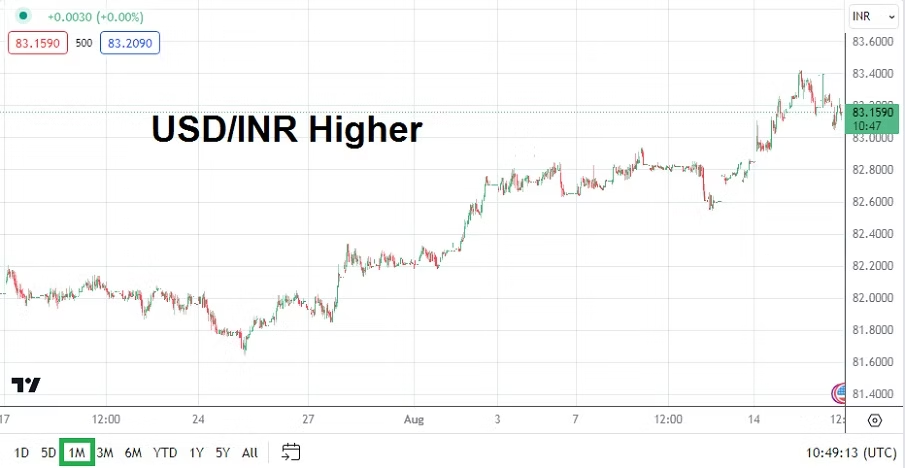
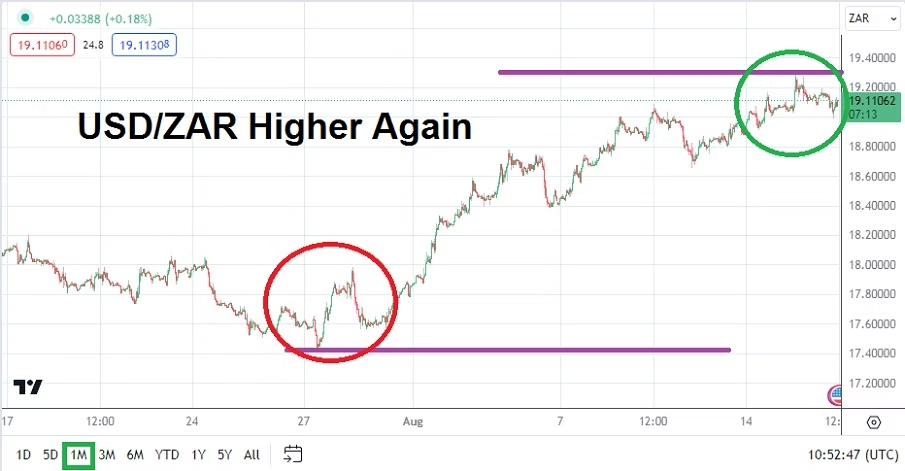
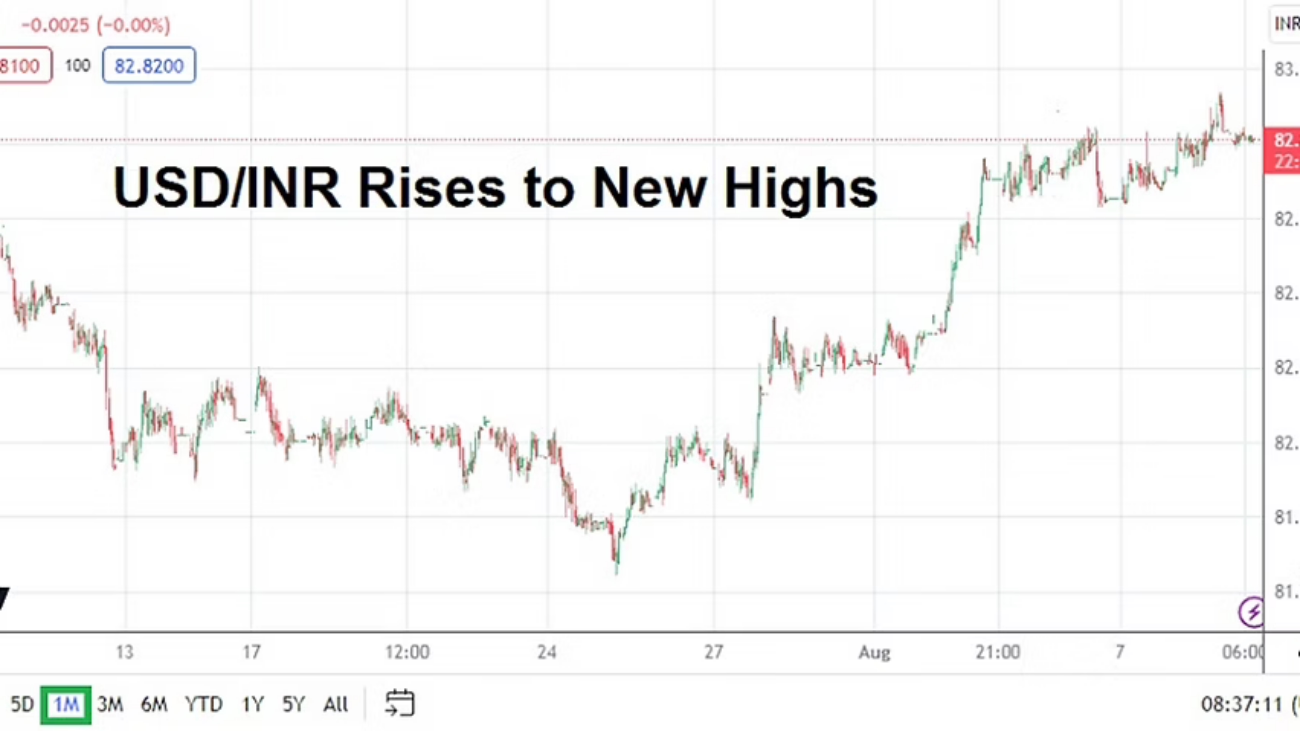
Market price action has caused quite a few interesting interpretations of the prices being demonstrated in Forex, gold and equity markets recently. The USD/INR is now at record heights, the USD/ZAR is back above 19.00000 and the USD/BRL is again near the 5.0000 ratio.

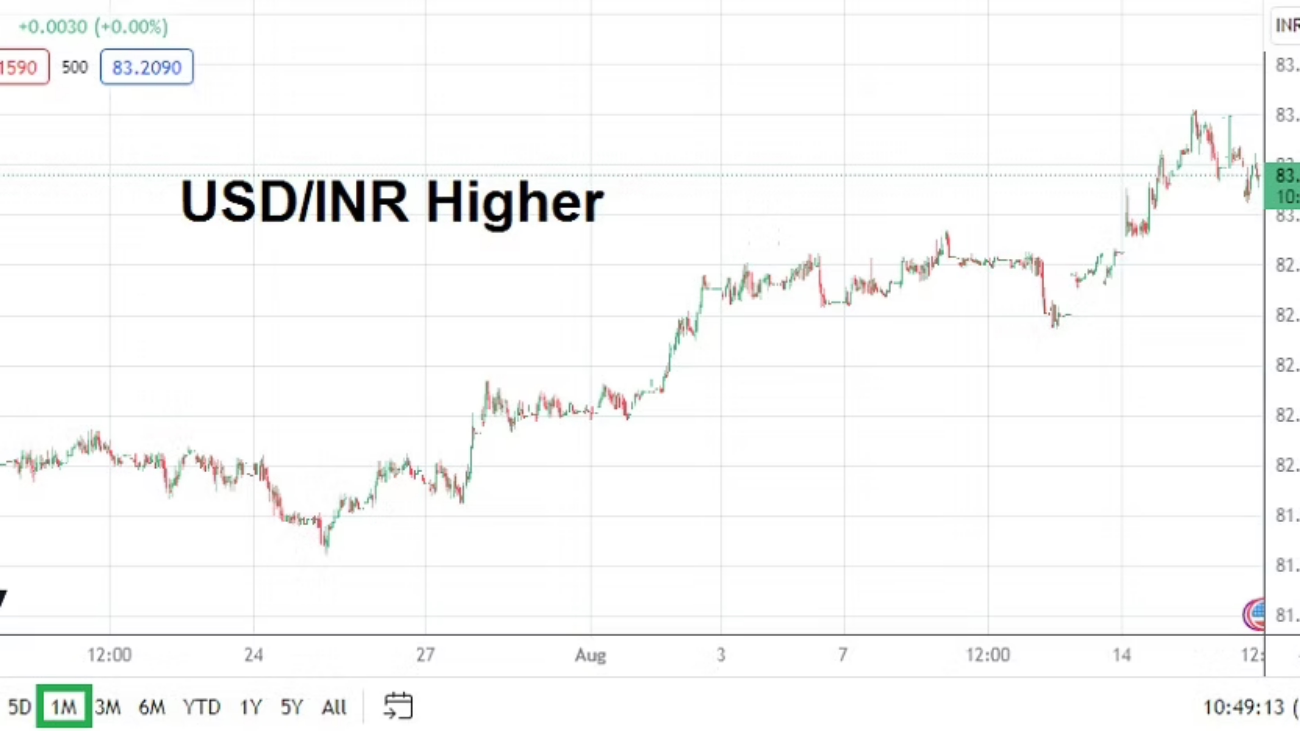
USD/INR One Month Chart as of 16th August 2023

While Forex traders around the world look for clues as to why their local currencies are suffering and are likely blaming domestic policy from their own governments and central banks, they should remember the larger global financial markets tend to move in a unified sphere. Domestic concerns are a real cause for market action often, but when global sentiment becomes nervous the larger force of institutional financial houses shake the ground.

Correlations exists worldwide because of behavioral sentiment ruling outlooks over the near, mid and long-term in the marketplace. While we like to put our faith in the financial markets as an all knowing entity, this is far from the truth. Humans who react to nervous conditions and also have bias are the ones still making decisions in financial houses, they are the ones giving orders to their programmers via their trading software which is largely geared to follow perceived trends these institutions deem important.

USD/ZAR One Month Chart as of 16th August 2023

Most financial institutions are not speculative in nature, day and even longer term retail traders should remember this point. Most institutions are trying very hard not to ‘speculate’, they are simply positioning per their outlooks based on their understanding of the trading landscape. Whispers of potential downgrades from U.S rating agencies on larger corporate banks yesterday sent a shudder through the broad markets, economic data and rumors swirling about China are not helping either. The current volatility in the broad markets is not welcomed warmly by financial institutions.

When price velocity accelerates and volatility flourishes in highly charged trading situations, this suggests financial institutions are nervous and not able to find comfortable positions. Conflicting ‘opposite’ positions from other larger players are causing market chaos in Forex, equities and other financial assets. There is a herd mentality in trading and when the herd doesn’t march in an unified direction chaos happens.

Most institutional players want calm, they want tranquil trading conditions so they can manage their clients’ money quietly. Bonds, equities and indices, real estate holdings via REITs, and gold make up a large part of their holdings.

Most U.S pension funds for instance have mandates to be positioned into a large amount of quiet investment vehicles which do not trade with wild price ranges. They seek steady returns from their institutional investors that can be counted on in a quantitative manner to demonstrate to their clients.

Large financial institutions are allowed sometimes to trade 2 to 4% of their holdings in different categories of speculative investments – such as start-ups, allocate cash to hedge funds they trust, small cap stocks they might know about, etc., depending on the exact mandates agreed upon.

Yes, hedge fund managers like Bill Ackman and investor Michael Burry get a lot of attention when they bet against the markets, but believe it or not they are small fish in a large ocean a lot of the time. They are good at what they do, but their speculative positions cannot be mirrored by most financial institutions or small day traders.

Ackman and Burry may be trading billions, but remember institutional financial companies including pension funds when combined total approximately 80% of market cap. Institutional trading decisions can cause massive waves in the financial world, but they actually seek calm seas.

When markets become volatile this often means institutional traders are not comfortable and their behavioral sentiment is fragile. Forex for example is often affected by financial institutions moving money as they handle export and import transactions for companies, but transactions are often done to buy and sell equities too. The Bank of International Settlements estimated an average around 7.5 trillion USD in value was traded in Forex everyday in 2022.

Day traders should not take it personally when the markets move against them, instead they should look to try and mirror the sentiment of larger financial movers. However, knowing and timing financial institution decisions is elusive because short term compared to long term considerations are often different.

Most traders are merely betting on the price action the large institutional funds are undertaking via the direction of the marketplace. Day trading for most retail speculators remains dangerous. A solid fundamental understanding of market ‘forces’ can allow smaller traders to feel more comfortable.

postN39

USD/INR: Higher Move Correlates and Political Shadows Loom

USD/INR: Higher Move Correlates and Political Shadows Loom

The USD/INR is near the 82.8150 ratio as of this writing the 9th of August, on the 25th of July the currency pair was near the 81.6500 level momentarily. Upwards movement of the USD/INR did produce price volatility in the last week of July, and on the 1st of August the Forex pair was near the 82.1700 ratio. Another dose of upwards momentum quickly occurred on the first day of August, and by the 2nd the USD/INR was trading around the 82.7650 mark.

From Wednesday of last week the USD/INR has essentially taken on a consolidated framework, speculators who are gambling on the USD/INR and need big movement to occur in order to facilitate profits have likely found the currency pair difficult to manage. Yesterday a high of nearly 82.9500 came within sight briefly, this as global risk adverse conditions arose because of the Moody’s rating agency downgrade of some U.S mid and small size banks regarding their fundamental ‘soundness’ and credit worthiness.

Rising interest rates from the U.S Federal Reserve have made it harder for many U.S banks to conduct their business, and loans have become more expensive for their clients struggling to keep up with the rising payments. Particularly if borrowers have the unfortunate position of holding ‘variable’ loans which cost more when interest rates are going up. This has also affected the housing sector in the U.S and in the U.K, as mortgages have become highly priced due to the Federal Reserve and Bank of England having aggressive interest rate policies which are affecting the cost of new home purchases.

The question USD/INR traders may be asking is what does this have to do with them?

USD/INR One Month Chart as of 9th of August

The USD/INR Doesn’t Trade in a Vacuum

The USD/INR has risen in value the past two and half weeks as many other major currency pairs have suffered a similar fate. Nervous sentiment abounds in the global markets because financial institutions are wary of what the major central banks will do next. U.S economic data has been mixed recently, but this perspective depends on time frames regarding outlooks.

Short and mid-term viewpoints continue to point to complications regarding growth and inflation expectations and interpretations of U.S data. The ratings downgrade of some U.S banks from Moody’s yesterday, and early last week Fitch’s downgrade of U.S Treasuries all is related. Rating agencies are getting nervous, perhaps because they do not want to be blamed and held liable if the proverbial ‘fluff’ hits the fan over the mid-term. Rating agencies largely ‘missed’ the financial crisis of 2007 in a famously bizarre manner. The sudden emergence of rating agencies warning investors has made the USD stronger as global investors have become risk adverse temporarily. Yes, this might feel illogical, but the USD remains the world’s safe haven.

The USD/INR also certainly trades because of economic conditions affecting its value from within India. The Reserve Bank of India has a large hand in managing values and is known to be rather active regarding interventions. Yet the USD/INR is being ‘allowed’ to continue to trade near all-time highs. This as India’s status as a growing economic power has taken shape in the global financial markets the past year. The India government has not been aggressive regarding its interest rate policy, and has allowed inflation to seep into the domestic economy via a weaker Indian Rupee for a number of complex reasons. Purchasing goods from India abroad and the ability to invest in India by global financial institutions may be more attractive to those holding USD and needing to convert into INR only when the time is necessary.

Politics and the USD/INR Price Level as 2024 Elections Start to Lurk

From a political perspective too, let’s acknowledge a general election will take place in India in April and May of 2024. Economic decisions being made today and for the mid-term are certainly being affected by the ruling Indian government’s outlook and desire to remain in power. Having come off of yesterday’s highs in the USD/INR the currency pair does remain within sight of highs.

The 83.0000 level likely remains a key barometer for the USD/INR and the Reserve Bank of India is likely watching this value carefully. While it seems unlikely the India government wants the USD/INR to trace much higher because of the psychological implications, global risk adverse sentiment are making the higher values of the currency pair sticky. Tomorrow’s inflation data from the U.S will affect Forex and the USD/INR via the Consumer Price Index. Friday the U.S Producer Price Index will be published. A slight rise in the broad CPI results tomorrow is expected, while Friday’s PPI outcome is expected to match last month’s numbers.

If risk adverse trading remains evident today and the USD/INR holds its ground over the next 20 hours, the currency pair could find that its consolidated price movement from the past week suddenly changes. A higher tick in U.S inflation could be enough to cause the USD/INR to challenge the 83.0000 ratio. Speculators who are wagering on the USD/INR are cautioned to be pro-active regarding their risk management the remainder of this week.

postN34

USD/INR: Consolidation Might Come to an Abrupt Conclusion

USD/INR: Consolidation Might Come to an Abrupt Conclusion

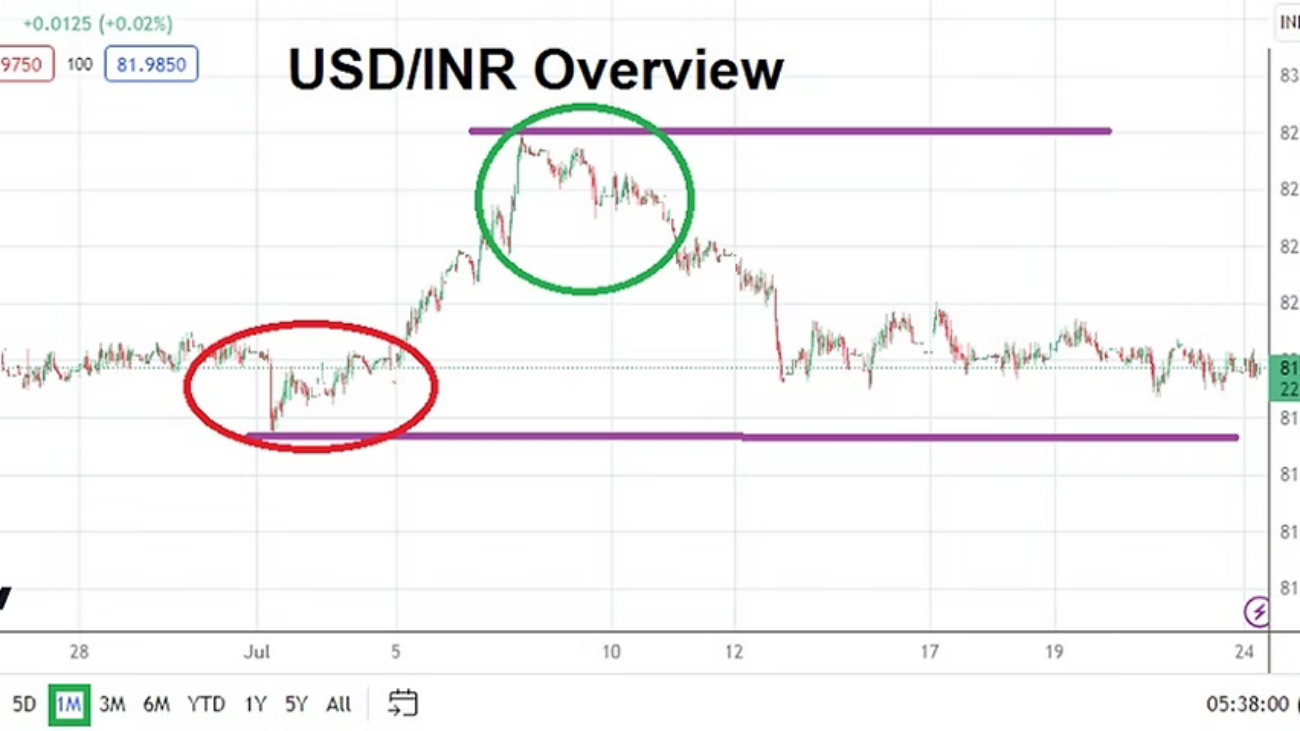
The USD/INR is trading near the 81.9750 ratio as of this writing and its price action since the 13th of July has produced a tight price range. On the 12th of July the USD/INR was trading around the 82.3000 region, this after being able to incrementally decline when a high of nearly 82.7900 was reached on the 6th of July.

Prior to the apex value of July, the USD/INR had traded in a rather consolidated mode from the middle of June until the first few days of July, essentially within a price realm the currency pair now lingers. Speculators must constantly fight the slightest of reversals if they are using too much leverage, but the USD/INR over the mid-term has produced interesting behavioral sentiment and this can be seen on technical charts.

While day traders may believe the current price ratios will hold and the potential interest rate hike from the U.S Federal Reserve has been digested into the USD/INR for this coming Wednesday, they might want to reconsider their thinking. No, the world is not coming to an end, Forex has dealt with U.S central bank decisions before and experienced traders understand the sudden potential of the USD/INR changing direction. The rather tight price range of the USD/INR could vanish in the coming days if the Federal Reserve begins to change their tone within the FOMC Statements.

USD/INR One Month Chart as of 24th July 2023

U.S Federal Reserve is Likely to Raise the Federal Funds Rate but Perhaps Shouldn’t

The USD/INR may not get hit too hard when the U.S Federal Reserve delivers the anticipated 0.25% addition to the Federal Funds Rate. However, the FOMC Statement which talks about the Fed’s outlook might cause a change to what have been calm seas recently in the USD/INR. Recent U.S economic data has been rather troubling, but inflation does actually seem to be creeping lower. The Fed has been pretty adamant in their recent ‘whispering’ about raising interest rates in July, and the potential of raising again later this year.

Time for the U.S Federal Reserve to Start Sounding Dovish

Yet, recent data suggests the Fed should likely not even raise rates on the 26th of July and continue its pause. But having expressed plenty of verbiage on the subject, the Fed may not want to surprise financial institutions and may have to raise, even if they do not really have to this week. And here is where it gets interesting – the FOMC Statement may have to express this notion of becoming more dovish. Think of this potential hike to the Federal Funds Rate this week as the last dose of medicine for a patient who already feels better, the doctor (the Fed) is insisting that to make sure the ‘sick’ is cured another teaspoon consisting of an interest rate hike is necessary.

If the FOMC Statement sounds more dovish than expected the USD/INR might start to see selling ignite and a downturn generate. There are no guarantees and certainly the Fed’s actions this coming Wednesday are not known. Yet, if the Fed hints that it will not raise interest rates over the mid-term and wants to see if inflation continues to lower that it may consider the potential of no more hikes, the USD will start to get weaker across the board. In other words, this last dose of medicine from the Fed may give them the feeling to tell the patient (U.S economy) that they no longer need to visit the doctor’s office for a while.

Other central banks are watching too. Inflation in Europe and elsewhere remains high. The complications of weaker domestic currencies against the USD have hit many economies including India where inflation has been rather strong. If the Fed can now start to become less aggressive, the effect will be quick and start helping the USD/INR trade lower if healthy economic mechanics allow this to happen.

Support levels for the USD/INR near 81.8000 to 81.7500 should be watched, if these levels begin to see challenges and sustained prices remain nearby, the USD/INR may be signaling that another downturn is about to happen. If the U.S Fed delivers a cautious, but more optimistic FOMC Statement this coming Wednesday, the USD/INR may deliver a new cycle of selling.

postN26.1

USD/INR: Bounce Higher Ignites a Return to High Water Values

USD/INR: Bounce Higher Ignites a Return to High Water Values

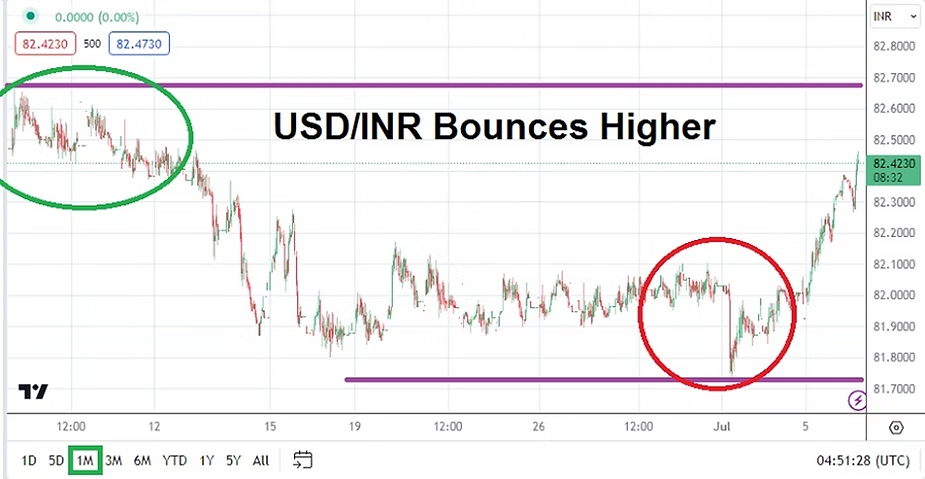
The USD/INR is trading near 82.4350 as of this writing, which is a value the currency pair has not touched since the second week of June. While some analysts may say the move to higher ground yesterday and early this morning is based on the U.S FOMC Meeting Minutes, Wednesday’s report from the Federal Reserve likely only reinforced the bullish momentum which started earlier this week. The world of Forex can feel fickle, particularly when so many of the internal dynamics are hidden from a large segment of people who are trying to speculate on the results.

If the mechanics of the move higher which started on Monday are examined a couple of points should be considered closely, the low of the USD/INR was around 81.7300 on the 3rd of July. This low took place as most U.S financial institutions were on holiday in preparation for Tuesday’s 4th of July celebrations.

Fears of U.S Economic Prospects: Behavioral Sentiment and Stagflation Potential

The reversal higher since the 3rd of July has been pronounced, but before going into last weekend the USD/INR was largely trading within a consolidated manner near the 82.0000 level with a test of this mark having been displayed forcefully since the middle of June. A range of nearly 81.8500 to about 82.1500 largely has played out the past three weeks of Forex trading.

USD/INR One Month Chart as of 6th July 2023

Monday’s dip in value to lows around 81.7300 took place when there was very little volume in the USD/INR market. The depths challenged marks not seen since the first week of May.

The reversal higher the past few days is certainly part of more transactional volume starting to be pumped into the USD/INR as U.S financial institutions have returned, but they are also likely being caused by an underlying nervousness within the Forex markets which may be factoring in the notion the U.S Federal Reserve seems to be on a path which will increase the Federal Funds Rate on the 26th of July.

The behavioral sentiment being generated regarding a Federal Reserve which stays in an aggressive stance started before yesterday’s release of the FOMC Meeting Minutes. Nervous conditions have been on the surface of the broad markets because U.S inflation remains rather resilient – but also importantly because last week’s Gross Domestic Product numbers published on the 29th of June, came in stronger than anticipated. From a troubling perspective some analysts could point to the moderately improved growth and combination of stubborn inflation as a sign stagflation is starting to shadow the U.S, which would certainly be a troubling predicament.

USD/INR Move to New Highs this Morning could Ignite more Nervous Reactions

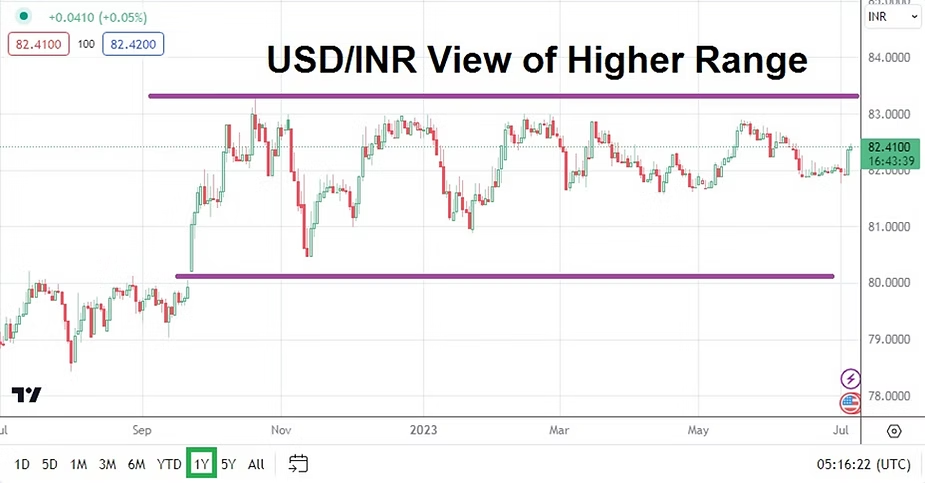
USD/INR speculators may believe the move higher in the currency pair is overdone and that values need to be lower. However, the current price of the USD/INR is one that has been experienced quite a bit since October of 2022. A look at a one year chart shows the USD/INR has returned to higher ratios of its price range which it has experienced since breaking upwards in the middle of September 2022. And to make things more interesting for technical traders, the USD/INR has actually produced a rather stable range between 81.6000 and 82.9000 since February of this year.

USD/INR One Year Chart as of 6th July 2023

While traders are certainly trying to anticipate what will happen next in the USD/INR to gain an advantage, they should remember the currency markets are almost impossible to time on a daily basis, but a look at mid-term prices does offer plenty of insights. If the USD/INR climbs too high, perhaps to the 82.5000 level the Reserve Bank of India could get a bit nervous and consider some type of intervention which it supposedly has done a few times over the past handful of months – but perhaps at higher price ratios.

USD/INR Mid-Term Considerations and the Current Price Range

However it is more cost efficient and reputably less damaging for central banks to not intervene if they do not have to, and simply let market dynamics effectively create a price for the USD/INR based on supply and demand. Meaning the current prices of the USD/INR look to be rather high, but taking into consideration the range of the Forex pair the past five months the values are not new. The prices in fact have been rather established, meaning the USD/INR may trade slightly higher, but then a lower wave of downward momentum could be anticipated.

Day traders who are gamblers may be tempted to sell the USD/INR if the currency pair finds more upwards mobility in the near-term. Trading volumes should be back to normal now that U.S financial institutions have returned from their holidays, and traders should be ready for the potential of fast price velocity developing. Risk management on wagers regarding the USD/INR are essential as always.

postN18

USD/INR: Correlation to Broad Forex Market Intriguing Signal

USD/INR: Correlation to Broad Forex Market Intriguing Signal

The USD/INR is near the 82.1200 price as of this writing. On Friday the USD/INR hit a low near the 81.8000 ratio. The ability to touch depths in the USD/INR before going into the weekend correlated well with the broad Forex markets, as the USD was showing signs of weakness globally. Yesterday’s trading volumes were weak because of a U.S banking holiday being observed and only in the next handful of hours will U.S financial institutions return from their long weekend, meaning an increase in volatility could arise.

The lows seen in the USD/INR on Friday challenged values not seen since the 10th and 11th of May. Interestingly support seems to have held technically, and the USD/INR was not able to test lower values seen in the middle of April and the first week of May. However, the trading conditions in the USD/INR appear to be healthy and performing in a manner that can be compared to the broad currency markets, and that is important because it may be a sign that interventions have not been necessary from the Reserve Bank of India the past few weeks.

USD/INR One Month Chart as of 20th of June

Was the Federal Reserve Decision a Pause or a Skip Regarding Interest Rates?

While the U.S Federal Reserve behaved as anticipated last Wednesday and did not raise its Federal Funds Rate, the central bank is still rattling its ‘inflation’ sword and has let it be known it can raise interest rates in July. The decision to not hike borrowing rates in June has been described widely as a pause by U.S Federal Reserve watchers, but if the Fed were to raise interest rates in July the pause would then have to be described as mere ‘skip’.

However, if broad Forex market price action is being interpreted correctly, it does appear many financial institutions are seemingly betting on a less aggressive Federal Reserve over the long-term. The question is if this is the correct outlook. Inflation remains problematic and until consistently solid drops in the costs of goods takes place, the Federal Reserve will remain rather unclear regarding its rhetoric and will likely bang on its higher interest rates ‘drum’ as a warning.

Here Comes More U.S Federal Reserve Rhetoric: Today and Tomorrow

Something USD/INR traders should pay attention to later today and tomorrow are the spoken words and gestures from Federal Reserve officials. New York Fed President John William will be speaking later today and he will certainly be asked about his outlook regarding interest rates. Because he is in charge of the New York Federal Reserve Bank, Williams remarks are watched carefully by the financial markets and his comments will certainly affect Forex and equity indices.

And then leaning into the microphone tomorrow will be Federal Reserve Chairman Jerome Powell. He will present his viewpoints and be asked questions regarding monetary policy in the House of Representatives by the Financial Services Committee on Wednesday. On Thursday, Powell will remain in Washington and perform the same show for the Senate Banking Committee. The Fed Chairman is a trained D.C insider and he will try not to inflame the financial markets with any surprises.

Outlook for the USD/INR is Choppy in the Near-Term

A reversal higher in the USD/INR early this morning has also correlated to the broad Forex market. It is likely the USD has been viewed as potentially oversold in the short-term. However, the slight moves higher might also be a natural cautious reaction to the coming rhetoric from John Williams and Jerome Powell. Because of this USD/INR traders should expect rather choppy conditions to flourish near-term.

Friday’s trading for the USD/INR will get important U.S economic data via the Flash Manufacturing and Services PMI reports. If the USD/INR remains below resistance levels of 82.1500 and 82.2000 consistently over the next few days leading into Friday’s trading, this could mean the broad Forex market remains bearish regarding its outlook for the USD. Speculators should be careful over the next 24 hours. It should also be mentioned that if Jerome Powell doesn’t surprise the marketplace tomorrow, he will not be likely to offer any new information the following day in Washington, meaning tomorrow’s comments from the Fed Chairman are the words likely to cause volatility if this happens.

postN10.1

USD/INR: Elevated Range as Questions about Values Persists

USD/INR: Elevated Range as Questions about Values Persists

The USD/INR has traded the past week approximately between the 82.2200 and 82.7000 ratios. Plenty of discussion regarding what the Reserve Bank of India has been doing as they battle the strong USD has been whispered openly, and is being questioned from financial institutions and speculators. Day traders who have been trying to wager on the value of the Indian Rupee have likely found the waters difficult to swim. As of this writing the USD/INR is near 82.5200.

USD/INR Three Month Chart as of 8th June 2023

Last Wednesday’s sudden rhetoric, from two U.S Federal Reserve officials caused mayhem briefly within the USD/INR. The currency pair got hit after India’s official trading hours closed, and essentially moved in overseas accounts based on the spoken words from the two Fed members stating the U.S central bank should not raise the Federal Funds Rate on the 14th of June. These sudden Forex moves hurt many USD/INR speculators. After this rhetoric from the two well-regarded FOMC members, like clockwork U.S economic data provided a counter punch last Friday with better than anticipated Non-Farm Employment Change numbers, this while inflation results also remained persistent.

Three Month View of the USD/INR offers Sentiment Insights and perhaps Clues

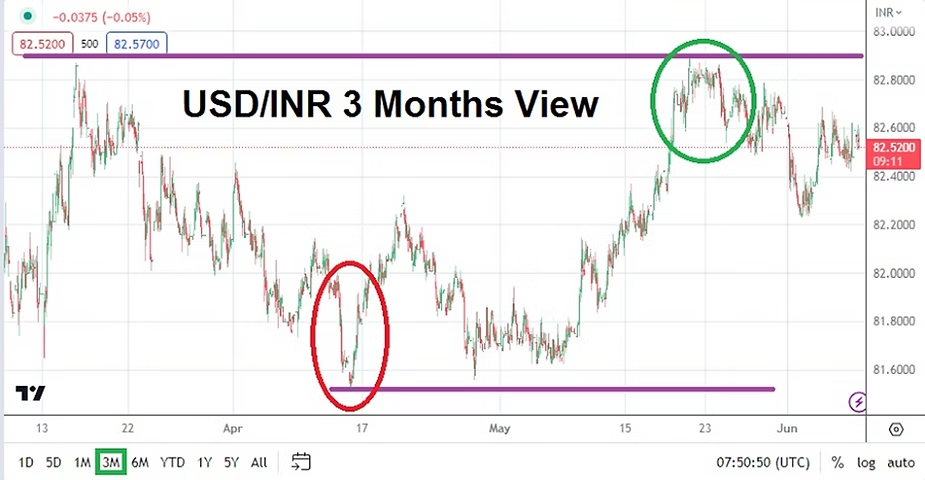
The past three months of trading in the USD/INR have produced a rather rocky price trend. A low of nearly 81.5200 was seen on the 14th of April, which turned into a high of approximately 82.9000 on the 19th of May. Intriguingly while many USD/INR speculators may be looking at the U.S Federal Reserve and casting blame, questioning the potential interventions by the Reserve Bank of India remains relevant. The Reserve Bank of India has actually been rather tranquil regarding its use of interest rate hikes; it has not raised the key lending rate aggressively in India like many of its major global counterparts. Why is this?

Is there a potential the Reserve Bank of India and the government has wanted the Indian Rupee to get weaker? Deflating the Indian Rupee’s value in order to potentially create an unseen tax is considered an old trick by economists. This because some believe inflation is a way to tax people without actually raising interest rates, the deflated value of a currency makes it easier for governments to sometimes repay debt, based on the notion the money they are now using is cheaper compared to when the Indian Rupee’s value was better.

Where is the USD/INR Going to Go Next?

I am no economist; my specialty tends to be risk analysis. There is an old joke, ‘why did god create economists? To make weathermen look good.’ The point is that economists often get their outlooks wrong, but we cannot blame only economists for getting their outlooks wrong, many of us do. The USD/INR has a tough few days ahead, it must deal with nervous market sentiment generated from a lack of clarity via the U.S Federal Reserve. Looking for correlations in the Forex market is proving difficult for the moment for all short-term speculators. Choppy trading in the USD/INR has been noticeable the past few days, this Monday’s upwards trend has turned into near-term consolidated day trading. Other major currency pairs are turning in rather turbulent results also without a firm technical stance.

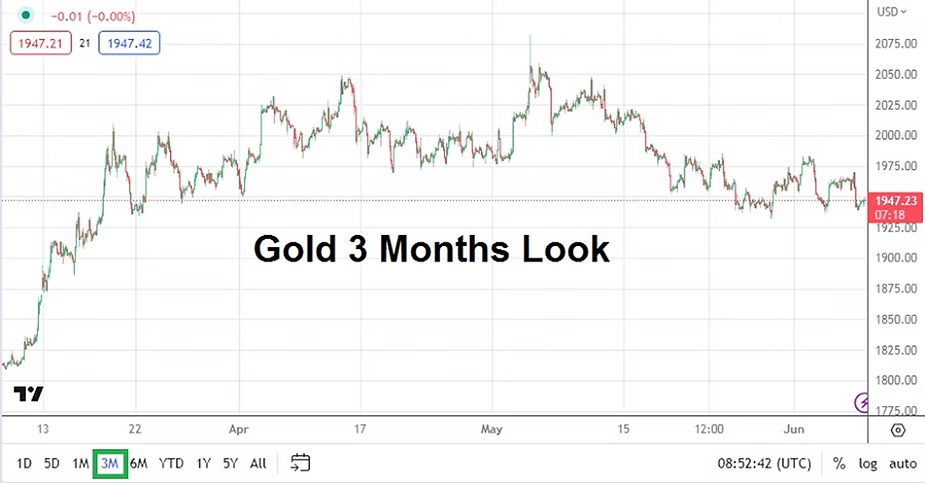
Gold Three Month Chart as of 8th of June 2023

After speaking with many associates in the financial sector the past week, it appears many people believe the Fed should stop raising interest rates for the time being. Some financial institutions seem to be leaning in this direction, but there are caution signs all over that warn about potential surprises from the U.S Federal Reserve.

Yesterday the Bank of Canada raised its Overnight Rate by another 0.25%, when most analysts believed they would pause. Another interesting sign is the current price of Gold near 1950.00. The recent lower price could indicate some financial houses believe the Federal Reserve may actually remain active regarding further interest rate hikes, this because the price of Gold has tended to rise when the perception existed the Federal Reserve is going to be dovish. Gold’s downward price action should raise suspicious eyebrows.

But then again, I am not an economist; I am merely a risk analyst. So my words to you are, be careful if you are wagering on the USD/INR before the U.S Federal Reserve’s pronouncements next Wednesday on the 14th of June.

postN5

USD/INR: Stubborn Higher Range and Risky Speculative Wagers

USD/INR: Stubborn Higher Range and Risky Speculative Wagers

The USD/INR has remained within the higher level of its one month price range as behavioral sentiment remains difficult to gauge. As of this writing the USD/INR is near the 82.7200 ratio, but readers are urged to check this price against live market action as they read to compare conditions.

The Broad Forex Market is Nervous and so is the USD/INR

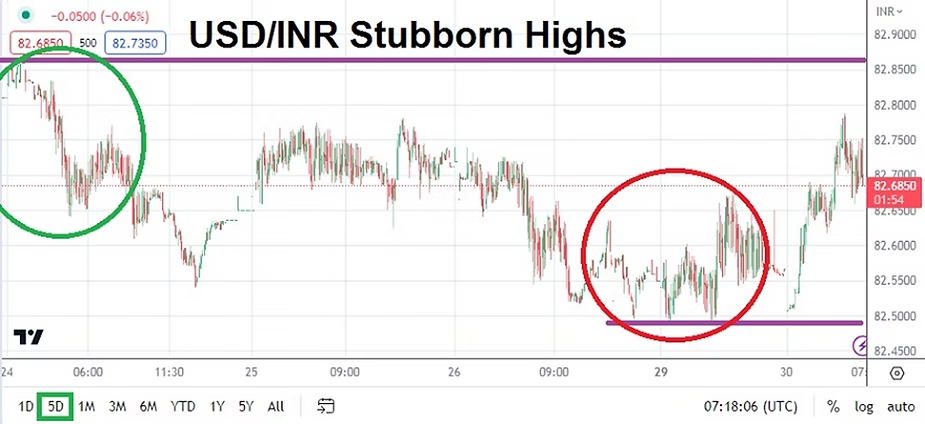
While many traders of the USD/INR who have been tempted to be sellers of the currency pair might be taking it personally that their perceived price targets have not been accomplished, they should note the broad Forex market has been difficult for most global speculators. The price action the USD/INR is experiencing currently comes from impetus due to nervous behavioral tendencies being generated from conflicting sentiment. The price range between 82.5000 and 82.8500 since the 18th of May has been rather persistent with momentary outliers.

USD/INR Five Day Chart as of 30th May 2023

Fear of the U.S Federal Reserve remains rather strong in Forex, this has affected the USD/INR because of concerns the U.S central bank might increase the Federal Funds Rate on the 14th of June. Inflation remains durable and is showing few signs of vanishing. The higher consumer prices in the U.S are a thorn in the side of the Federal Reserve which is intent on trying to put a dent into rising prices. If U.S data continues to show inflation is pushing ahead a rate increase could happen, and the higher prices in the USD/INR likely reflect this has been priced into the currency pair.

Federal Reserve policy can certainly be debated and fingers pointed at their wrong conclusions and decisions made the past two years. The current circumstances for the Fed has put it in a very difficult position. The lack of a clear outlook for financial institutions is leading to a lot of risk adverse trading since the 9th of May. Also concerns about the U.S debt ceiling did not calm many nerves the past few weeks, although the crisis seemingly has found a compromise which is likely to be approved tomorrow in Washington.

High U.S Interest Rates and More Corporate Banking Woes as a Potential

Higher interest rates are hurting U.S corporate banking particularly in the mid and small sized sectors of the industry. If these banks continue to suffer, their problems will create a credit crunch for many in the U.S middle class, which could have a big effect on consumer spending.

Higher interest rates via the increasing Federal Funds Rate are hurting the corporate banking sector because it makes it harder to lend money, and some clients are taking their money out of deposits to seek better returns elsewhere – like Treasury Bonds. The increased interest rates in the U.S also hurt many global currencies like the USD/INR because global financial institutions sometimes seek the better paying U.S bonds, which are also seen as more trustworthy long-term investment vehicles.

Thus, while the Fed is projecting tough talk about the potential of raising interest rates in June, and warning the mid and long-term outlook is cause for concern as inflation shows its ugly head, financial institutions are demonstrating nervous behavioral sentiment. The strong rhetoric from the U.S Fed and its lack of clarity regarding real direction has left the USD/INR and many other major currency pairs in awkward choppy positions with highs being tested. Until U.S economic data shows inflation is under control and growth is slowing down substantially, the Fed may have to continue to be rather hawkish sounding, which will not help the USD/INR selloff strongly in the near-term. In other words traders considering selling should be conservative with the USD/INR and not be overly ambitious with their targets.

Today the CB Consumer Sentiment reading is coming from the U.S, a lackluster report with negative data would actually help the USD/INR. Also this coming Friday jobs statistics will be published. While many folks will watch the employment outcome from the Non-Farm Employment Change, the Average Hourly Earnings could be more important and provide insights regarding inflation which could prove crucial. A rise in wages is not the outcome the Federal Reserve wants to see.

Warning: Use Entry Price Orders when Trading the USD/INR when Possible

Traders should also note that short-term wagers on the USD/INR should be done with entry price orders to make sure they are not caught and hurt by the large spreads which might be offered by their brokers – the spread is the differential between the ‘bid and ask’ price. Frequently a trader will be given a price fill that leaves them feeling like they have been cheated. Speculators frequently try to target short-term price goals with quick hitting bets, but bad price fills make these types of wagers difficult to get a positive result – when only a handful of pips in either direction can hurt a trader because too much leverage is being used.

USD/INR traders who are buyers should understand they will most likely be given the sell price of the ‘bid and ask’ when seeking upwards direction, and sellers of the currency pair are likely to get the ‘buying’ price of the spread – thus making a chosen wager on direction further away and difficult to achieve profits. Using an entry order which pinpoints a chosen price to enter a trade is vital. A trader should not expect to get a price fill which is ‘geared’ towards their chosen direction. Also, spreads in the USD/INR are wider than many major currency pairs because the amount of volume in the Indian Rupee cash market tends to be thinner, leaving more room for the technological capabilities of Forex brokers to provide less than attractive pricing.

post40

USD/INR: Narrow Price Range as Nervous Sentiment Exhibited

USD/INR: Narrow Price Range as Nervous Sentiment Exhibited

The USD/INR has delivered a rather narrow price range the past four days of trading as the currency pair awaits impetus from crucial U.S risk events.

The USD/INR is trading near the 82.7000 ratio as of this writing. While the currency pair over the past month has seen a rather incremental climb higher, the past handful of days has seen rather sideways price range emerge. Talk about Reserve Bank of India intervention has been discussed widely and this has caused speculative caution too. However, risk events from the U.S which will be delivered soon are also a catalyst for conservative trading in the USD/INR and broad Forex markets globally.

Trading Tip Regarding Bias that Forex Speculators should try to Avoid

A very important aspect for USD/INR traders to consider is that they should remove any bias they may feel personally regarding the Indian Rupee. Traders closely connected to the currency they are trading, particularly if they are citizens of the nation; tend to believe their national currency should always be stronger no matter the circumstances. This notion of bias does not always work out well for traders with a nationalist leaning.

The Indian Rupee is no different regarding its ability to maneuver against the USD like many other major currencies. While the Indian Rupee certainly has its own financial capabilities, the USD remains the dominant currency on the block and affects most outcomes. If a trader can remove their bias and love of their nation from their trading sentiment, this often makes it easier to have a more realistic viewpoint about potential price direction in the short-term and long-term. The Indian Rupee is an important global currency, one that will grow in stature, but traders should remember current circumstances too.

USD/INR Five Day Chart as of 24th May 2023

U.S Debt Ceiling Concerns and the Upwards Drift of the USD/INR Causing Problems

Concerns are being voiced regarding the failure of U.S debt ceiling talks, the inability to not find an agreement in the U.S Congress is problematic. June 1st is supposedly the date the U.S government must reach a conclusion. The past week has seen signs from Democrats and Republicans acknowledging the importance of finding a settlement, but political rancor still is making a mess of the situation. Trading institutions are certainly not happy about the loud debate and could ‘punish’ financial assets more over the short-term until a debt ceiling compromise is reached.

The move higher in the USD/INR has likely caught many speculators by surprise the past month. However, the drift upwards has correlated to the broad Forex markets the past couple of weeks, this as the USD has turned stronger against many major currencies. The USD/INR essentially went from 82.1200 to its current price since the 15th of May. The Forex pair was trading near 81.6000 on the 4th of May. The temptation to sell the USD/INR the past couple of weeks has likely been strong as traders flirted with the notion technically that the currency would have to reignite its downwards path, but that clearly has not happened.

Today and the remainder of the week, the U.S has important risk events on the calendar. U.S Treasury Secretary Janet Yellen will be speaking and will certainly be asked to state her opinion on the debt ceiling talks. She will likely try to offer a neutral tone and not scare the financial markets. However, she can certainly be counted upon to say it is important to reach an agreement so the U.S can continue paying its financial obligations.

Perhaps more important than Treasury Yellen’s talk this afternoon, will be the U.S Federal Reserve’s FOMC Meeting Minutes publication later in the day. Financial institutions globally are nervous about the Fed’s interest rate outlook regarding its June Federal Funds Rate decision. Many analysts have predicted the U.S central bank will halt interest rate hikes and not increase on the 14th of June. Yet inflation data from the U.S remains problematic. Today’s FOMC Meeting Minutes text will provide insights regarding the Federal Reserve’s last meeting and give an inside look towards its leanings for a potential hike or pause.

USD/INR traders should also be aware that important Gross Domestic Product data will come tomorrow which will offer details regarding U.S growth. On Friday the U.S will release Core Personal Consumption Expenditure statistics and this will provide inflation results, and the outcome will certainly influence the U.S Federal Reserve’s June interest rate decision.