postN48.1

Absurd Friday Forex Results? Suspicions as the Week Begins

Absurd Friday Forex Results? Suspicions as the Week Begins

This coming week may be an opportunity where speculators can test their conspiracy thinking, perceptions of technical and fundamentals in unison. Experienced traders who typically have a high degree of skepticism about markets (particularly when results don’t go in the direction they expected) may question late last week’s results.

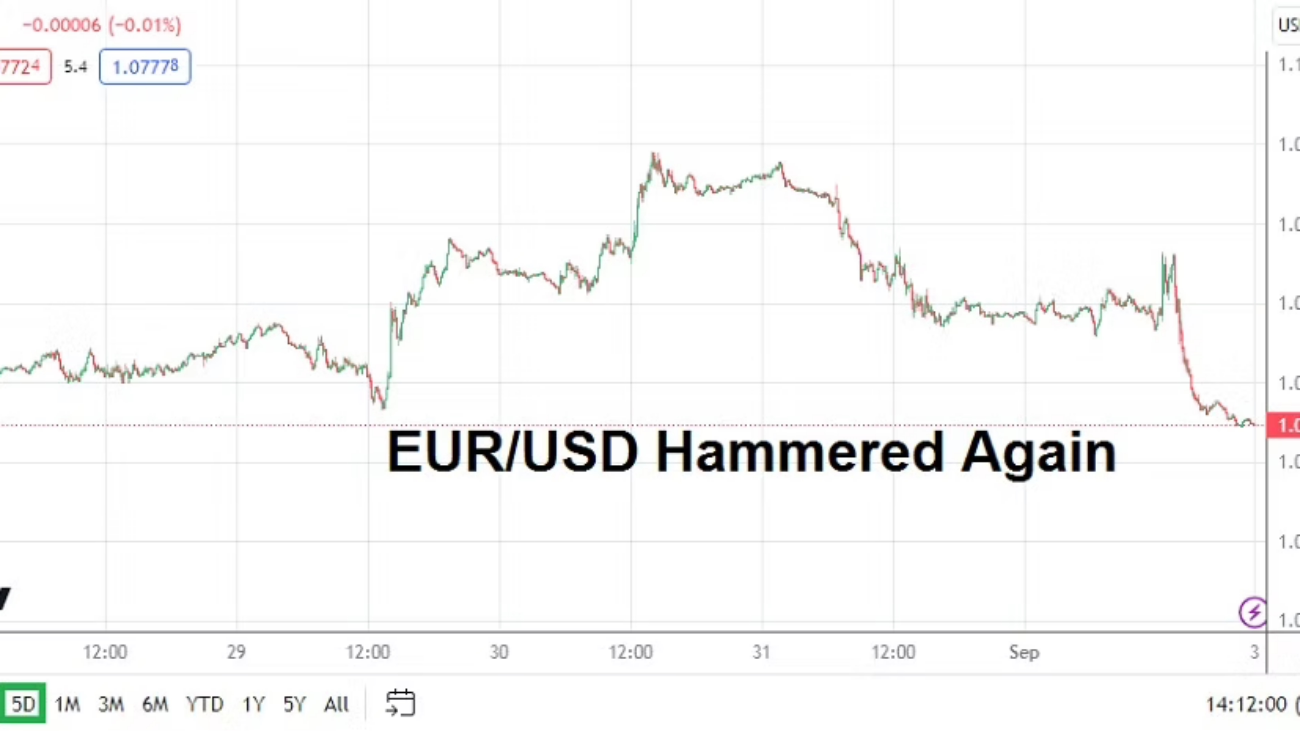
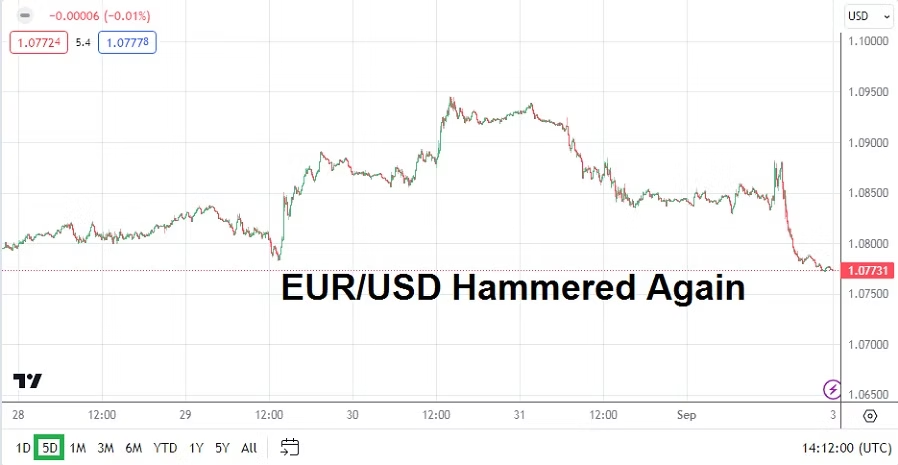
EUR/USD 5 Day Chart as of 3rd of Sept. 2023

Without trumpets or too much hyperbole, was Friday before going into the weekend a ‘false flag’, this as the USD gained strength against many other major currencies. A lack of volume because of the Labor Day holiday coming in the U.S and Canada tomorrow may have affected the Forex landscape. While trading is largely done by computer programs in financial institutions, day traders should understand last Friday worked as a get away day to enjoy a long holiday weekend in North America.

Meaning financial executives largely escaped their offices because they have seniority and the ability to disappear while their ‘underlings mind the store’. Essentially senior management often tells the staff that has to stay behind, “monitor and not touch the system”. This could have left the door open for what appears to be a strange reaction in Forex upon what was in fact weaker data on Friday from the U.S via the Average Hourly Earnings which came in slightly below expectations, and less than stellar U.S GDP results on Wednesday the 30th of August.

Yes, also this past Friday the Non-Farm Employment Change numbers were fractionally better this month than anticipated, but the prior month’s results were actually revised downward. And yet the USD remained strong. Is this because senior analysts, chief traders and risk management officers were absent on Friday?

Tomorrow the same folks will remain largely away from the markets too, meaning results should also be viewed with suspicion. Which sets the table for an intriguing Tuesday and Wednesday for all the major and minor currency pairs teamed against the USD. Gold and equity markets will need to be monitored closely too.

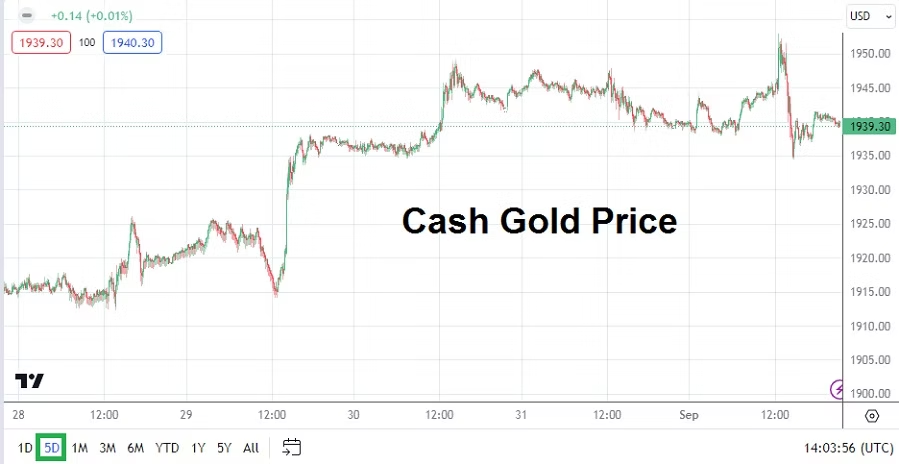
Gold Cash Price Five Day Chart as of 3rd Sept. 2023

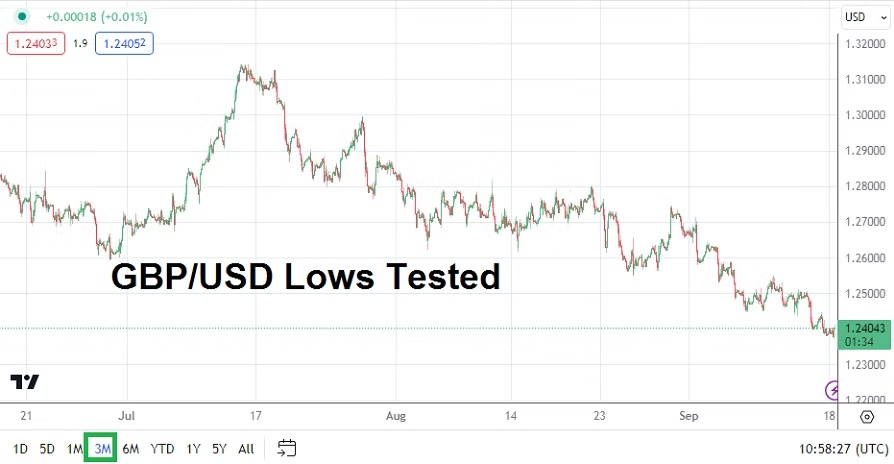
Some potential clues are that the price of gold stumbled slightly on Friday as the weekend approached, but this happened as the EUR/USD sank to a low for the week, and the GBP/USD came under renewed pressure. But again this happened in rather questionable circumstances. Important support levels technically may get tested tomorrow, but trading volumes should be examined. Gold in many respects held onto gains made earlier in the week.

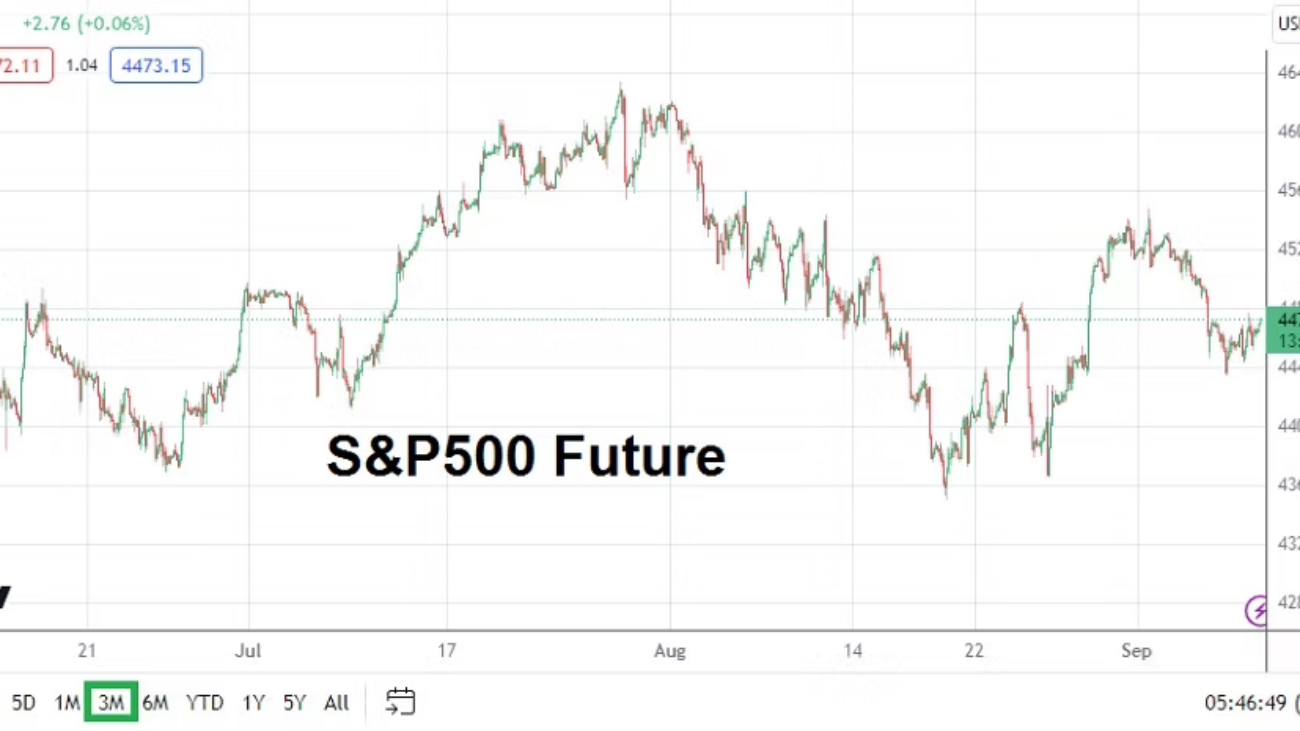
Yes, there are reasons to be nervous in financial institutions, due to higher short-term U.S Treasury yields, concerns about the China economy, mortgage rate worries in the U.S and elsewhere, fears about credit availability for small U.S businesses. However, these troubles have not caused a massive meltdown in the most primal of trading venues yet – major stock indices.

September is a notoriously volatile month for equities and speculators who use CFDs to participate in the stock markets globally need to be careful. Correct, some well known ‘traders’ are talking about a coming selloff in the markets, but so far we have not seen a major decline in the NASDAQ, S&P 500 or Dow Jones 30 indices. Day traders should not and cannot underestimate the potential for volatility to occur suddenly. Successful speculative bets via limited funds often means having to practice patience and risk management.

Thus, as the week begins early this Monday, day traders should be careful. Please note that a lack of big trading volumes because of the absence of U.S and Canadian financial institutions will make tomorrow’s results questionable. Opening the door for the potential of reversals on Tuesday, which might be abrupt as a ‘re-balancing’ of sorts takes place as folks returning to their offices seek equilibrium perhaps with their adjusted outlooks.

Simply put the U.S Federal Reserve the past two weeks has seen the same lackluster U.S data as all global traders, and the U.S central bank is in no position to raise interest rates over the mid-term. It would be useful if the Fed voiced their insights regarding the weaker than expected U.S Gross Domestic Product results last week, and the lower than expected Average Hourly Earnings report seen before the weekend. However, do not count on the Federal Reserve to do the right thing.

post203

AMT Top Ten Miscellaneous Considerations for this Friday

AMT Top Ten Miscellaneous Considerations for this Friday

AMT Top Ten Miscellaneous Considerations 1st September 2023

10. Travel Alert: Surprise visit to Jeddah, Saudi Arabia for Israeli bound passenger jet.

9. Book: Machiavelli A Biography by Miles J. Unger.

8. Coup d’Etat: Gabon added to the growing African list.

7. Bitcoin: Rollercoaster prices in BTC/USD past 48 hours. Up 2,000.00, down 2,000.00.

6. China: Weakness in Yuan is concerning governments and financial institutions.

5. Market Shifts: U.S Treasury yields have decreased the past week.

4. USD and Gold: Greenback stubborn with slight weakness emerging, Gold steady.

3. U.S Data: Jobs numbers may rattle markets today and expose underlying outlooks.

2. Labor Day: Volumes could be light today with long U.S holiday weekend coming.

1. Trading Tip: Cautious trading likely today, expect volatility to increase next week.

postN47.1

Plenty of Data from the U.S and China Should be Anticipated

Plenty of Data from the U.S and China Should be Anticipated

As the last week of August trading gets ready to begin, day traders may be glad to put the past month behind. The BRICS Summit and Jackson Hole Symposium delivered soundbites as promised last week, but there were few surprises. Forex, equities and commodities have been supplying a bumpy road for a while and may continue to do so.

Behavioral sentiment in the broad markets remains fragile, this as short-term U.S Treasuries continue to allure institutional players looking for solid returns. Some well known market players continue to issue cautious words regarding U.S equities, but the three major indices are still near mid-term highs. We have yet to experience a blood curdling selloff in the U.S equity markets. This maybe producing choppy results for some day traders pursuing CFDs while betting against higher moves.

Which brings up the question, which quantified analysis do you want to act upon? While the major U.S indices are up, a lot of the market action in these indices are driven by the ‘top performers’ which have ‘floated the boat’ while many other stocks have not performed handsomely.

Retail traders who are wagering on daily fluctuations need to understand there is a vast difference between short-term speculative positions and long-term investments. Hence the reason day traders are reminded to only bet money on what can be lost without a great deal of discomfort. Speculation should only be done with a very limited amount of cash, because day trading never offers guaranteed profits.

The next handful of days will deliver plenty of important data. The question is how financial institutions will react as they weigh the coming results against their own sentiment and outlooks regarding mid-term interest rates via the U.S Federal Reserve’s rhetoric. Market nervousness remains on edge as more tranquil days are certainly sought via risk adverse financial decisions.

The cryptocurrency market should be watched carefully by participants within its volatile assets. Bitcoin continues to trade near the 26,000.00 level and this is considered important support by many. And Binance coin has failed to inspire a sustained upwards reversal as Binance exchange remains under legal and regulatory shadows.

Traders are also advised to note the U.S will be on holiday on the 4th of September, the coming long holiday weekend could spark rather dynamic market action Thursday and Friday as financial institutions trade in advance of Labor Day.

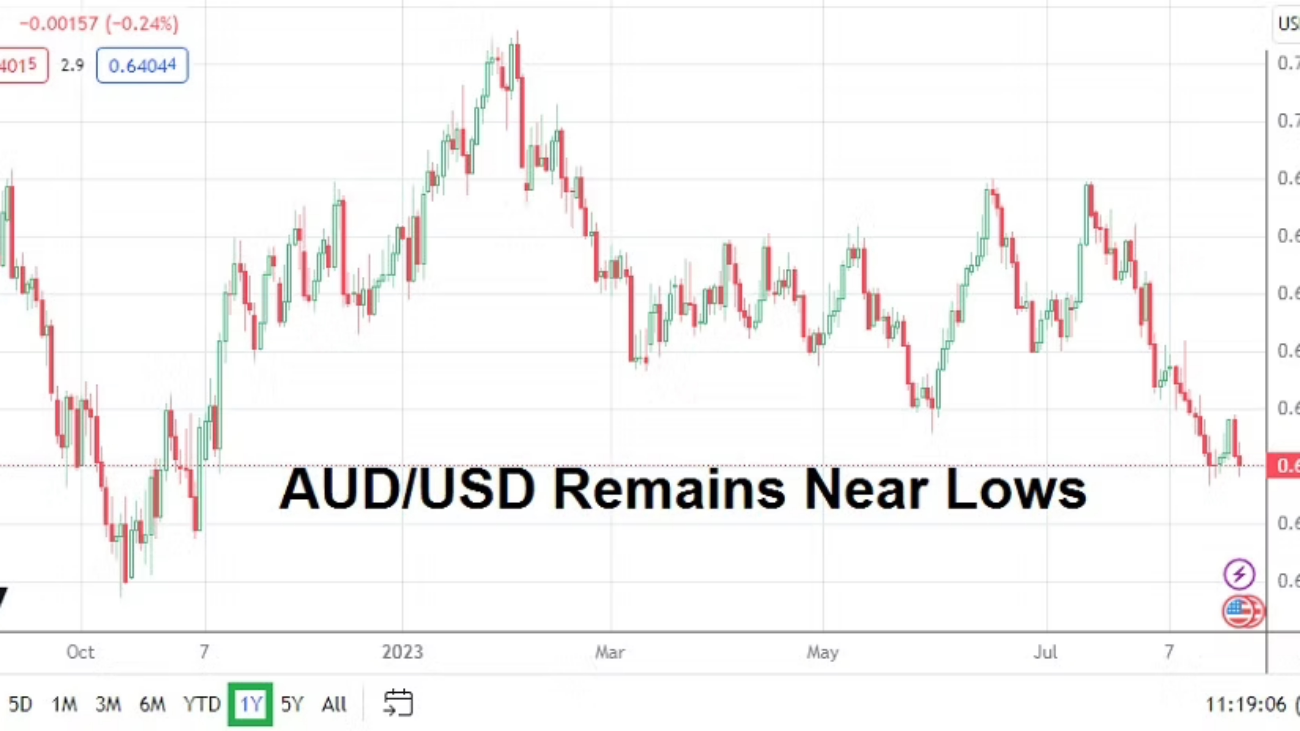
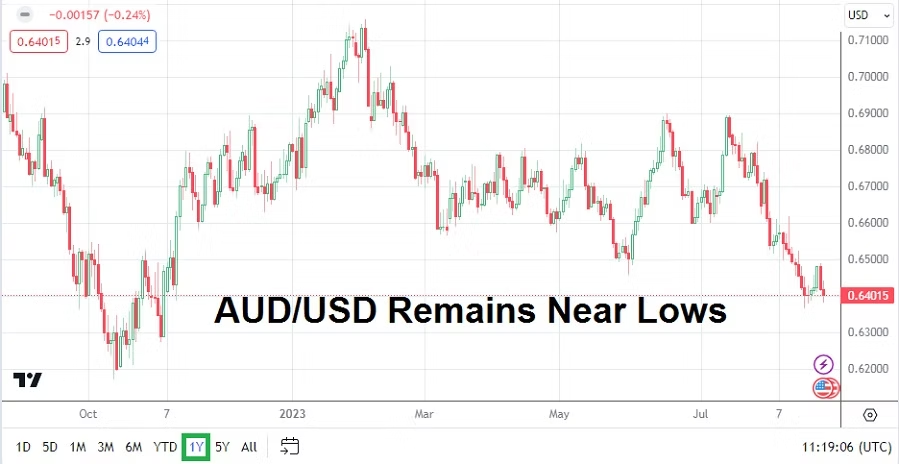
AUD/USD One Year Chart as of 27th August 2023

Monday, 28th of August, Australia Retail Sales – the numbers will cause a reaction in the AUD/USD and the result is expected to be slightly better than last month’s outcome. The AUD/USD is near important long-term lows.

Tuesday, 29th of August, U.S Consumer Confidence via The Conference Board – the anticipated result is lower than last month’s reading. However, the past three months have done better than expected, which may put some analysts on edge before the publication.

Wednesday, 30th of August, Germany Preliminary Consumer Price Index – the inflation numbers are expected to match last month’s gain of 0.3%. The EUR/USD will react to the outcome with momentary volatility. German economic data has been a concern in the European Union for a handful of months.

Wednesday, 30th of August, U.S Preliminary Gross Domestic Product and GDP Price Index – the numbers from the GDP reports will be watched by most financial institutions. Last month’s numbers surprised traders, this as growth remained quietly stubborn and inflation crept higher. The USD has been a powerhouse against the GBP and EUR recently. If these GDP reports surprise to the upside again, this could spark more buying of U.S Treasuries which could create additional strength in the USD.

USD/CNY One Year Chart as of 27th August 2023

Thursday, 31st of August, China Manufacturing PMI – the results from the Purchasing Managers Index from China since April have been lackluster and showed weak export demand globally. Economic data from China has sparked concerns from international investors, and the USD/CNY has certainly received attention as it has risen steadily and is now challenging highs from late October and early November 2022.

Thursday, 31st of August, U.S Core PCE Price Index – the Personal Consumption Expenditures data is expected to match last month’s gain. This inflation data, and the GDP Price Index numbers from the day before will certainly get a reaction from financial institutions which would prefer to see no surprises higher.

Friday, 1st of September, U.S Non-Farm Employment Change and Average Hourly Earnings – as always these reports could shake market sentiment instantly. However it is the wages data which will likely be a focal point for investors. If wages can come under last month’s gain of 0.4%, this would be welcomed by investors and they may go into the long U.S holiday weekend a bit more calm regarding the Federal Reserve.

post204

AMT Top Ten Miscellaneous Considerations for this Friday

AMT Top Ten Miscellaneous Considerations for this Friday

AMT Top Ten Miscellaneous Considerations 25th August 2023

10. Behavioral Sentiment: Risk adverse conditions heightened again.

9. Book: Pioneering Portfolio Management by David F. Swenson.

8. Rugby: All Blacks vs. Springboks tonight at Twickenham.

7. Federal Reserve: Jackson Hole Symposium and Speeches.

6. Travel Tips: Stay away from Russian corporate jets with Wagner members flying aboard.

5. South Africa: What’s next after BRICS Summit, an end to loadshedding?

4. Cryptocurrencies: Bitcoin, Binance coin remain under pressure.

3. Germany data: Coming ifo Business Climate and GDP data.

2. U.S data: Yesterday’s mixed Durable Goods numbers.

1. USD: Another burst of strength yesterday.

postN17

Fed Caught Again in Reactive Stance waiting for ‘Good’ News

Fed Caught Again in Reactive Stance waiting for 'Good' News

Let’s recall that about two and a half years ago the U.S Federal Reserve was still calling inflation transitory and claiming that price pressures would subside quickly as the onslaught of coronavirus decreased. Nearly all financial institutions could see the Fed was merely being stubborn, and that is a polite way of putting it, instead of being realistic.

It would be nice to give the Fed the benefit of the doubt now, and say the Fed have better information and know how to quantify the outlook of the U.S economy in a more dynamic fashion. However, being skeptical of the U.S Federal Reserve and its ability to miss signs plainly in front of them is a full time job for many analysts and it pays well.

As said by many before, many members of the U.S Federal Reserve have the profound disadvantage of not having the experience of ‘skin in the game’. Many Fed officials have worked as paid bureaucrats their entire lives and have literally ‘studied’ their way to the top of the central banking world, without having firsthand knowledge regarding the daily chore of running businesses. Most Fed officials have no dirt under their fingernails.

The Fed is clamoring now to return the U.S inflation level to 2.0%, and there is a large amount of disagreement about how this number is interpreted via different economic gauges. The Federal Reserve has a poor track record as stated above for being able to know what is actually ahead. They have been very aggressive regarding raising interest rates the past year and a half, and now they are finding it difficult to say they are done. This tough talk could be an attempt by the Fed to create headwinds for those considering proclaiming the U.S central bank should become ‘dovish’ by speaking tough about potential pitfalls to come, this even though the Fed plainly missed dangerous road signs a few years ago which helped agitate the problems being dealt with at this moment.

What could go wrong you ask? A credit crunch for banks and consumers.

However, business people know all about potential crisis if they have enough experience. Paying employees wages, finding additional good employees, landing a space that charges a reasonable amount for rent, hoping taxes remain sane, and hoping your shop is not shoplifted into poverty are some obstacles business owners face nowadays in the U.S. The rising costs of wholesale prices has not completely disappeared, but things may be getting better via economic data. Maybe this will be proven wishful thinking, but outlook is important and should be considered.

The rising costs of doing business is then passed along to consumers. The Federal Reserve seemingly doesn’t understand that it has made it more expensive to accomplish positive business results for small owners of enterprise in the U.S, and the Fed seems to forget that over 44% of the American economy is powered by what can be called family owned companies. The Fed certainly doesn’t mention that it is hard enough for small U.S business to survive over the long haul, with a number of nearly 65% becoming failures after ten years statistically.

So while the Federal Reserve talks a great game about managing interest rates via their monetary policy and the Federal Funds Rate, they often forget about the problem small business owners face. Having said that, the higher interest rates the Fed has sparked because of its slow reaction to what they perceived as transitory inflation two years ago – is having a bad effect on bigger businesses too. This because big corporations no longer enjoy ‘free money’ from their banks. Money has become harder to attain.

Once again it has been proven that everyone looks like a genius when the U.S economy is sailing smoothly, but when obstacles develop and people have to quantify solutions to real problems, suddenly it is harder to produce profitable results. The U.S government has created massive deficits by using huge amounts of cash stimulus to protect economic growth in the U.S over the past five years. In fact because of the quantitative easing after the financial crisis of 2007, it can be argued the U.S has used stimulus for more than 15 years to make sure the U.S economy is ‘stable’. Politicians like to keep their jobs because there is little else they can do in the real world.

The Federal Reserve by increasing the Federal Funds Rate has made U.S Treasuries a feeding frenzy and yields have increased substantially. The higher rates of interest the U.S government will have to pay down the road on existing U.S Treasuries is not a small problem mathematically. However, for the time being the Federal Reserve and U.S government seem to be less concerned about what they are potentially putting on the shoulders of future generations of U.S citizens, and trying to keep the U.S population tranquil. Luckily for many American homeowners, U.S mortgages are still mostly being paid out via the lower interest rate amounts agreed upon a couple of years ago and beyond. New home sales and existing home sales are sputtering in the U.S, because many people do not want to pay the higher interest rates that now need to be signed upon for mortgages and paid.

What the U.S Federal Reserve needs to do is to state publicly that it is not going to raise interest rates over the mid-term, and that it is going to allow the free market to work itself out via enterprise with supply and demand ratios taking center stage and being allowed to work. And lastly, that if inflation conditions as expected continue to improve by decreasing, that the Federal Reserve will consider lowering interest rates in the first part of 2024.

However, the Federal Reserve is worried that if it does sound too positive, businesses will start to gamble on a better outlook and this will raise existing inflation which has been stubborn. But again, the Federal Reserve often doesn’t understand how smaller U.S businesses work. To get out of the current economic mess the U.S Federal Reserve needs to be pro-active and not reactive. Also, the ‘ruling’ U.S government has to cut back on stimulus programs with promises of a ‘free lunch’ for all and return to looking at numbers realistically. Fiscal responsibility is an idea that can actually be practiced.

postN44.1

Dog Days of Summer and a Return of Calm as Storms Threaten

Dog Days of Summer and a Return of Calm as Storms Threaten

With essentially two full weeks of trading until the end of August and the unofficial end of summer in sight, perhaps this week may be a good time for retail traders to be observers if they do not have the stomach for potentially noisy speeches and markets.

However, speculators who can block out media hyperbole and microphone soundbites from folks standing on podiums may find conditions rather attractive. As always outlook depends on perspective, time frames and managing risk. Behavioral sentiment has been rather chaotic the past month and some traders may suspect we are approaching the end of the loud spectacles of nervous drama in the markets.

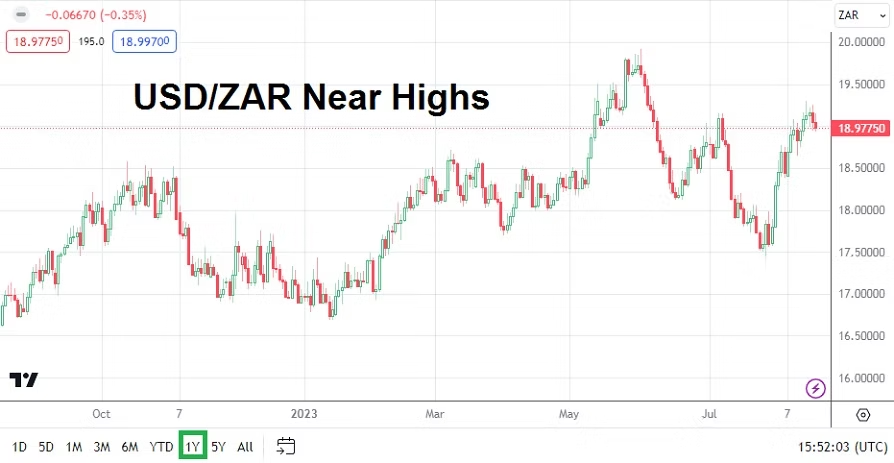
USD/ZAR One Year Chart as of 20th August 2023

The economic data this coming week should prove to be a rather mild schedule, but outside influences will certainly get publicity and get fanfare from talking heads who want 15 minutes of your attention. The BRICS Summit will get underway in Johannesburg, South Africa officially on the 22nd. Another big conference later this week will be the U.S Federal Reserve’s Jackson Hole Symposium. Both events will produce plenty of conversations about inflation, economic stability and a more cohesive global cooperation monetarily. This will also create many raised eyebrows among traders who are skeptical about these type of events.

While leaders of China, Russia, India, Brasil and South Africa get together in Johannesburg, it is likely we will hear talk about potential BRICS expansion and the pursuit of a new unified currency which doesn’t rely upon the USD. However, in the background there is likely to be plenty of distraction because of China’s faltering economic data and Russia’s Ruble which has been impacted severely in the past month. Plenty of large rugs will be needed to hide the dust which threatens to make this BRICS event rather memorable.

Add the ongoing saga of Niger and the absence of a political solution for the world’s fourth largest producer of uranium as a potential flash point standing on the side of the stage waiting to make an appearance regarding Africa news. Perhaps it is too cynical to wonder if coordinated military action within Niger will await the end of the BRICS Summit. This so China and Russia are not given an opportunity on the ‘world stage’ as a united voice to offer their opinions regarding an intervention.

The Jackson Hole get together of global central bankers from the Fed, BoE, ECB, BoJ and others will certainly grab headlines late this week, but the script is mostly known regarding the rhetoric to come from the Federal Reserve’s annual event. Forex may move based on comments from the central bank chiefs as they speak towards the end of this week, but it is unlikely anything surprising is going to be heard. U.S Treasuries will remain a topic because of the ability to lock in a solid return over the mid-term compared to betting on the outcomes of the stock market, but this scenario has been playing out the past month. Investors should prepare for a long line of speeches regarding economic outlooks from central bank officials all week. Day traders should also remember that the chatter starts to be ‘tuned out’ as the speeches grow longer.

Traders looking for other outside influences may want to look at the cryptocurrency market where major assets have shown signs of struggling. Bitcoin and Binance coin could remain in the headlines for all the wrong reasons, if their prices continue to challenge important support levels and become more vulnerable.

Monday, 21st August, China Prime Rates – economic data from the nation has caused concerns that real estate problems are spilling over into the domestic consumer market. The interest rates China lends money to consumers is expected to be lowered to try and spark spending. Recent economic reports from China have been bad, and readers who believe this is merely ‘Western’ bias being reported should be careful to look for other sources to confirm data. Investment within the second biggest economy of the world has become tentative, because there is a fear the ‘official’ China numbers may be worse than those being reported.

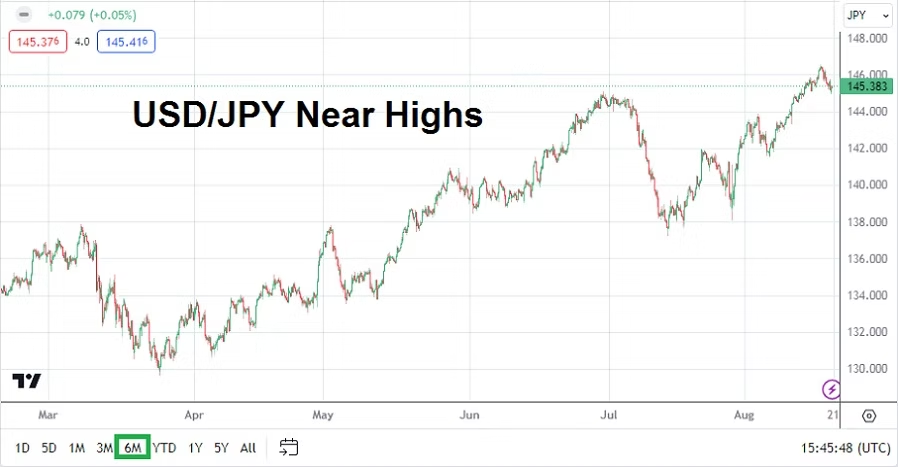
USD/JPY Six Months Chart as of 20th August 2023

Tuesday, 22nd August, Japan Consumer Price Index – the Bank of Japan report is expected to show a slight decline to the inflation numbers. Last month’s outcome of 3.0% is expected to lower and produce a 2.9% result. The USD/JPY could react momentarily to the outcome, the currency pair is near highs it hasn’t touched since November 2022.

Tuesday, 22nd August, U.S Existing Home Sales – the data is expected to show a slight decline of purchases. Mortgage prices continue to climb in the U.S and homeowners are less likely to desire taking on a new higher mortgage, this if they already have a lower mortgage locked in from a few years ago within a dwelling they already live.

Wednesday, 23rd August, Flash European Manufacturing and Services PMI – the reports will come from the E.U and U.K. The German and British outcomes will stir the Forex markets. The manufacturing data from Germany and Britain are forecast to be slightly negative.

Wednesday, 23rd of August, U.S Flash Manufacturing and Services PMI – the U.S reports are expected to show a decline in the manufacturing sector. If a negative result materializes, this could actually spark a selloff of the USD – if the financial markets have returned to calm waters by the middle of this week. Weaker numbers might be interpreted as another reason for the U.S Federal Reserve to remain neutral and why they should consider becoming dovish over the mid-term.

Thursday, 24th of August, U.S Durable Goods Orders – the core and broad numbers are anticipated to show declines. If the Durable Goods Orders numbers are worse than expected this could spark more USD selling, particularly if financial institutions are already calm and feel the data is another step to ‘lowering’ the Fed’s hawkish interest rate rhetoric. However, for the USD to weaken the markets will likely have needed to be tranquil beforehand, without major surprises having happened earlier in the week that may have escalated nervous behavioral sentiment in the broad markets.

Friday, 25th of August, Germany Business Climate and GDP – the ifo Business Climate report comes from a composite of manufacturers, wholesalers, and other enterprises and is expected to be lower than last month’s outcome. The Gross Domestic Product results are anticipated to show no changes, which would mean Germany’s economy remains in the doldrums and is flirting with recessionary pressures.

Friday, 25th of August, U.S University of Michigan Consumer Sentiment – this revised reading is expected to show U.S consumers remain steady without significant changes compared to the previous outcome.

postN43

Alert: Important Support in View for Binance Coin Traders

Alert: Important Support in View for Binance Coin Traders

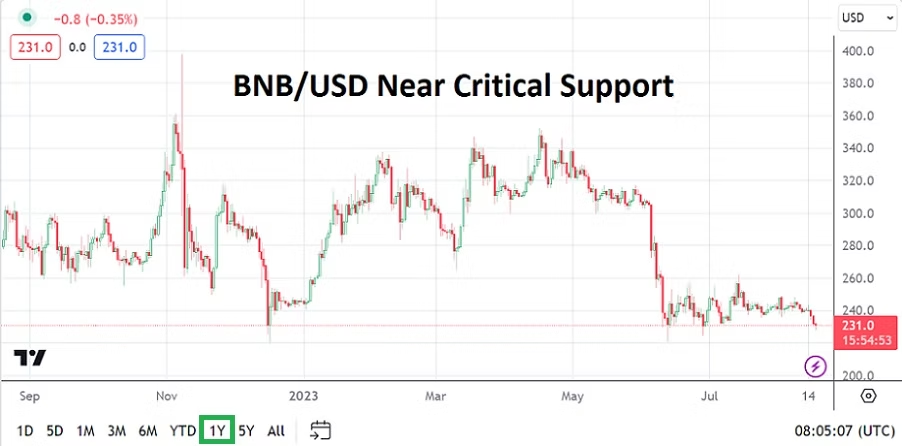
BNB/USD One Year Chart as of 17th August 2023

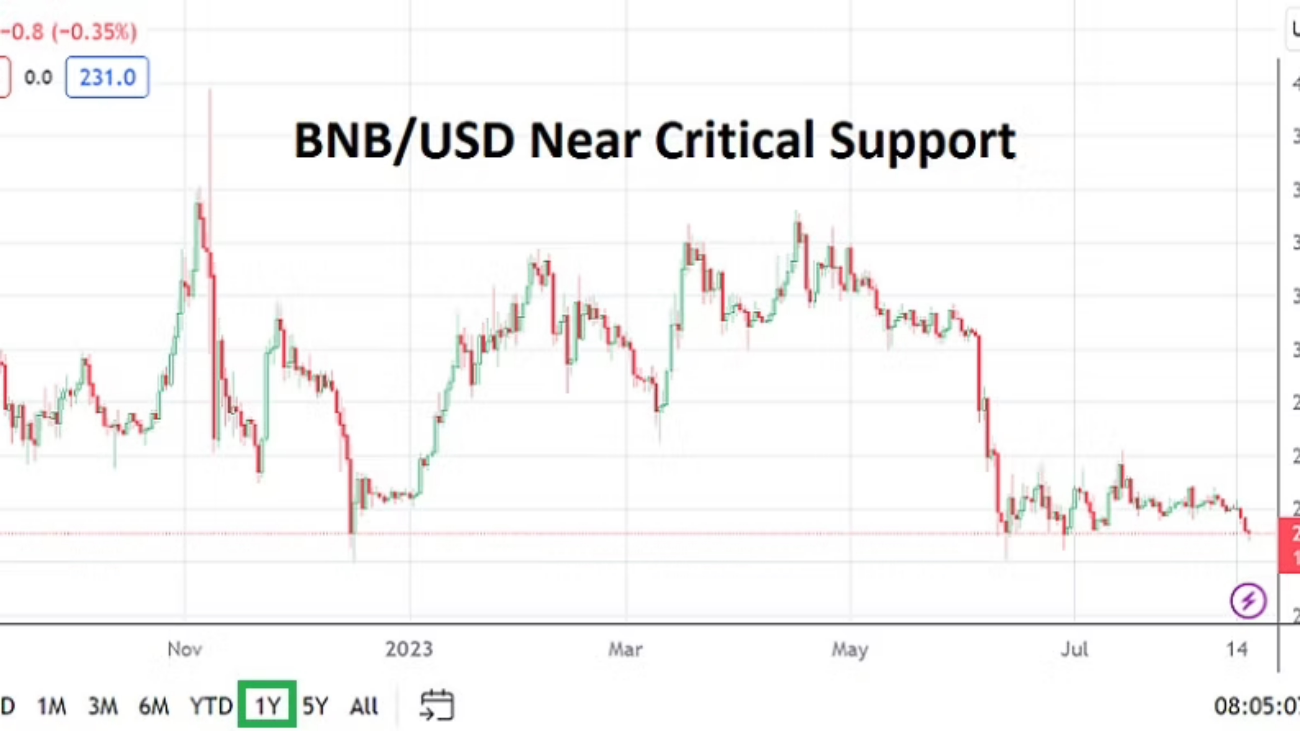
Important support for BNB/USD is now being battled. The price of Binance coin is near a key inflection value of 230.00 USD. The digital asset world including Bitcoin and other cryptocurrencies has taken on stronger selling recently. Legal issues surrounding Binance have not gone away, nor will they. If Binance starts to show stronger price velocity lower it could spook the broad cryptocurrency market in a large manner. Binance is still the biggest crypto exchange in the world, even as it has come under the investigative pressures of the U.S and some European nations.

Traders should pay attention to ‘stablecoins’ as a barometer of behavioral sentiment in the cryptocurrency landscape. Tether should be watched closely. If USDT sustains value below the 1.00000 USD level for more than a couple of days this would be a negative signal that ‘players’ in the cryptocurrency world are getting more nervous.

Bitcoin is also seeing steady selling early this morning and the price of BTC/USD is near 28,550.00 as of this writing. If BTC/USD were to break below the 28,000.00 this could also add to fear and noise in the cryptocurrency world.

The next seemingly important level for BNB/USD below is around the 225.00 USD mark if tested, if this level proved vulnerable and trading momentum continued downward stronger selling could develop if panic erupts surrounding Binance coin. Traders should be very careful in the cryptocurrency trading environment right now. Legal shadows hovering over Binance have existed for a long-time, and if selling pressure were to mount and values are suddenly tested from June of last year when the 200.00 BNB/USD level was last tested (this as FTX collapsed) this would clearly not be a good signal.

postN42.1

Day and Institutional Traders Suffering Nervous Conditions

Day and Institutional Traders Suffering Nervous Conditions

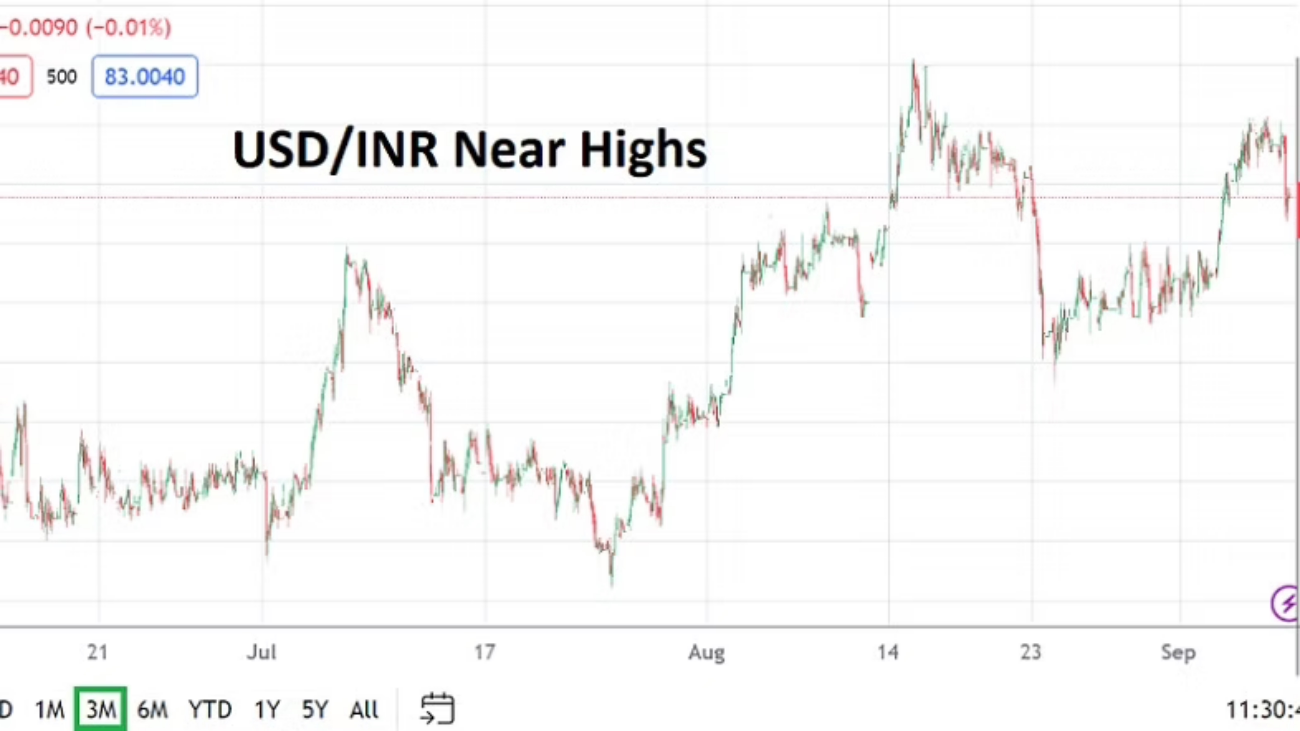
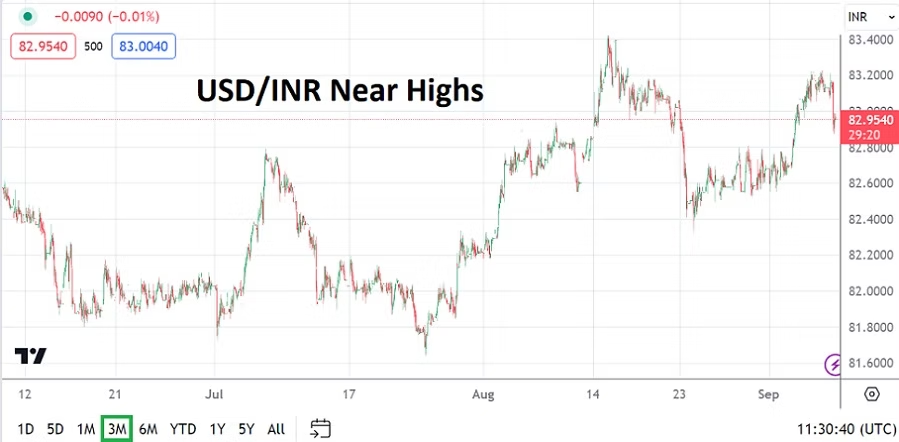
Market price action has caused quite a few interesting interpretations of the prices being demonstrated in Forex, gold and equity markets recently. The USD/INR is now at record heights, the USD/ZAR is back above 19.00000 and the USD/BRL is again near the 5.0000 ratio.

USD/INR One Month Chart as of 16th August 2023

While Forex traders around the world look for clues as to why their local currencies are suffering and are likely blaming domestic policy from their own governments and central banks, they should remember the larger global financial markets tend to move in a unified sphere. Domestic concerns are a real cause for market action often, but when global sentiment becomes nervous the larger force of institutional financial houses shake the ground.

Correlations exists worldwide because of behavioral sentiment ruling outlooks over the near, mid and long-term in the marketplace. While we like to put our faith in the financial markets as an all knowing entity, this is far from the truth. Humans who react to nervous conditions and also have bias are the ones still making decisions in financial houses, they are the ones giving orders to their programmers via their trading software which is largely geared to follow perceived trends these institutions deem important.

USD/ZAR One Month Chart as of 16th August 2023

Most financial institutions are not speculative in nature, day and even longer term retail traders should remember this point. Most institutions are trying very hard not to ‘speculate’, they are simply positioning per their outlooks based on their understanding of the trading landscape. Whispers of potential downgrades from U.S rating agencies on larger corporate banks yesterday sent a shudder through the broad markets, economic data and rumors swirling about China are not helping either. The current volatility in the broad markets is not welcomed warmly by financial institutions.

When price velocity accelerates and volatility flourishes in highly charged trading situations, this suggests financial institutions are nervous and not able to find comfortable positions. Conflicting ‘opposite’ positions from other larger players are causing market chaos in Forex, equities and other financial assets. There is a herd mentality in trading and when the herd doesn’t march in an unified direction chaos happens.

Most institutional players want calm, they want tranquil trading conditions so they can manage their clients’ money quietly. Bonds, equities and indices, real estate holdings via REITs, and gold make up a large part of their holdings.

Most U.S pension funds for instance have mandates to be positioned into a large amount of quiet investment vehicles which do not trade with wild price ranges. They seek steady returns from their institutional investors that can be counted on in a quantitative manner to demonstrate to their clients.

Large financial institutions are allowed sometimes to trade 2 to 4% of their holdings in different categories of speculative investments – such as start-ups, allocate cash to hedge funds they trust, small cap stocks they might know about, etc., depending on the exact mandates agreed upon.

Yes, hedge fund managers like Bill Ackman and investor Michael Burry get a lot of attention when they bet against the markets, but believe it or not they are small fish in a large ocean a lot of the time. They are good at what they do, but their speculative positions cannot be mirrored by most financial institutions or small day traders.

Ackman and Burry may be trading billions, but remember institutional financial companies including pension funds when combined total approximately 80% of market cap. Institutional trading decisions can cause massive waves in the financial world, but they actually seek calm seas.

When markets become volatile this often means institutional traders are not comfortable and their behavioral sentiment is fragile. Forex for example is often affected by financial institutions moving money as they handle export and import transactions for companies, but transactions are often done to buy and sell equities too. The Bank of International Settlements estimated an average around 7.5 trillion USD in value was traded in Forex everyday in 2022.

Day traders should not take it personally when the markets move against them, instead they should look to try and mirror the sentiment of larger financial movers. However, knowing and timing financial institution decisions is elusive because short term compared to long term considerations are often different.

Most traders are merely betting on the price action the large institutional funds are undertaking via the direction of the marketplace. Day trading for most retail speculators remains dangerous. A solid fundamental understanding of market ‘forces’ can allow smaller traders to feel more comfortable.

postN41.1

Nervous Trading Results End of Last Week Serve as Caution

Nervous Trading Results End of Last Week Serve as Caution

The end of last week saw mixed U.S inflation data and lingering nervous sentiment regarding outlooks about U.S Treasuries, create rather choppy conditions for day traders. Economic data this week should be more calm because there appears to be less significant risk events on the horizon. Financial institutions finished Friday within a USD buying mode, a bearish gold trend, and U.S stock indices declining – highlighting fragile conditions remain evident among larger market players.

NZD/USD Six Months Chart as of 13th August 2023

Monday, 14th of August, New Zealand Business Services Index – this report may turn out to be the highlight of the day for some traders. The NZD/USD which will start tomorrow near values last seen in the middle of November of 2022, may find interested speculators glancing at the report. But the NZD is moving largely under a USD centric driven market, like most of the broad Forex market. Mid and long-term technical support levels are certainly in focus, and they have proven vulnerable recently as the NZD/USD trends lower.

Tuesday, 15th of August, China Industrial Production – economic data from the nation has been troubling regarding deflation. However, traders who lean towards a ‘Western’ bias should remember to keep their perspectives realistic, because weaker China economic results mean the global economy is struggling too. A slight decline in Industrial Production is expected. Weaker than expected numbers from China could indicate ‘soft’ demand via export partners.

As an aside financial institutions will keep their eyes on the China real estate market too, this as whispers about ‘Country Garden Services Holdings’ funding problems remain a talking point and potentially escalate. Values of properties are suffering from declines too in China and this is hurting the domestic economy.

Tuesday, 15th of August, U.S Retail Sales – a slight gain in spending by U.S consumers is expected to be seen. If the number can meet the anticipated gain of 0.4% the result may not spark too much volatility. If for some reason a higher outcome is produced, this could spark some concerns about U.S Federal Reserve rhetoric. Although it may seem counter-intuitive to some traders, a weaker number could help ignite some bearish selling of the USD.

Wednesday, 16th of August, New Zealand Official Bank Rate – the interest rate policy from the RBNZ is expected to remain in place. Although it should be noted both New Zealand and Australia have almost made it a habit to surprise investors over the past few months.

Wednesday, 16th of August, U.S FOMC Meeting Minutes – the report will be studied for clues regarding outlook. However, the Fed has a well-practiced ability to maintain tight lips and not disclose too much internal thinking, particularly when it comes to disagreement regarding policy – which is seemingly escalating in the Federal Reserve.

Thursday, 17th of August, U.S Weekly Unemployment Claims and Philly Fed Manufacturing PMI – in what has likely been a quiet week of data leading up to these reports, some analysts may try to get the attention of their clients regarding these results to create ‘noise’, but unless there is a strong miss the data is likely to simply be digested quietly into the broad marketplace.

GBP/USD One Week Chart as of 13th August 2023

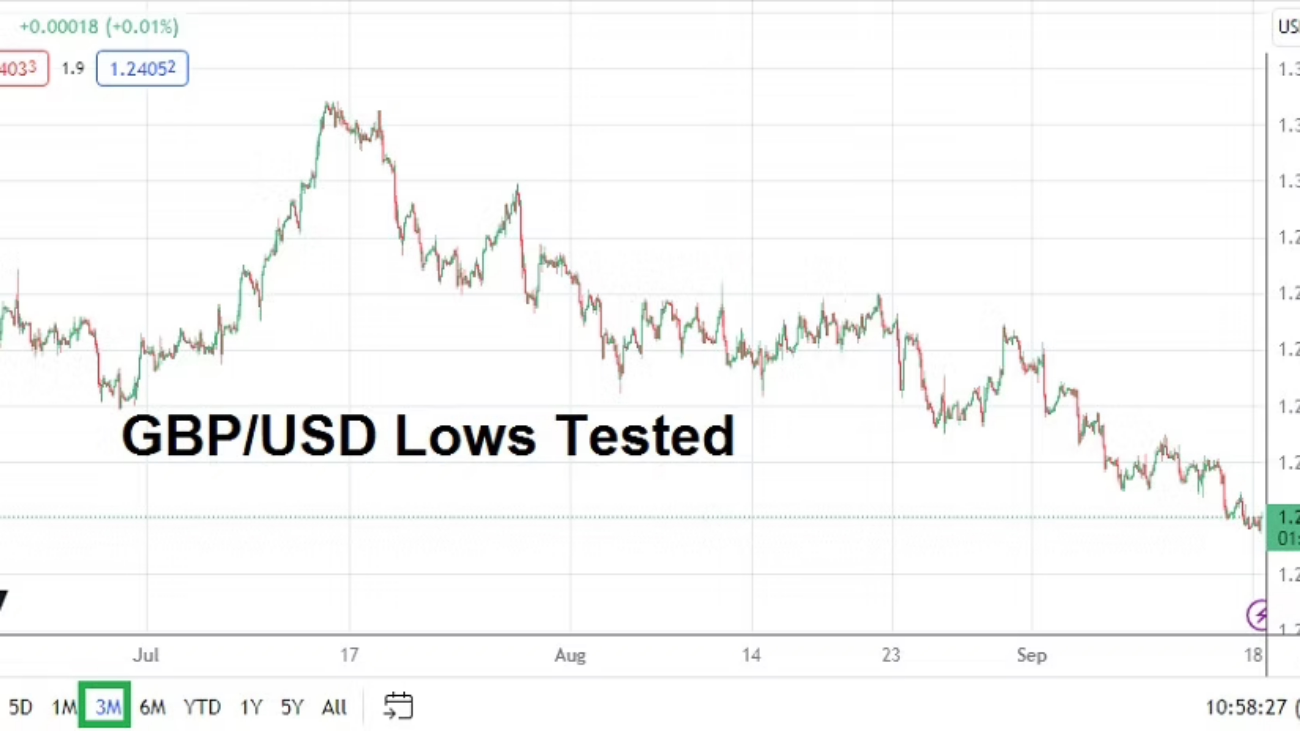
Friday, 18th of August, U.K Retail Sales – last week’s better than expected GDP numbers from Britain will make the outcome of this consumer data rather intriguing. The GBP/USD could find some impetus from the results. The estimate is calling for a decline of minus -0.4% compared to last month’s gain of 0.7%. The GBP/USD which went into last weekend near lows will likely find plenty of attentive traders as this new week comes to a close.

postN39

USD/INR: Higher Move Correlates and Political Shadows Loom

USD/INR: Higher Move Correlates and Political Shadows Loom

The USD/INR is near the 82.8150 ratio as of this writing the 9th of August, on the 25th of July the currency pair was near the 81.6500 level momentarily. Upwards movement of the USD/INR did produce price volatility in the last week of July, and on the 1st of August the Forex pair was near the 82.1700 ratio. Another dose of upwards momentum quickly occurred on the first day of August, and by the 2nd the USD/INR was trading around the 82.7650 mark.

From Wednesday of last week the USD/INR has essentially taken on a consolidated framework, speculators who are gambling on the USD/INR and need big movement to occur in order to facilitate profits have likely found the currency pair difficult to manage. Yesterday a high of nearly 82.9500 came within sight briefly, this as global risk adverse conditions arose because of the Moody’s rating agency downgrade of some U.S mid and small size banks regarding their fundamental ‘soundness’ and credit worthiness.

Rising interest rates from the U.S Federal Reserve have made it harder for many U.S banks to conduct their business, and loans have become more expensive for their clients struggling to keep up with the rising payments. Particularly if borrowers have the unfortunate position of holding ‘variable’ loans which cost more when interest rates are going up. This has also affected the housing sector in the U.S and in the U.K, as mortgages have become highly priced due to the Federal Reserve and Bank of England having aggressive interest rate policies which are affecting the cost of new home purchases.

The question USD/INR traders may be asking is what does this have to do with them?

USD/INR One Month Chart as of 9th of August

The USD/INR Doesn’t Trade in a Vacuum

The USD/INR has risen in value the past two and half weeks as many other major currency pairs have suffered a similar fate. Nervous sentiment abounds in the global markets because financial institutions are wary of what the major central banks will do next. U.S economic data has been mixed recently, but this perspective depends on time frames regarding outlooks.

Short and mid-term viewpoints continue to point to complications regarding growth and inflation expectations and interpretations of U.S data. The ratings downgrade of some U.S banks from Moody’s yesterday, and early last week Fitch’s downgrade of U.S Treasuries all is related. Rating agencies are getting nervous, perhaps because they do not want to be blamed and held liable if the proverbial ‘fluff’ hits the fan over the mid-term. Rating agencies largely ‘missed’ the financial crisis of 2007 in a famously bizarre manner. The sudden emergence of rating agencies warning investors has made the USD stronger as global investors have become risk adverse temporarily. Yes, this might feel illogical, but the USD remains the world’s safe haven.

The USD/INR also certainly trades because of economic conditions affecting its value from within India. The Reserve Bank of India has a large hand in managing values and is known to be rather active regarding interventions. Yet the USD/INR is being ‘allowed’ to continue to trade near all-time highs. This as India’s status as a growing economic power has taken shape in the global financial markets the past year. The India government has not been aggressive regarding its interest rate policy, and has allowed inflation to seep into the domestic economy via a weaker Indian Rupee for a number of complex reasons. Purchasing goods from India abroad and the ability to invest in India by global financial institutions may be more attractive to those holding USD and needing to convert into INR only when the time is necessary.

Politics and the USD/INR Price Level as 2024 Elections Start to Lurk

From a political perspective too, let’s acknowledge a general election will take place in India in April and May of 2024. Economic decisions being made today and for the mid-term are certainly being affected by the ruling Indian government’s outlook and desire to remain in power. Having come off of yesterday’s highs in the USD/INR the currency pair does remain within sight of highs.

The 83.0000 level likely remains a key barometer for the USD/INR and the Reserve Bank of India is likely watching this value carefully. While it seems unlikely the India government wants the USD/INR to trace much higher because of the psychological implications, global risk adverse sentiment are making the higher values of the currency pair sticky. Tomorrow’s inflation data from the U.S will affect Forex and the USD/INR via the Consumer Price Index. Friday the U.S Producer Price Index will be published. A slight rise in the broad CPI results tomorrow is expected, while Friday’s PPI outcome is expected to match last month’s numbers.

If risk adverse trading remains evident today and the USD/INR holds its ground over the next 20 hours, the currency pair could find that its consolidated price movement from the past week suddenly changes. A higher tick in U.S inflation could be enough to cause the USD/INR to challenge the 83.0000 ratio. Speculators who are wagering on the USD/INR are cautioned to be pro-active regarding their risk management the remainder of this week.

postN36.1

Anxiety and Surprising U.S Data for Day Traders to Consider

Anxiety and Surprising U.S Data for Day Traders to Consider

Global central banks stayed in their anticipated lanes last week as the Fed and ECB raised their key lending rates. The BoJ has admitted it is allowing its yield curve to increase, meaning the Japan government is cutting back on purchases of Japanese bonds. Forex produced anxiety and choppy results for day traders.

Gold 6 Months Chart as of 30 July 2023

Economic data from the U.S last week provided a strong Gross Domestic Product result on Thursday, and followed with weaker than expected Personal Consumption Expenditures and Personal Income statistics before going into the weekend. Meaning the U.S economy appears to be surprisingly solid, while inflation pressures do indicate they are in decline. The Forex market turned volatile on Thursday and Friday, gold which traded at nearly 1980.00 USD on Thursday went into the weekend near 1959.00.

VIX Index 1 Year Chart as of 30 July 2023

Stock markets in the U.S via the major indices continue to incrementally rise and folks waiting for a big sustained selloff are having their patience tested. Perceived volatility in U.S markets is very low and the VIX (Volatility Index) indicates many investors are not taking the time to hedge with options because their confidence is remarkably high. A cautious reminder for traders, one bad day could change all of the optimistic sentiment.

In the cryptocurrency world, folks should continue to keep their eyes on the Binance exchange and its Binance coin. Many digital assets seem to be suspiciously close to important support levels as this week begins and appear vulnerable.

Monday, 31st of July, China Manufacturing PMI – while U.S data surprisingly improves, China has not begun to show signs of a positive turnaround quite yet, and this reading is expected to be below last month’s outcome. China data is a solid barometer of global economic health and traders should give these results proper attention.

Monday, 31st of July, E.U Consumer Price Index Flash Estimates – the European CPI numbers are expected to come in slightly below the previous month’s reading. If for some reason these inflation numbers are higher than expected, this could cause some chaos briefly for the EUR/USD. A weaker number however offers no sound wagering basis for short-term day traders either. Behavioral sentiment appears to be ruling the EUR/USD landscape for the time being, and technical levels should be watched.

Tuesday, 1st of August, Australia Reserve Bank Cash Rate – the RBA is expected to follow in the footsteps of the Fed and ECB and raise its lending rate by 0.25%.

Tuesday, 1st of August, E.U Manufacturing PMI – Germany and France are anticipated to produce similar results to last month’s outcomes. Recessionary pressures are a concern in the E.U and better than expected numbers would be welcomed, but this may prove difficult to demonstrate as economic conditions remain challenging.

Tuesday, 1st of August, U.S ISM Manufacturing PMI – the results from the manufacturing sector in the States should be watched. A slight improvement is expected, but the reading is not expected to produce a wildly optimistic result. An outcome which slightly beats expectations, but is not too strong might make the USD slightly weaker. Global investment institutions are likely hoping for any signs that the Federal Reserve will have to become less aggressive. A lackluster to ‘fair’ ISM Manufacturing PMI result could be evidence larger Forex traders want to see if they are aiming for bearish momentum in the USD.

NZD/USD 3 Months Chart as of 30 July 2023

Wednesday, 2nd of August, New Zealand Employment Change – the jobs statistics are expected to show slightly weaker results from the nation. The NZD/USD remains within the lower elements of its long-term price range. There are many NZD/USD bullish traders waiting for a sustained reversal higher, but it is unlikely to be produced from these New Zealand jobs numbers.

Thursday, 3rd of August, U.K BoE Monetary Policy Summary and Official Bank Rate – the Bank of England remains in a difficult spot and it will likely raise interest rates by another 0.25%. Criticism of the Bank of England has been loud in Britain, but the BoE likely feels it has to remain in line with the Fed and ECB. Recessionary pressures continue in the U.K and inflation remains problematic. Concerns will be heard regarding property mortgages for home owners if the BoE hikes. The GBP/USD will certainly move depending on the rhetoric from the Monetary Policy Summary and talking points delivered by BoE Governor Andrew Bailey.

Friday, 4th of August, U.S Non-Farm Employment Change and Average Hourly Earnings – the jobs data parade will climax at the end of the week, this after starting on Wednesday via the ADP jobs numbers. Investors will watch the Non-Farm Employment Change data carefully and correlate them to the better than expected GDP results from the 27th of July. The wages data from the Average Hourly Earnings is expected to come in with a slight decrease. A weaker inflation result from the wages statistics could cause additional softness in the USD. However, recent data from the U.S has been hard to predict correctly, and day traders may want to sit on the sidelines until all the jobs numbers are digested.

postN34

USD/INR: Consolidation Might Come to an Abrupt Conclusion

USD/INR: Consolidation Might Come to an Abrupt Conclusion

The USD/INR is trading near the 81.9750 ratio as of this writing and its price action since the 13th of July has produced a tight price range. On the 12th of July the USD/INR was trading around the 82.3000 region, this after being able to incrementally decline when a high of nearly 82.7900 was reached on the 6th of July.

Prior to the apex value of July, the USD/INR had traded in a rather consolidated mode from the middle of June until the first few days of July, essentially within a price realm the currency pair now lingers. Speculators must constantly fight the slightest of reversals if they are using too much leverage, but the USD/INR over the mid-term has produced interesting behavioral sentiment and this can be seen on technical charts.

While day traders may believe the current price ratios will hold and the potential interest rate hike from the U.S Federal Reserve has been digested into the USD/INR for this coming Wednesday, they might want to reconsider their thinking. No, the world is not coming to an end, Forex has dealt with U.S central bank decisions before and experienced traders understand the sudden potential of the USD/INR changing direction. The rather tight price range of the USD/INR could vanish in the coming days if the Federal Reserve begins to change their tone within the FOMC Statements.

USD/INR One Month Chart as of 24th July 2023

U.S Federal Reserve is Likely to Raise the Federal Funds Rate but Perhaps Shouldn’t

The USD/INR may not get hit too hard when the U.S Federal Reserve delivers the anticipated 0.25% addition to the Federal Funds Rate. However, the FOMC Statement which talks about the Fed’s outlook might cause a change to what have been calm seas recently in the USD/INR. Recent U.S economic data has been rather troubling, but inflation does actually seem to be creeping lower. The Fed has been pretty adamant in their recent ‘whispering’ about raising interest rates in July, and the potential of raising again later this year.

Time for the U.S Federal Reserve to Start Sounding Dovish

Yet, recent data suggests the Fed should likely not even raise rates on the 26th of July and continue its pause. But having expressed plenty of verbiage on the subject, the Fed may not want to surprise financial institutions and may have to raise, even if they do not really have to this week. And here is where it gets interesting – the FOMC Statement may have to express this notion of becoming more dovish. Think of this potential hike to the Federal Funds Rate this week as the last dose of medicine for a patient who already feels better, the doctor (the Fed) is insisting that to make sure the ‘sick’ is cured another teaspoon consisting of an interest rate hike is necessary.

If the FOMC Statement sounds more dovish than expected the USD/INR might start to see selling ignite and a downturn generate. There are no guarantees and certainly the Fed’s actions this coming Wednesday are not known. Yet, if the Fed hints that it will not raise interest rates over the mid-term and wants to see if inflation continues to lower that it may consider the potential of no more hikes, the USD will start to get weaker across the board. In other words, this last dose of medicine from the Fed may give them the feeling to tell the patient (U.S economy) that they no longer need to visit the doctor’s office for a while.

Other central banks are watching too. Inflation in Europe and elsewhere remains high. The complications of weaker domestic currencies against the USD have hit many economies including India where inflation has been rather strong. If the Fed can now start to become less aggressive, the effect will be quick and start helping the USD/INR trade lower if healthy economic mechanics allow this to happen.

Support levels for the USD/INR near 81.8000 to 81.7500 should be watched, if these levels begin to see challenges and sustained prices remain nearby, the USD/INR may be signaling that another downturn is about to happen. If the U.S Fed delivers a cautious, but more optimistic FOMC Statement this coming Wednesday, the USD/INR may deliver a new cycle of selling.