30 Year Govt Bonds 20260820

Bond Yields: The Wheel Has Not Been Rediscovered

Unintended Consequences: USD and Gold will now get their turn in the casino because of Scott Bessent's QA

Treasury Secretary Scott Bessent’s decision to begin injecting money into U.S Treasuries needs to be looked at by Forex traders. There is reason to suspect USD centric weakness may prevail moving forward. 

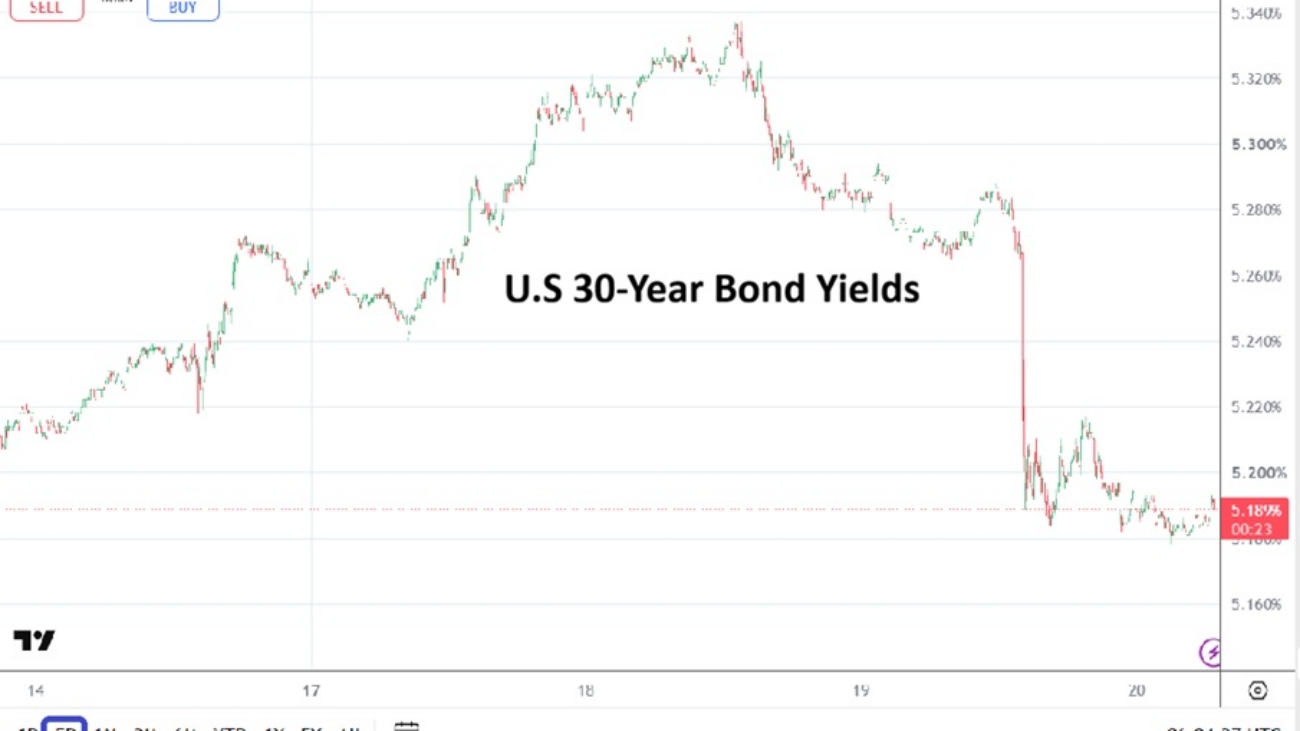
Yesterday’s bond news regarding Bessent’s actions to fight the higher yields in U.S 30-Year Bonds has brought rates down from almost 5.28% to nearly 5.18% as of this morning. 
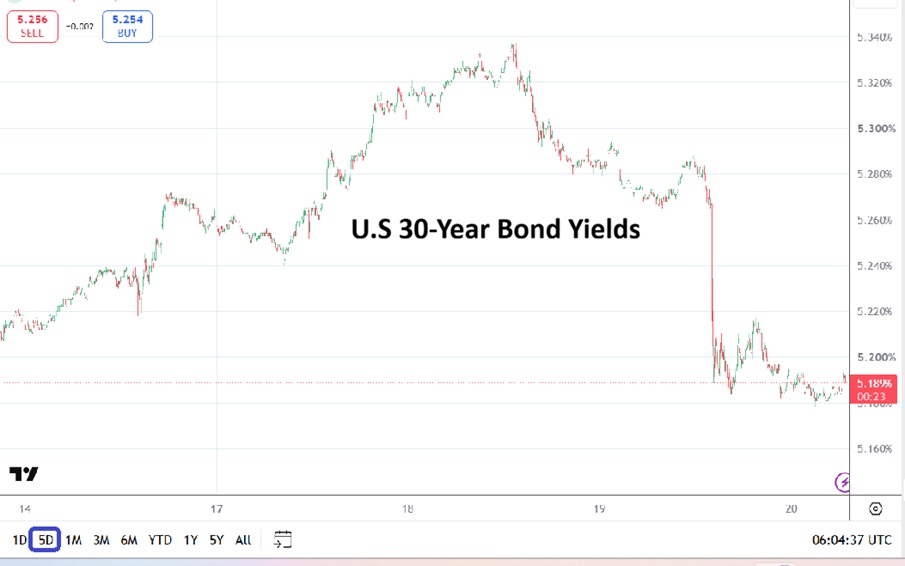
U.S 30-Year Bond Yields 5 Day Chart as of 20 August 2026

Perhaps market results and dynamics can be quantified as math within a game, but at the end of the day it is behavioral sentiment that drives market forces and the way financial institutions react. Psychology can be looked at as the reaction via the marketing/influence of policy positions and presentation.

We have been down this road before. The decision to announce a round of quantitative easing yesterday via Treasury/Fed intervention should be compared to what the same team did a couple of weeks ago regarding its powerplay with the Bank of Japan in order to make the JPY stronger. We are now in a definite cycle in which government institutions are battling investors to stop momentum in certain assets when policies have gone bad.

The wheel has not been reinvented. It may seem like an unfair advantage to traders betting against government policies that are interpreted (correctly) as being misguided or unwise, but these are the rules of the game. Large players who have been betting on U.S Treasury yields to increase were likely not happy yesterday, but they should have known the U.S government would not sit idly and simply allow an implosion of the financial system to occur.

Having said the above, now we can look towards the realm of unintended consequences. The U.S Dollar Index dove yesterday with USD centric weakness and gold soared. And as long as folks refuse to buy U.S long-term Treasuries on the cheap and demand higher interest rates to protect their investments the potential of further unintended consequences will occur. 

Scott Bessent handled the situation perhaps correctly yesterday, but he is dealing with symptoms and not the cause of the virus. A lack of clarity clouds global central banks and monetary policies connected to their interest rates. Inflation concerns persists and so does the debate regarding how to battle this illness.

The U.S Fed and Chair Kevin Warsh have a major task ahead regarding interest rate policy.  And government’s – particularly the U.S – have to decide if they can actually stop the bleeding. For the moment this appears to be a tall order because by injecting digital money into U.S long-term bonds the U.S is spending money that it really doesn’t have, except to say that this is a game of chicken in some respects and financial institutions could be faced with the dilemma of cutting off their nose to spite their face. Where are Friedrich Hayek and Milton Friedman when you need them?
Copy and paste the text from AMT that you want to share

Share:
post258

The Fed: Beating a Dead Horse as the Bulls want to Run

The Fed: Beating a Dead Horse as the Bulls want to Run

Yesterday’s lackluster and underperforming GDP results from the U.S highlights our often discussed doubts surrounding the Federal Reserve. While Jerome Powell definitely has a right to be ‘uncertain’ and express his concerns regarding sudden inflation emerging, he has also proven to be wrong. The Fed should have begun cutting the Federal Funds Rate three months ago.

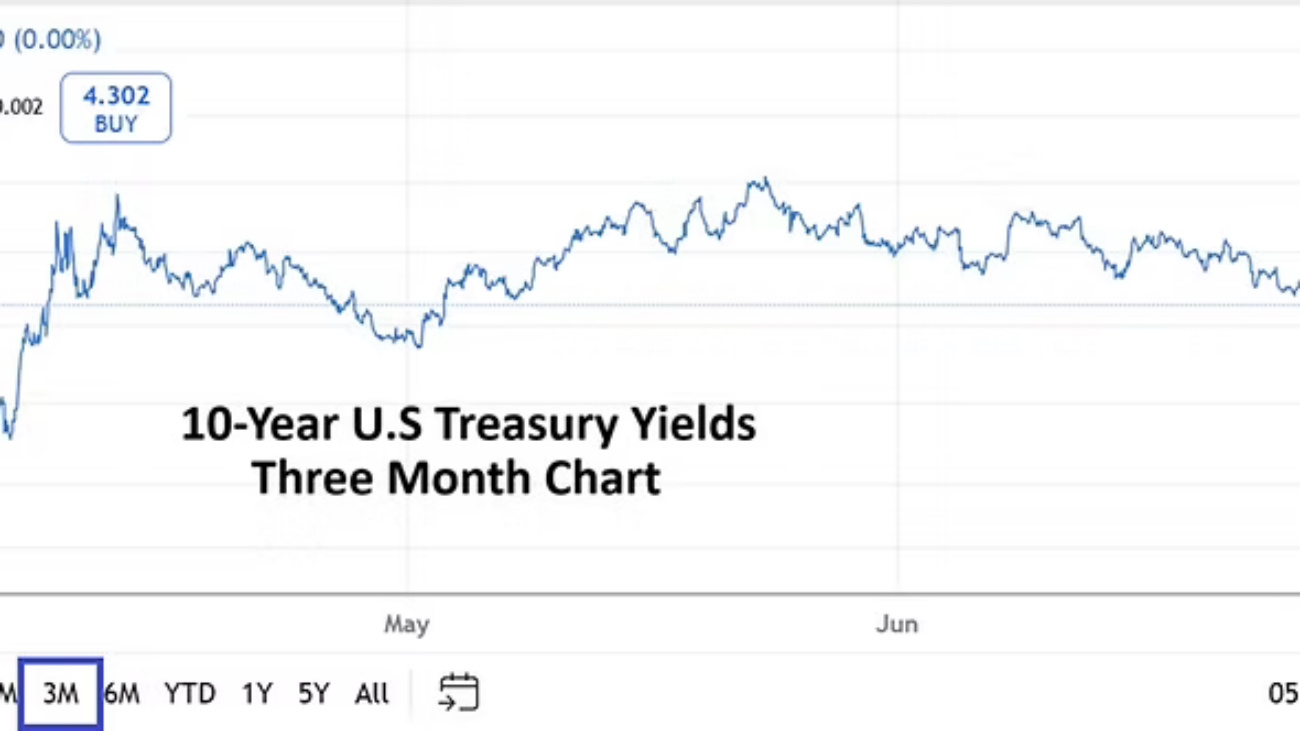
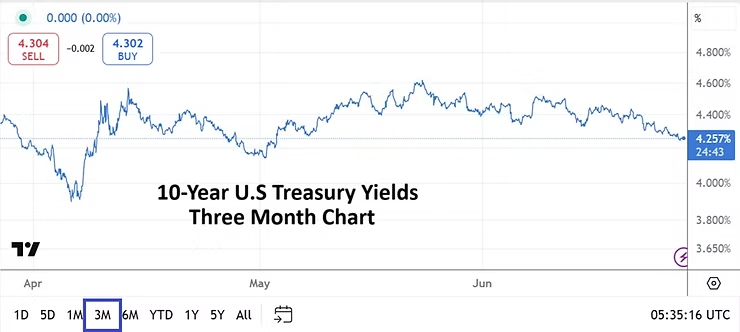
10-Year U.S Treasury Yields Three Month Chart as of 27th June 2025

Although Powell may not be a fan of President Trump, the Fed Chairman and the FOMC has the ability to be more nimble in this era. Instead of being passive about interest rates, the Fed could have lowered borrowing costs and helped spur on the U.S economy months ago instead of watching GDP numbers falter.

For all of the consternation regarding potential tariff pratfalls, the effect from President Trump’s policies have not caused massive inflation. The Fed can begin cutting rates even before the next FOMC meeting in late July, but they will not. In fact, the Fed should now cut the Federal Funds Rate by 0.50% in late July, but again they won’t. We will be lucky to get a 25 point basis cut.

The Federal Reserve remains too passive and acts as if it doesn’t have data technology which can be more proactive. Instead, Fed Chairman Powell chooses to act as if cutting the Fed Funds Rate is an academic exercise and can be done via a polite semester like manner akin to a report card. Dangerously, the U.S is paying an exorbitant amount of interest on long-term Treasuries and short-term Notes. Lower borrowing costs would also help U.S consumers. Jerome Powell doesn’t seem to care about these factors, which raises the consideration regarding his loyalties.

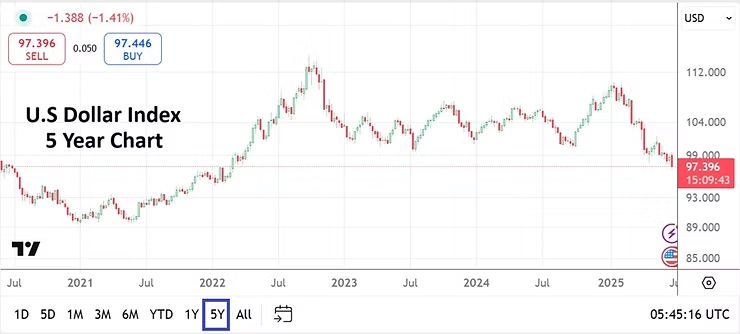
U.S Dollar Index Five Year Chart as of 27th June 2025

In recent weeks there have been at least two FOMC members who have suggested that interest rates need to be cut sooner rather than later. And there are some financial institutions who are clamoring for aggressive interest rate cuts throughout the calendar year and into 2026 in order to jumpstart the U.S economy, this includes Goldman Sachs and UBS. Signs of evidence that interest rate cuts will develop can be seen in the 10-Year Treasury yields which have been eroding recently. Some may claim this is a false narrative and that it is merely risk premium starting to be discounted. Nevertheless yields have lowered in the past month.

Yes, President Trump speaks loudly and delivers brawling negotiations. July 9th is another deadline for tariff agreements. However, financial institutions and many governments have learned to cope with President Trump’s backstreet tactics, which academics like Jerome Powell are not fond of particularly. U.S stock markets are hovering near highs, but still cautious because they are waiting on impetus from the Federal Reserve.

If the Fed fails to deliver an impactful FOMC Statement in late July this will not be greeted well by investors. Many believe the Fed needs to react, and it is quite apparent the S&P 500, Nasdaq 100 and even the Dow 30 are positioning for gates to be opened allowing for a bullish stampede. The USD has been weaker too the past few months as large commercial players anticipate lower U.S borrowing costs. The time for the Fed and Chairman Powell to act is now, making it clear that cuts to the Federal Funds Rate are coming.