postR175.1

U.S Growth (Lack of it) and Inflation Report Key to End of Week

U.S Growth (Lack of it) and Inflation Report Key to End of Week

Day traders may believe they are being confronted by another wave of data and news which is going to make their endeavors more difficult. The announcement by Joe Biden that he will not run for re-election in November however was not a major surprise. The handwriting on the proverbial wall has been clear for nearly a month that Biden was under immense pressure to step aside. It appears Kamala Harris will get the Democratic nomination per reports that delegates are starting to pledge their loyalty.

Financial markets which may have been interpreted yesterday as cautious due to the Biden and Harris news may actually not have had a tremendous effect. It is quite possible investors and traders have started to position their assets for a Trump victory. Love him or hate him, the polling numbers appear to suggest the Republicans are potentially going to win big in November. Except the word November is the key, there are still over 100 days for things to go wrong for the Republicans. Nothing is settled and day traders need to understand that a lot can change. Economic data from the U.S will be plentiful in the coming days. Also, China has lowered key borrowing costs in an effort to try and fuel spending in the nation as consumers remain hesitant and a sign the nation is battling a troubling economy.

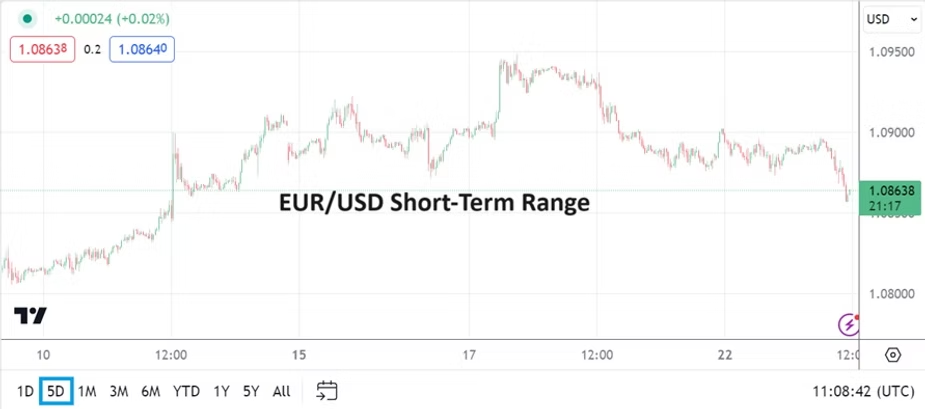
EUR/USD Five Day Chart on the 23rd July 2024

Traders who have been trying their hand in Forex have seen the EUR/USD and GBP/USD sink in value via short-term price changes. While retail speculators may look at the moves over the past day as vicious, they should note that since Wednesday of last week the USD has been stronger in Forex. It is doubtful financial institutions were betting on Biden to drop out of the race last week or for China to lower their interest rates. What in fact might be playing out is the possibility that most financial institutions believe the USD had been oversold and now want to position for the economic statistics coming this week. Results this week will help motivate notions the Federal Reserve will have to become dovish in September and proclaim a weaker U.S economic outlook through the end of this year, or for more idle chatter as the Fed undertakes a soundtrack which pleads for caution if inflation numbers remain stubborn.

USD/CNY One Year Chart on the 23rd July 2024

Monday, 22nd July, China One and Five Year Loan Prime Rates – borrowing costs were cut officially yesterday. The interest rate reductions of 0.10% were small, but China hopes this change helps propel stimulus for its struggling economy. It may not. But before folks sell China short, the nation continues to be a dynamic economic and political force and this power is not going to abate soon. The USD/CNY has incrementally risen since the start of 2024, but it is still below the higher values seen from August into early November of last year. It seems possible the Chinese government will continue to allow the Yuan to lose value in an attempt to reignite export.

Tuesday, 23rd July, U.S Existing Home Sales – the past few months have seen a decrease in the housing data. However, last month’s outcome was stronger than anticipated. These numbers tend to get a lot of fanfare, because they are a solid barometer of U.S outlook regarding interest rates and potential inflation. If folks feel like they should not sell their homes because their current payments are cheaper via their existing mortgages compared to taking on higher costs which are being offered now due to more expensive interest rates, this causes existing home sales to often fall. This because those with homes are not looking to move and simply want to stay in place, also making the potential of finding a house for folks who want to enter the market a more expensive proposition. Again, the outcome of this data is more of a barometer and doesn’t tend to affect financial markets like equities or Forex too much.

Wednesday, 24th July, Europe Manufacturing and Services PMI – E.U nations and the U.K will publish their readings. Last week the ECB kept their key lending rate in place. Political questions still linger in France which is more of a thorn in the side of the E.U than the potential outcome of these data reports. France and Germany expect better results from the Manufacturing and Services numbers. The broad E.U estimate also is optimistic about better results. Great Britain too is expecting better numbers. However, Forex traders will likely be more focused on coming U.S data and stay in a USD centric mindset the remainder of the week when making their forward considerations. And it should be noted the E.U and U.K economies are still struggling.

Wednesday, 24th July, U.S Manufacturing and Services PMI – these reports will be important certainly regarding the sentiment of Purchasing Managers, but the index reading may not be the biggest thing on investors minds. U.S data statistics on Thursday and Friday will be the outcomes that are being prepared for regarding potential affects. The Manufacturing number is expected to match the previous result, the Services figure is anticipated to be weaker.

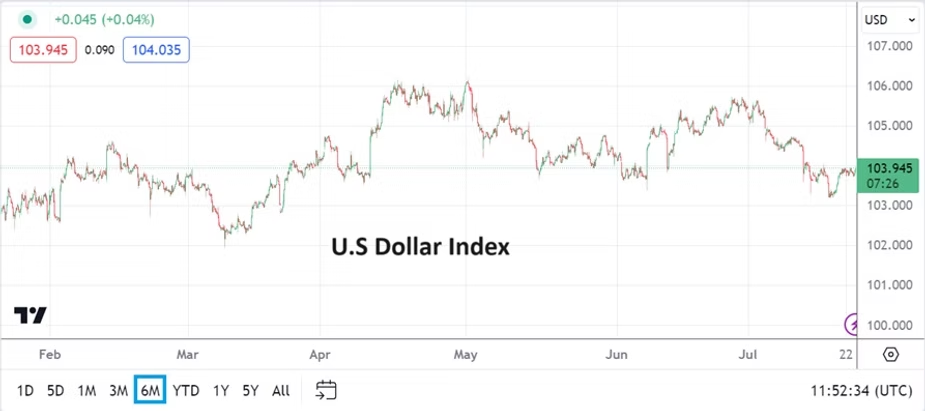
U.S Dollar Index Six Month Chart on the 23rd July 2024

Thursday, 25th July, U.S Advance GDP and Advance GDP Price Index – last month’s growth number came in below expectations, this GDP number is anticipated to produce slightly better numbers. The U.S economy via data has been showing signs of slowing the past few months and this Gross Domestic Product number is going to get a lot of airplay not only because of investors who will use it as an outlook because they believe the Fed will be paying attention, but also because the GDP result will start to become a political football for the Republicans and Democrats. If the growth numbers are weaker than anticipated this could propel USD centric weakness. However, day traders need to keep their eyes on the GDP Price Index stats too – if the inflation report comes in below expectations this could also fuel USD selling. Day traders need to pay attention to the USD Index charts later this week. While the short-term has seen some bullishness, the range of the USD remains near important support levels via a six month perspective and as the Fed comes under more scrutiny, traders should expect more tests in the near-term.

Friday, 26th July, U.S Core PCE Price Index – last month’s report matched expectations. If this inflation number meets the anticipated outcome, or comes in below the estimate this could sustain USD centric bearish momentum into the weekend and early next week.

postR174

Implications of a 48th President on the 20th January 2025

Implications of a 48th President on the 20th January 2025

Presidential news and questions are moving fast, but the coming weeks and months may become a political nightmare if challenges are not handled pragmatically. Financial markets opened this morning with risk appetite reduced, as cautious trading swept through financial assets on the news President Joe Biden would not seek re-election in November of this year. Hyperbole is dangerous and noise can cause unwanted nervous reactions in financial markets when there are unknowns.

Taking into account possible risk factors is important for mid and long-term outlooks. Financial institutions and traders should consider the potential of a rather dangerous political situation developing in the United States over the next few months. First off, will Kamala Harris now get the nomination from the Democrats to run for President in November? There are no certainties and Democratic power brokers may have other potential candidates in mind, which will create less clarity for investors.

Worse, what if there is a 48th President being sworn into office on the 20th of January 2025? Joe Biden, the 46th President, has in no uncertain terms publicly admitted he does not have the capacity to run for the Presidency in the coming U.S election. Does this also mean that he does not have the ability to run the nation until another President takes over following the November election and January inauguration? What would happen if the 25th Amendment of the U.S Constitution dealing with presidential succession and disability comes into force? If Biden is seen as unfit to rule now, he would have to be replaced and Vice President Harris would assume power.

What happens if Harris is forced to take control and becomes the 47th President of the United States before the U.S election is held or even afterwards? The 25th Amendment will become a talking point by political foes of President Biden, and maybe even by those who admire him. The question about Biden’s ability to make correct cognitive decisions between now and the inauguration in January is not a far fetched conspiratorial concern anymore.

How would financial markets react to Biden being replaced by Harris as President in the coming weeks or months? What would happen to U.S foreign policy? The U.S is not set up like Parliamentary political systems to have caretaker governments simply help guide a nation until a new government can be formed. The 25th Amendment and its use could be demanded in order to remove Joe Biden if he is currently unfit to serve, and this opens the door to chaotic U.S executive administration developments and decisions in the months ahead.

The fact that Biden has not been able to make a public announcement regarding his decision not to seek re-election, and will only speak to the U.S public later this week per his letter yesterday is troubling. Is Biden’s health so bad that he cannot perform the job of U.S President today? Section three of the 25th Amendment allows for the Vice President to be transferred power if the current President is unable to discharge their duties until fit again.

However, section four of the 25th Amendment allows the Vice President and cabinet to declare the current President incapable of performing their duties. The Vice President and the current President’s cabinet allows them to decide and issue a statement to the Senate and House leaders declaring the President is unable to govern and is unfit to voluntarily transfer power to the Vice President. Yes, there are timetables involved regarding the President’s capacity to be judged again and reconsidered for the resumption of power, but the U.S Constitution does open the door for a President to be removed permanently if they cannot perform their jobs by the President’s cabinet.

So again, what will happen over the coming weeks and months? Critics of Joe Biden will certainly claim he is not capable of governing and demand proof of his ability in the coming days. A growing chorus is likely to emerge expressing doubts about Biden’s ability to lead. Politics will be a factor in the potential game which will get loud. Republicans will certainly claim if Biden cannot run for President in November, that he likely cannot run the country until a new President is elected.

Politics have delivered a lot of noise this past weekend, but investors should expect the turmoil to grow in sound as people question the leadership of the U.S and ask for proof that Biden is in charge. The U.S elected Joe Biden to be President, not his appointed cabinet. If Biden is not able to prove he can do the job, there are legitimate reasons to consider a transfer of power to Kamala Harris.

At this juncture it appears the Republicans are in the drivers seat politically regarding the November elections. The Republicans may take control of the Senate, remain in charge of the House and attain the White House. Will Kamala Harris have to perform a caretaker government until the 20th of January 2025? Investors and day traders should keep these risk scenarios in mind.

postR173

Rich Dad, Poor Dad: What the Rich Teach Their Kids About Money

Rich Dad, Poor Dad: What the Rich Teach Their Kids About Money

Book corner: Rich Dad, Poor Dad: What the Rich Teach Their Kids About Money That the Poor and Middle Class Do Not! by Robert T. Kiyosaki

Every now and then a book comes along which leads to a major shift in how Americans think. Uncle Tom’s Cabin changed perceptions about slavery. The Jungle woke the nation to the horrific labor and sanitary practices in factories. The Feminine Mystique shed new light on feminism and women’s roles in society. All those books struck deep into society’s conscious and led to major changes.

Robert Kiyosaki’s Rich Dad Poor Dad: What the Rich Teach Their Kids About Money That the Poor and Middle Class Do Not! might not echo the social justice that his revolutionary predecessors strived for. But this 1997 best-seller packed no less of a wallop. Hitting the bookstores just as the twentieth century was coming to a close, Kiyosaki’s book changed how Americans – and others around the world – think about personal finance.

Rich Dad Poor Dad is not an instructional book as one would expect in a college course, with Kiyosaki running through facts, charts and figures. A Japanese-American born and raised in Hawaii, Kiyosaki uses his own life and background to tell a simple, almost fable-like story. The “Poor Dad” in the title refers to Kiyosaki’s biological father, Ralph Kiyosaki, who worked as a educator most of his life. By all accounts a good father and an honest man, he was a big believer in standard, traditional education, wanting the younger Kiyosaki to be a good student and then go to college in order to get a good job – in other words, as Kiyosaki puts it, to be an employee. But he had little financial education, which is what Kiyosaki explains is knowledge of business, investing, accounting, entrepreneurship, real estate and all other related subjects whose knowledge one can use to make money and be financially independent – to be an employer in contrast to an employee. Kiyosaki explains that although his Poor Dad made a decent salary, he was able to save little of it due to his lack of financial education and poor career decisions later left him broke.

The ”Rich Dad” in the title is the father of Kiyosaki’s buddy Mike, a man of limited standard education but excellent and well-developed financial education. A savvy entrepreneur with his hand in many businesses, he was approached by the two pre-teens for lessons on getting rich. Rich Dad put them to work in his general store for little money, but provided something more valuable – lessons on business and entrepreneurship that would form the foundation of Kiyosaki’s life and career. The book is structured around the conversations he had with his Rich Dad and the advice he was given, and the contrast in mentality to his Poor Dad.

As Kiyosaki explains, the drive for financial education consumed him and drove his decisions well into adulthood. A mediocre student, he nonetheless graduated from the Merchant Marine Academy, and then as a US Marine, served honorably in Vietnam as a helicopter pilot. Kiyosaki was eligible to work in the maritime industry after the war, a job that would bring excellent pay, conditions, steady work and several months of vacation a year. But he instead enrolled at Xerox’s sales school – considered the best of its kind in the country – seeing it as a major key in his financial education. His need for independence was so strong that in later years, during hard times, he and his then-wife Kim slept in their car rather than the accept the charity of friends’ guest rooms.

Besides the lack of financial education in the school system – an issue that Kiyosaki raises several times throughout the book – Kiyosaki challenges conventional beliefs. He rails against purchases that are liabilities instead of assets, even arguing against home ownership. He discusses the mindset of money and wealth creation and how ordinary people – due to society’s conditioning to be employees – are held back by limiting beliefs. To be successful in wealth creation and to take control of your financial destiny, Kiyosaki argues, one must take calculated risks; inspired by his Rich Dad, he says that one must not think I can’t afford this but instead What do I need to do to be able to afford this?

In one of the few diagrams in the book, Kiyosaki introduces the cash flow quadrant (of which he would later base an entire book), which categorizes individuals as employees, self-employed, business owners, or investors. He discusses the advantages and/or disadvantages of each quadrant.

Kiyosaki hit a raw nerve in the personal finance-hungry public, turning him into an international finance guru. It has to this date sold anywhere from thirty to forty million copies and is noted as the bestselling personal finance book of all time. He – and Kim, who has a series of similarly-themed books intended for women – have subsequently published an entire series of finance books, each with its own spin, such as real estate, investing, gold/silver, multi-level marketing, etc. These include two collaborations with Donald Trump, Why We Want You to Be Rich and Midas Touch: Why Some Entrepreneurs Get Rich — And Why Most Don’t. Kiyosaki also markets a board game, Cashflow, that attempts to teach the basics of financial education and how to exit what he calls the “rat race”, which is his description of the sometimes grueling life of dependency that employers place upon their employees and the financial mediocrity that ensues.

Rich Dad Poor Dad is not without controversy. Two of Kiyosaki’s businesses prior to his turning full-time to financial education went bankrupt, fueling claims that he is not as savvy as his image projects. Some experts and competing finance writers claim that he gives poor, substandard – even dangerous – advice. Another claim regards the identity of the “Rich Dad”. His name is not revealed in this book nor the follow-ups in the series and Kiyosaki was silent about this issue for several years, leading to accusations that the book is complete fiction. He has since revealed the identity of the man, plus his friend referred to as “Mike”. Kiyosaki explained that many years ago, upon the book’s initial publishing, the family requested anonymity, to which he respectfully complied.

Another claim, not without merit, is that this book gives little advice in general beyond the series of anecdotes and soundbites. Kiyosaki has not refuted that, and has claimed that it is the intention of the book to raise these issues and to simply convince people of the need – and to direct them onto – the path of financial education.

The book is worth reading. You won’t come away with the knowledge to pick stocks, examine real estate, understand tax laws or read a financial statement. But you’ll be immediately reaching for books that do – and that, according to Kiyosaki, is the intention.

If you want to read another Book Corner article, please visit this review by Evan Rothfeld: https://www.angrymetatraders.com/post/dangerous-and-unpredictable-duties-during-the-vietnam-war

postR196

AMT Top Ten Miscellaneous Remarks for the 14th of July 2024

AMT Top Ten Miscellaneous Remarks for the 14th of July 2024

10. Words of the Day: Political rhetoric is using platitudes and subterfuge camouflaging verbal nonsense, masking a vacuum of non-results and causing fatigue of populist promises.

9. Harris Prediction: After the NATO press conference in which Biden was more lucid but still made mistakes, it is beginning to feel like Kamala Harris is being given room to audition for the Presidency by the Democratic machine. If her polling numbers show improvement over the next couple of weeks, look for Harris to replace Biden at the DNC in Chicago, if her polling numbers are not good enough in the eyes of the elite power brokers, it is possible Biden may be asked to give up his delegates, allowing for an open convention.

8: Zombie Inflation: Data results via the U.S CPI caused a reaction in the broad markets, and volatility in Forex. While the broad monthly Consumer Price Index number on Thursday was minus -0.1%, the PPI numbers on Friday came in higher than expected causing some to feel that inflation remains a plague. However, if the Producer Price Index was interpreted as being higher because rising prices are coming via more expensive employee costs (which might see an end to the cycle sooner rather than later if jobs data continues to weaken) this is why there might not have been a violent Forex reversal on Friday. And Consumer Sentiment numbers from the University of Michigan came in below expectations again, and inflation expectations via the consumer survey showed some erosion.

7. Federal Fund Rates: Financial institutions have clearly begun to factor in the belief an interest rate cut will occur in September. The Fed which has been cautious consistently the past seven months may now have enough ammunition to consider becoming more dovish. A September interest rate cut has certainly been factored into Forex and Treasury yields, and there is a growing tide of sentiment which believes the weaker GDP numbers combined with the potential of less inflation could spark additional Federal Funds Rate cuts this calendar year. Outlook fueled by optimism regarding a more dovish Fed could be a factor in the markets the remainder of July.

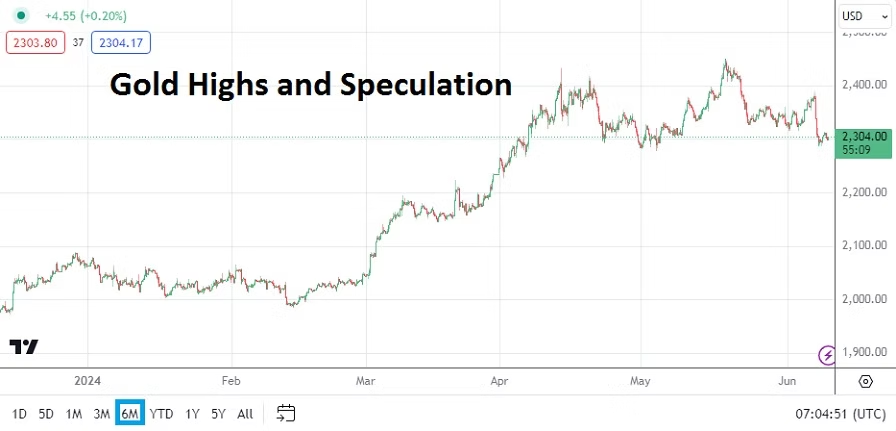
6. Gold and Silver: Commodity prices are soaring as speculators pursue bullish trends. Gold finished this week above 2,410.00 USD. Silver is traversing above 30.00 USD per ounce for the first time since 2011 and 2012. These two metals are not always correlated, and day traders should remember Silver remains a rather easily mined commodity which sometimes influences downwards pressure because supply can be increased. Having said that, Gold and Silver have had solid bullish trends since February of this year.

5. Thaw: Bitcoin is near 60,000 as of this writing. The crypto winter has seemingly ended and many folks are standing in the sunlight and proclaiming long-term projections of Bitcoin as it maintains a higher price range. It should be remembered the most significant percentage of trading volumes within cryptos reside heavily within the top tier, and the ‘assets’ ranked lower remain in wagering cesspools. Cryptocurrency remains speculatively dangerous, and largely a place to move illicit cash with the perception the money can be kept ‘dark’.

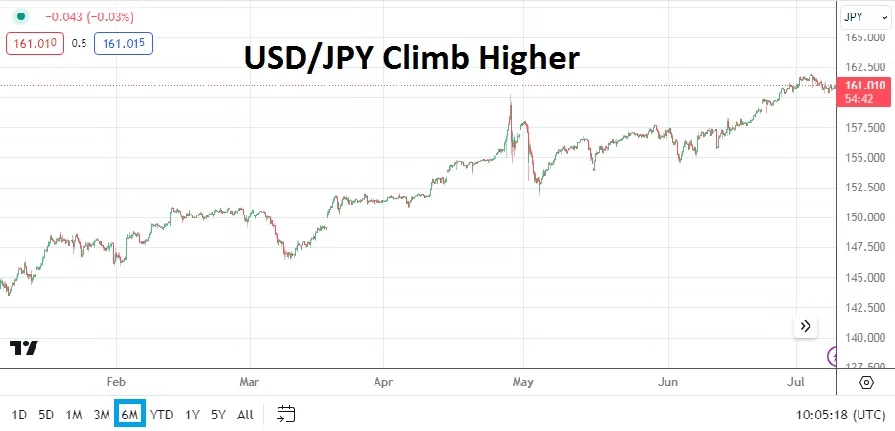
4. USD/JPY: The Bank of Japan won last week’s game of fire. The U.S Consumer Price Index numbers dealt a blow to the blind fury of speculative buying in the USD/JPY, and there is also a belief among many that the BoJ added onto the selling momentum of the currency pair too with a well timed intervention. The currency pair which was near the 161.640 juncture suddenly dived to nearly 157.420. The USD/JPY has gone into this weekend near the 157.900 ratio. The USD/JPY saga is not finished yet, and froth via bullish endeavors remains dangerous. Day traders here have been warned.

3. China: Friday’s Trade Balance numbers were good, compared to the rather weak CPI results seen on the 10th of July which were negative. China’s Communist Central Committee begins a Plenary Session tomorrow until the 18th. Will they speak in platitudes? The USD/CNY has certainly seen a ‘soft’ devaluation since February of this year, but the currency pair did go into the weekend near the 7.2500 mark which is off the high of 7.2765 seen this past Thursday. China still must improve consumer sentiment domestically and this remains a difficult struggle as ramifications from the implosion in China housing values mires the landscape. GDP numbers will come from the nation on Monday.

2. Behavioral Sentiment: Equities and indices, Forex, and commodities are all experiencing risk appetite permutations. While it might be tempting for retail traders to bet on lower reversals of trends, sometimes its much easier to simply ride optimistic waves. Certainly there will be days when financial assets struggle, but the apex heights of the Dow Jones 30, S&P 500, Nasdaq 100 should be treated with respect. Treasury yields are at mid-term depths and appear ready to traverse lower.

1. Trump: The attempted assassination of Donald Trump on Saturday in Pennsylvania will galvanize his supporters and likely push many people towards voting for him November. The amount of vitriol Trump has endured from his political opponents including the highest echelons of the Democrats and many in the media needs to be contemplated and quieted. Opposition to political ideology is fine, but the use of hyperbolic musings has led the U.S to a dangerous place. It would be wise for pragmatic adults to rejoin political discourse. Traders should watch the financial markets early this week to see if the U.S political front causes a reaction.

postR172.1

Risks: Powell and Inflation Data will Generate Market Reactions

Risks: Powell and Inflation Data will Generate Market Reactions

Traders returning to their desks after a long holiday weekend can see the USD has become weaker the past couple of sessions as behavioral sentiment has shown signs of shifting again. Yet the trends experienced in Forex have not been clear cut, this as questions and concerns regarding what governments and central banks are thinking remains problematic. Investors who take a long-term approach to the markets will likely have an easier time in the coming days because their comfort levels are set to different metrics compared to large traders and the retail crowd. Noise doesn’t effect investors as much as traders.

Politics clearly remain on the minds of many as President Joe Biden has his ability to effectively lead the U.S questioned with growing doubts. However, it is unlikely that there will be a change in the immediate future from the Democrats as they decide on a path regarding their nominee for the November Presidential election. Financial institutions would certainly react to a decision to eliminate Biden as a candidate, but the President remains steadfast that he will move forward. It is very conceivable that Biden may be forced to vacate against his wishes, but until then the broad markets will not react too much to worries about the White House. For the moment U.S politics remain hyperbole.

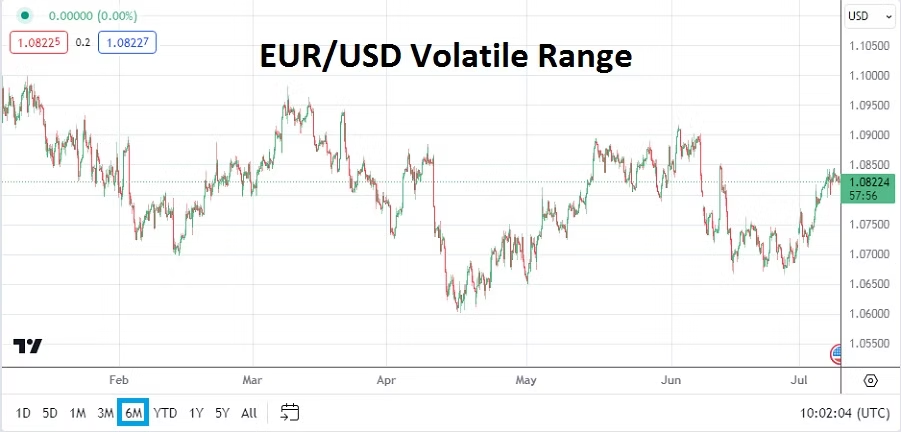
EUR/USD Six Month Chart on the 9th of July 2024

France held its Parliamentary second round elections on Sunday, and while the votes have been counted, the results in many ways are not yet clear. Coalitions are being rumored and EUR/USD traders may react to the developments and within French bonds, but the murky political conditions within Paris remain hard to predict regarding outcome as a whirlwind of deal making takes place in an assortment of offices.

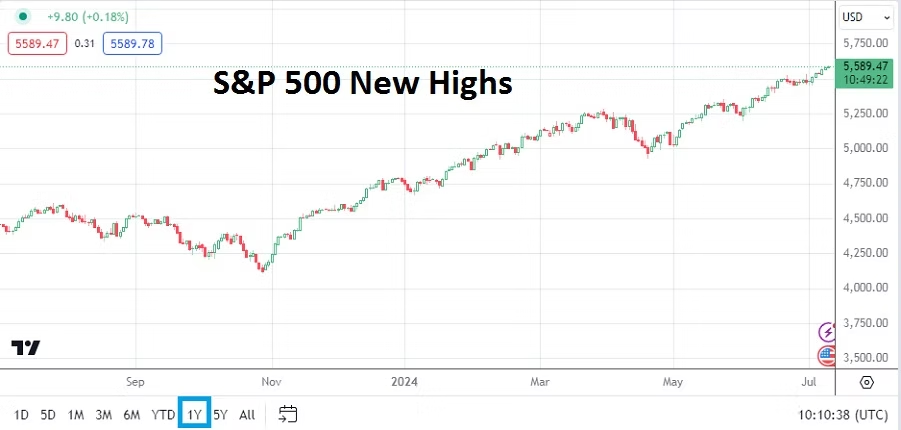
S&P 500 One Year Chart on the 9th of July 2024

The lack of total volume last week in Forex and equity indices did not stop trends from being seen and technical perceptions being formed. U.S stocks remain highly valued and U.S Treasury yields have produced a downwards slope.

USD/JPY Six Month Chart on the 9th of July 2024

Today will prove interesting as Jerome Powell and Janet Yellen speak in Washington D.C, later this week inflation data will certainly cause a stir. While Biden remains a concern, France tries to form a working government, and the Bank of Japan is being viewed with deep suspicion, day traders have reasons to monitor news, but they should also remember financial institutions have been positioning for potential sentiment shifts and may not react with volatility if their outlooks are confirmed.

This week of trading is laden with risk events, some of which are listed below, but speculators need to understand behavioral sentiment is showing signs of optimism within many financial assets, and the prevailing mood of financial institutions appears to be leaning towards risk appetite.

Monday, 8th of July, Japan Average Cash Earnings – real wages continued to fall via data reported yesterday. The USD/JPY is traversing dangerous heights and speculators are likely still testing their bullish perspectives even as the 161.000 sees values tested above. Traders should stay cautious and not bet wildly on more upside, but lower valued speculative viewpoints are also problematic for the time being. Simply put, beware of the BoJ as it looms in the shadows.

Tuesday, 9th of July, U.S Federal Reserve Chairman Powell – the central bank chief will testify before the Senate. U.S economic data has weakened via Gross Domestic Product, and Manufacturing and Services readings. However, inflation remains troublesome and Powell will have to speak about these issues in conjunction via his Monetary Policy Report. He will certainly try to sound cautious. If Powell hints at a potential rate cut in September this would spark USD selling. At the same time the Fed Chairman is talking, Treasury Secretary Yellen will be speaking to the House Financial Services Committee. Traders can be assured that Powell and Yellen will mirror each other. And Powell will speak to the House on Wednesday.

Wednesday, 10th of July, China CPI and PPI – the Consumer Price Index is expected to have a gain of 0.4%, while the Producer Price Index is anticipating a result of minus -0.8%. Deflation in China is a concern. Economic statistics continue to produce lackluster results, while this a partially due to the collapse of the real estate bubble in China, it also has to do with less demand for products from abroad as Europe and America suffer from economic declines too. The USD/CNY has produced a bullish trend since the start of 2024 and is traversing near 7.2714 as of this writing. Traders should look at the inflation reports and examine them for revisions downward in previous months.

GBP/USD Six Month Chart on the 9th of July 2024

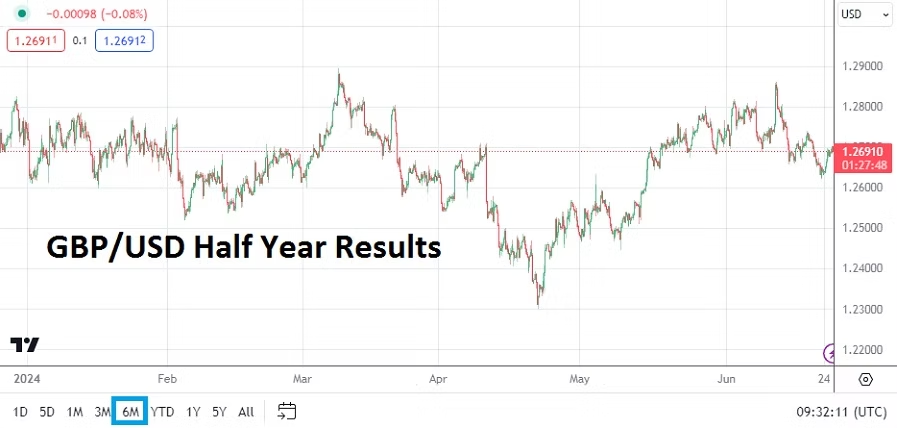
Thursday, 11th of July, U.K Gross Domestic Product – the newly elected Labour government will get their first taste of big economic data challenges as they now guide Britain. A lackluster gain of 0.2% is expected. While this may move the GBP/USD a bit based on the result, the currency pair will likely react more to the U.S inflation data later in the day. The July bounce higher in the GBP/USD has been healthy and value above the 1.28000 has provided bullish traders with some optimism.

Thursday, 11th of July, U.S Consumer Price Index – the core CPI report is projected to match last month’s number of 0.2%. If this result can be attained and the CPI annual data comes in with the anticipated 3.1% mark compared to last month’s figure of 3.3%, this could create dynamic bearish activity for the USD. However, traders should remain cautious and note that even though recent U.S economic data has tumbled, inflation reports have been stubborn. Betting on the outcome of these reports before they are published is akin to gambling for day traders.

Friday, 12th of July, U.S PPI and Preliminary University of Michigan Consumer Sentiment – the Producer Price Index reports are expecting slightly higher ratios. The Consumer Sentiment report should be looked at too, because the readings have been coming in weaker the past handful of months. If consumer behavioral sentiment is weaker the USD could sustain a negative stance.

postR192

AMT Top Ten Miscellaneous Fireworks for the 5th of July 2024

AMT Top Ten Miscellaneous Fireworks for the 5th of July 2024

10. Grudge: Ireland and the Springboks begin their rugby two match competition this Saturday in Loftus Stadium, Pretoria. Anticipation is palpable in South Africa. The weather is forecast to be good and the game is expected to be better. The battle between the Green Machines is real. The second game will be played on the 13th of July in Durban.

9. Digital Jitters: Bitcoin is trading near 54,300.00 USD as of this writing. As analysis filters in to explain this particular downturn which essentially began on the 7th of June, the fact is that BTC/USD has become a playground for institutional gamblers while many in the public remain dubious. Excuses such as the U.S election potential outcome and Fed monetary policy are all likely false narratives. Speculation is your answer.

8. Correlations: The USD/ZAR is near the 18.20500 mark, and the USD/MXN is around 18.06000 as of this morning. The South African Rand and Mexican Peso are not correlated, except as currencies that are witnessing a strong amount of political sentiment generate trading behavior in financial institutions which are trying to judge their long-term outlooks. The coalition National Unity Government of South Africa, and the Morena political party of Mexico are in the spotlights and are being watched by anxious investors.

7. National Security: The race for quantum supremacy is real as nations issue significant controls over the export of computing mechanisms to unfriendly competitors as reported by the New Scientist website recently. And the smuggling of semiconductors which are ‘forbidden’ to China who are using organized underground operations in order that Nvidia AI processors can be obtained, was reported on by the Wall Street Journal two days ago.

6. Commodities: WTI Crude Oil is trading above 84.00 USD, the energy has sustained prices above $80.00 since the 17th of June and is approaching mid-term highs, the slight rise in price earlier this week may have been because of hurricane concerns, but buyers have remained strong this morning. Cocoa is still traversing around 8,456.00 USD per metric ton, as it bounces along mid-term technical support levels. In early January of this year Cocoa was trading at half its current value.

5. Jobs Numbers: One of the favorite tools used by salespeople to get day traders geared towards speculating blindly are the monthly U.S Non-Farm Employment Change numbers which will be published today. But because of the U.S Independence Day yesterday, many financial institutions are celebrating a long holiday weekend and will be mostly inactive. Data has become increasingly lackluster from the U.S the past two months with rather pessimistic GDP, PMI manufacturing and services outcomes. Traders considering a dip of their toes into the markets today should be aware that volumes are going to be low which opens the door for volatility. Who will be paying attention to the Average Hourly Earnings report?

4. Markets: U.S Treasury yields are within sight of three month lows, this as the major stock indices via the S&P 500 and Nasdaq 100 make noise at record highs. The Dow 30 is not at a high but within a healthy territory as bullish behavioral sentiment remains rather abundant. When full trading volumes return next week, there is reason to believe the summer rally may continue.

3. Bank of Japan: The USD/JPY is trading below the 161.000 level. Some analysts suspect the BoJ engaged in a limited intervention earlier this week when the currency pair approached the 162.000 vicinity. The Bank of Japan is playing a dangerous game with speculators. The next BoJ Outlook Report is not due until the 31st of July. Until then the USD/JPY apparently is going to traverse in a higher price range with the threat of a potentially engaged Bank of Japan lurking which can punish speculators if they get too comfortable betting on the bullish trend. The price of Gold should be watched as it traverses around 2,365.00 USD, which remains in sight of record highs that touched the 2,425.00 vicinity on the 20th of May. Retail purchasing of gold in Asia is strong as citizens of some nations try to hedge against inflation.

2. Fallout: The Presidency of Joe Biden remains vulnerable as media pundits who have long supported him lurch towards public criticism, and question Biden’s inability to handle unscripted situations. Talk of replacing Biden with another candidate to face Donald Trump remains fever pitched, but there are strong obstacles which will not allow an easy path to unseat the current President. Biden owns his delegates won via Primary voting. He would have to officially relinquish his delegates at the Democratic National Convention in order to allow for a new candidate. The Democratic political party also knows that Vice President Kamala Harris is not particularly well liked, but if Biden were pushed to the side it would open the door for a potentially messy challenge by Harris who would certainly want the Presidency. Getting her to bow out of the race could be another potential disaster for the Democrats, and help create a level of disdain which could trigger a huge landslide for the Republicans in November.

1. Trouncing: Political incompetence is not only a stronghold in the U.S, this as the U.K and France are proving. The GBP/USD is near 1.27685 as of this writing, the EUR/USD is around 1.08230. Both currency pairs have gained this week. The massive defeat of the Conservatives in the U.K last night, and Macron’s political weakness which may increase after the 2nd round of voting this coming Sunday in France has been digested by financial institutions. The GBP/USD and EUR/USD were punished over the past few weeks due to knowledge that the Tories in Britain would suffer a resounding humiliation, and the belief that Macron opened the door for a loss of clout. Financial institutions have proven they are keen observers of politics and are accustomed to shifts of direction via new forces. Some may also say that financial institutions are comfortable as long as they know where power resides in the ‘deep state’ bureaucracies of every nation.

postR169.1

Forex Debate and Coming Impetus this Week for Speculators

Forex Debate and Coming Impetus this Week for Speculators

In many respects the broad markets feel as if they are waiting for big news and this may not be delivered as wanted. Yes, the debate between Biden and Trump this Thursday will get attention, but unless there is a major television moment the outcome is not likely going to give a final affirmation regarding the U.S election results in November. Some people may be counting on Biden to literally misstep, and for Trump to say something incredibly outlandish, but it is also possible the debate disappoints even as entertainment. Perhaps the Presidential debate will deliver sideways action like the broad markets have the past week, leaving us with a desire for more.

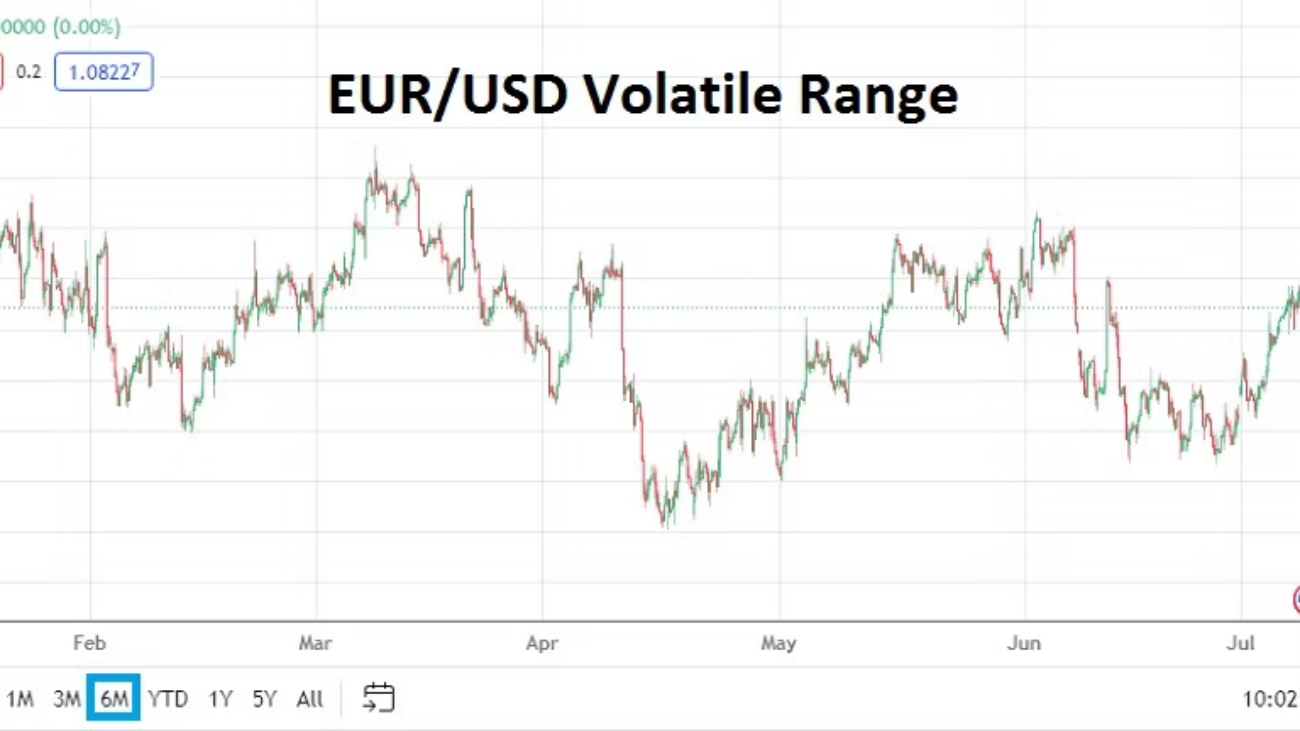
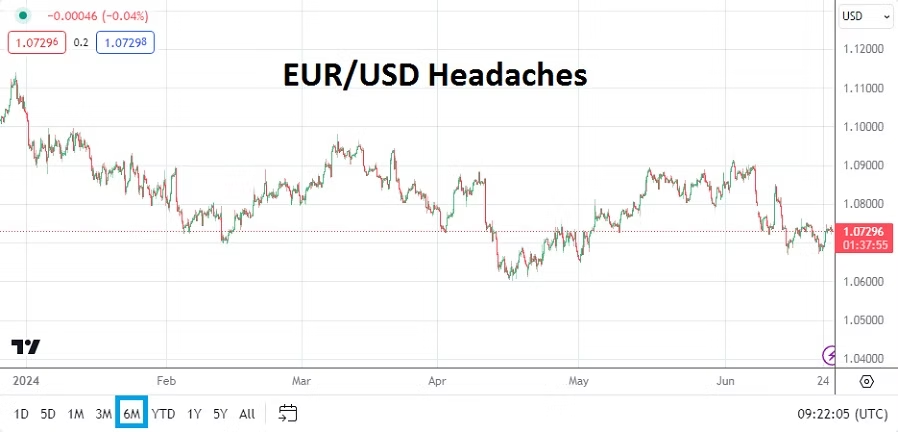
Financial institutions will look at U.S growth numbers this coming Thursday certainly, and also keep their eyes on the upcoming Sunday vote in France on the 30th which might prove rather remarkable. The EUR/USD is certainly back within its lower depths when a six month chart is inspected, and traders will react to France’s election this weekend, but it should be remembered the second and vital round of voting will not occur until the 7th of July. Until then, reactionary and precautionary results in the EUR/USD may produce headaches. The EUR does look oversold, but timeframes and the ability to hold a position may prove tough for short-term traders hoping for a wave of optimism to suddenly take hold and create a strong trend.

EUR/USD Six Month Chart on the 25th of June 2024

Not to be outdone the U.K is gaining plenty of attention because of its election on the 4th of July, but in this case it seems more like a coronation for the Labour Party and only a question about how devastating the carnage will be for the Tories. Financial institutions may have already factored in their perceived outlooks regarding the U.K vote into the GBP/USD. The currency pair will certainly react to the British election results, but financial institutions may have less to fear regarding sudden volatility of the British Pound, compared to the EUR/USD which could still have days ahead when it doesn’t trade in a USD correlated manner due to E.U political unknowns.

Monday, 24th of June, Germany Ifo Business Climate – the reading produced a drop to 88.6, missing the estimate of 89.4. Germany economic pressures remain negative and this may keep the idea alive that the ECB should be considering another interest rate cut. However, because the European Central Bank cut its Main Refinancing Rate recently and the U.S Fed continues to look rather neutral, it seems unlikely the ECB will decide to suddenly become the only proactive central bank around over the mid-term. Meaning, the ECB may stay conservative and want to wait on others to join the interest rate cut party, this before they create more unbalanced carry trade opportunities which could lower the value of the EUR/USD too much.

Tuesday, 25th of June, U.S CB Consumer Confidence – the reading will certainly be watched by investors, but will it create bedlam if there is surprise for equities or Forex? The likely answer is no. Behavioral sentiment has become flustered and shifted over the past handful of months, and this will create some caution no matter what today’s consumer reading says. Large financial institutions will probably stay geared to other upcoming data which will be considered more important.

Wednesday, 26th of June, U.S New Home Sales – a slight uptick in the amount of housing sales is expected. However, because of higher interest rates in the U.S via the cost of mortgages this number is likely to remain rather muted. For interested traders a look at the previous revisions of the New Home Sales data will prove interesting. The outcome of this reading should be treated with a bit of skepticism because it may be changed down the road. Unless there is a huge surprise the impact of this report may be rather calm, no matter what media narrative dictates.

Thursday, 27th of June, U.K Bank of England Governor – Andrew Bailey will speak about the Financial Stability Report. Bailey is certain to add some insights regarding the BoE’s neutral policy stance taken last week regarding interest rates, but more hints regarding potential cuts later this summer and possibly late this year again may be given. Economic data from the U.K remains troubling. The Bank of England may want to remain cautious because of inflation concerns, but financial institutions would like to see a more proactive dovish stance. Bailey might also talk about the potential affects from the U.K election, but he will have to be careful to make sure it doesn’t sound like he is taking a political side.

Thursday, 27th of June, U.S Gross Domestic Product and GDP Price Index – these two reports will impact the financial markets. The growth and inflation data will be examined by all financial institutions and generate trading reactions. The GDP growth number is expected to come at 1.4%, which is slightly higher than the previous report which posted a 1.3% result. Any number below 2.0% growth will be considered as lackluster by most financial analysts. Traders will then turn their attention to the inflation results which are supposed to match the 3.0% gain from the last Price Index report. If this number can somehow come in below expectations, this could propel some weakness in the USD. However, traders should be careful and remember U.S economic data the past handful of months has produced surprises which have created dangerous and choppy Forex conditions.

USD/JPY Five Day Chart on the 25th of June 2024

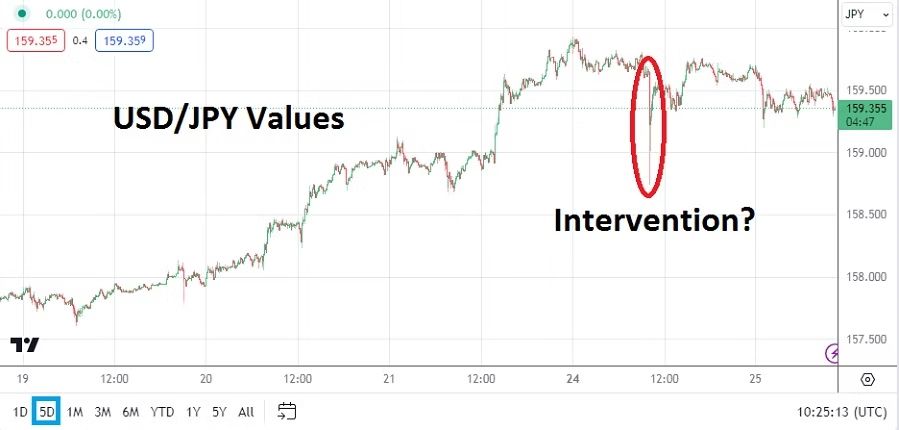
Friday, 28th of June, Japan Tokyo Core CPI – a gain of 2.0% is anticipated. The USD/JPY should be watched carefully. Early this Monday the BoJ likely tried an intervention in the Japanese Yen, but the USD/JPY only had a momentary swift selloff. As of this writing (Tuesday the 25th of June) the USD/JPY is trading near the 159.345 ratio which is very high when historical comparisons are considered. If the inflation number comes in with a 2.0% result or higher this could set off fireworks in the USD/JPY. Financial institutions clearly believe the BoJ should raise their interest rate by at least 0.25%, but the Japanese government appears keen on trying to keep the Japanese Yen weak to help GDP via exports from the nation. The Bank of Japan needs to be given attention. Speculators and the BoJ are battling against each other.

Friday, 28th of June, U.S Core PCE Price Index – the Personal Consumer Expenditures inflation report is forecasted to produce a gain of only 0.1% compared to the previous result of 0.2%. If the PCE Price Index does turn in the anticipated result, and the GDP Price Index from Thursday met expectations or came in lower, this could cause more speculative selling of the USD. However, if the inflation results come in stronger than expected Forex traders could see bullish USD buying which again challenges sellers abruptly.

postR168

AMT Top Ten Miscellaneous Missiles for the 21st of June 2024

AMT Top Ten Miscellaneous Missiles for the 21st of June 2024

10. Say Hey Kid: Baseball legend Willie Mays passed away earlier this week. He was a beloved player on the New York and San Francisco Giants in the 1950s, 1960s, and early 1970s. He might have been the best five tool baseball player of all-time.

9. AI Apocalypse: Talk about selling Nvidia shares to cash out of the super hot Artificial Intelligence tech boom on Wall Street might be considered the safe thing to do in order to protect profits. However, betting on the existing ‘machine learning’ gold rush in the stock markets to possibly end soon, thus turning into a ‘dot com’ like bubble bursting in the spring of 2000 could be misguided. The ‘dot com’ exuberance essentially started in 1995 and ran for almost five full years. The Artificial Intelligence surge may still have a lot of room to run.

8. Simmering Crypto: Bitcoin, Ethereum, and Binance Coin all remain at lofty prices, but they have lost value since touching highs in the first week of June. Trading volume of cryptos – including BTC/USD – is still below its peak of 2021 and early 2022. While the introduction of ETF products for Bitcoin has gotten institutional money involved, many individual ex-traders remain cautious. Former illustrious speculative plays like Dogecoin and Shiba Inu have turned into niche wagering cesspools.

7. Hezbollah Poker: Hassan Nasrallah delivered a surprise statement earlier this week when he proclaimed if there is an escalation between Hezbollah and Israel, that Cyprus could be attacked by missiles. The U.K still maintains sovereign military bases at Akrotiri and Dhekelia on the island of Cyprus. Direct fire from Hezbollah on an E.U member nation would be a major intensification of the Middle East conflict. Nasrallah may believe the rather limited response by the West to the Houthis attacks in the Red and Arabian seas, makes his threats on Cyprus an objective guise to get the West to pressure Israel to hold their fire.

6. Commodity Watch: WTI Crude Oil price is over 81.00 USD as of this writing and Gold is near 2365.00 per ounce. The price of energy needs to be watched because of its potential impact of inflation. WTI prices have been rather tame the past two and half months, but have climbed the past week. The precious metal remains within sight of highs and has been lingering within an elevated range since the middle of April. Cocoa for those interested is back below 10,000.00 USD per metric ton.

5. Shifting Sentiment: The Mexican Peso and Brazilian Real have lost value as politics in Mexico and Brazil are causing nervousness among financial institutions. The governing political parties in both nations are trying to reach for new powers, and the selloff of the two currencies against the USD have been clear. Morena, the leftist political party governing Mexico, is seeking controversial judicial reform which is seen as an attempt to gain more political influence. Lula da Silva’s Workers’ Party is attempting to take the head of the Central Bank of Brazil, Roberto Campos Neto, to court to try and muzzle his fiscal viewpoints. The USD/MXN is near 18.31650 and the USD/BRL is around 5.4539 as of this writing. Rand traders who have seen a bearish USD/ZAR trend emerge the past week and a half because of renewed optimism in South Africa might find the spats in Mexico and Brazil intriguing.

4. Euro Barometer: The first French election will be held on the 30th of June, the second on the 7th of July. The contest is shaping up as a election between the Left and Right. Political coalitions are being formed rapidly. The attempt to coalesce on the Left is an obvious sign that politicians feel threatened with the prospect of sweeping losses. Media noise is certain to boom and be exaggerated in the coming days as warnings about this election potentially affecting all of humankind litters the airwaves. Macron and other politicians may find tough days ahead as they apologize for policy failures and get punished via the election outcomes. The EUR/USD is close to 1.06931 for the moment.

3. China Woes: Economic data from the housing sector continues to show a downwards trajectory regarding home values in the nation, and it is having an impact on consumers as their net worth suffers and affects spending habits. Not only are property values still dropping at a rapid pace, but recent Factory output data has come in below expectations. China is tentatively scheduled to release Foreign Direct Investment numbers soon.

2. Summer Doldrums: Investor behavioral sentiment appears to be in a wait and see mode as as more impetus is awaited and large players grow cautious. The U.S will issue PMI manufacturing and services data today, but the results will have a limited effect. The U.S Juneteenth holiday which was celebrated on Wednesday and the return of traders yesterday did not rejuvenate optimism. The Nasdaq Composite and S&P 500 lost some ground. While the Dow 30 did gain slightly yesterday, the index has been treading water compared to the Nasdaq and S&P over the past month.

1. Geriatric Debate: Next Thursday the 27th of June, President Biden and former President Trump will debate. The televised event will be watched by American voters and the world. Not only will the debate deliver potential impetus to financial assets if there is a clear winner, but it may provide a large wagering environment for betters who gamble on which Presidential candidate will be the first to go off script. People in the U.S desire a discussion about the economy, foreign policy and immigration, this while hoping for a lack of mishaps, hyperbole and demagoguery which is unfortunately quite likely.

postR167

Forex and Political Sentiment Moving the South African Rand

Forex and Political Sentiment Moving the South African Rand

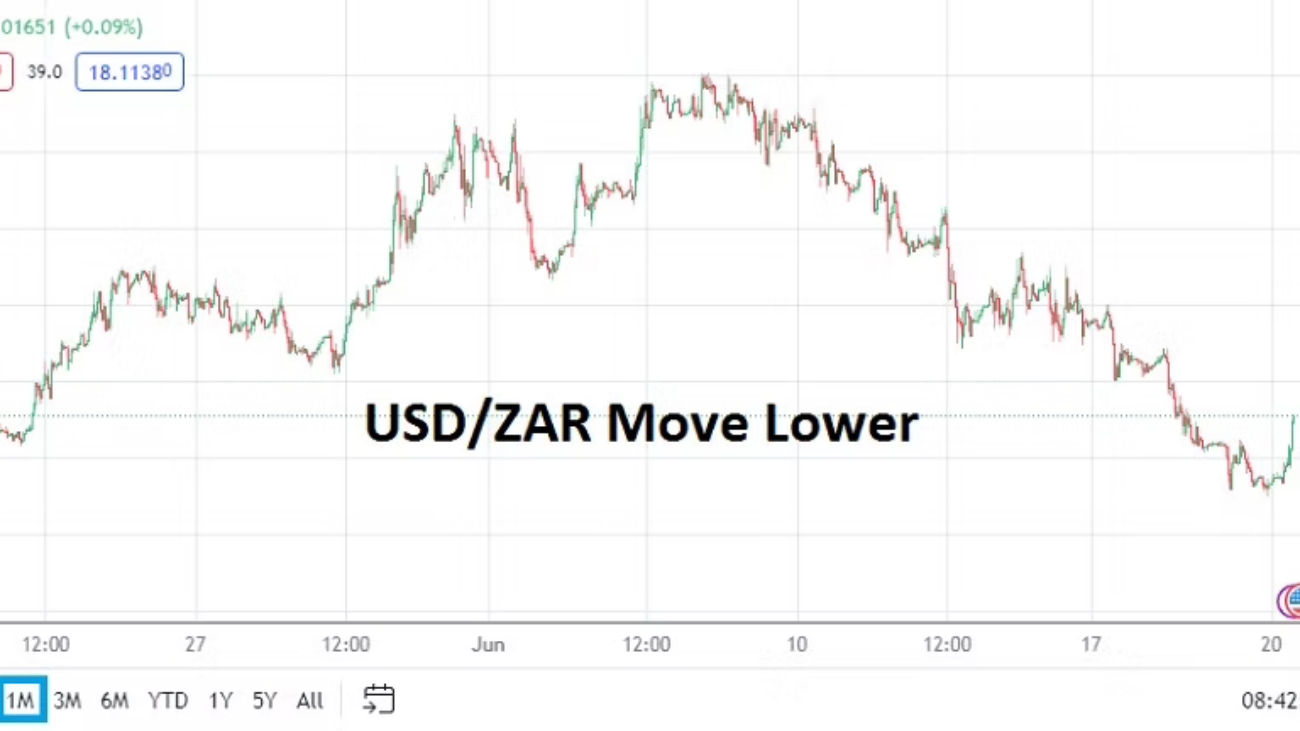
Recent trading in the USD/ZAR has become bearish and highlights the behavioral sentiment shifts taking place within South Africa, this as outlooks and perspectives create opportunities for financial institutions and speculators.

USD/ZAR One Month Chart as of 20th June 2024

South Africa politics have generated optimistic selling of the USD/ZAR in the past week and a half as the ANC has agreed to a National Unity Government coalition. Financial institutions pulled the USD/ZAR higher and to the 19.00000 realm in the second week of June as concerns grew the African National Congress could decide on a hard-left coalition in the nervous days following the election results. But those fears disappeared when it became clear the ANC would actually undertake a working association with the Democratic Alliance. The USD/ZAR began to selloff. Yesterday’s ability to test values below the 18.00000 level highlight the price velocity that optimistic outlooks have generated the past handful of trading days. Not all of South Africa’s problems are going to vanish magically, but there is a hope that better days are ahead.

As simplistic as it sounds, financial institutions trade based on their outlooks and they take an approach with much longer timeframe considerations compared to day traders. In a sense the price of the USD/ZAR isn’t a reflection of what is, it is a mirror of what can be. The trend lower will now run into a test as financial institutions question the move lower that has been attained the past week and a half, compared to realities which still have to be handled per the existing problems that remain. The African National Congress and Democratic Alliance aren’t natural bedfellows. They will certainly clash regarding fiscal transparency, day to day power sharing as the nation and municipalities are managed, and geopolitical alliances will be questioned.

While the USD/ZAR has definitively traded lower and is testing intriguing support, optimistic sellers who have a mid-term outlook will look at one year charts and know the currency pair has traded at significantly lower values in July of 2023. Day traders should not get overly ambitious, because it will be nearly impossible for most short-term speculators to hold onto a position longer than a day or two because of transaction fees most trading platforms charge for overnight positions. However, the notion that financial institutions will look at the lower values seen technically about eleven months ago, and consider the potential of ‘what can be’ might start to affect the USD/ZAR more over the coming weeks and months.

There are warning signs that need to be monitored, there is already talk among media outlets in South Africa that the ANC and DA are in disagreement regarding the working relationship they share and what type of influence will be allowed from the junior partners – which includes the Democratic Alliance and at least four other smaller political parties. Nothing is for free in politics. Power and the ability to govern will need pragmatic approaches by all members of the National Unity Government in order for it to remain viable. The coming days and weeks are sure to create headlines which will make financial institutions occasionally nervous and create support levels which sometimes look very durable.

Perhaps the best barometer for short-term traders of the USD/ZAR will be resistance technically which is tested in the coming days. The USD/ZAR is trading near the 18.14200 ratio as of this writing. U.S traders will be returning from their holiday celebrations yesterday and increase Forex volumes which could cause uneasy reversals. However, if the 18.20000 level proves to be durable resistance near-term, it may signal financial institutions may believe additional positive impetus will create more selling. Behavioral sentiment will remain nervous in South Africa, but if optimistic outlooks remain the USD/ZAR could move lower again. The search for equilibrium in the USD/ZAR is not over and the coming weeks will be worth watching.

postR165.1

Forex Noise: Influences from Suspicious Data and Rhetoric

Forex Noise: Influences from Suspicious Data and Rhetoric

Yesterday’s GDP numbers from Japan served as evidence regarding things to be considered this week regarding the rather complex web central banks and governments have created for financial institutions and day traders. There are plenty of risk events ahead that should be given attention this week.

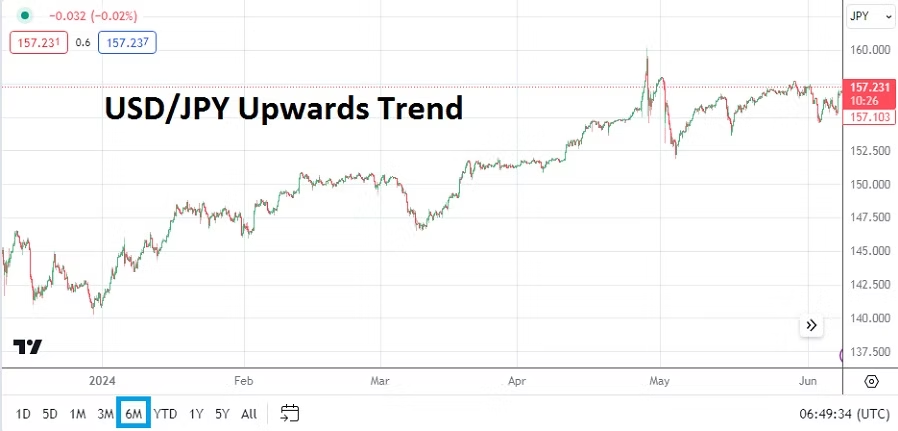
USD/JPY Six Month Chart on the 11th of June 2024

The USDJPY is now again in a dangerous value range near-term as it battles within a higher trend. The BoJ did intervene twice – in late April and early May – to try and damper speculative buying zeal of the USD/JPY and stop overly exuberant selling of the JPY. But they have been acting duplicitous as they have also wanted to no doubt allow a weaker Yen – while keeping its value within control. The BoJ has likely been hoping the Fed is going to sound more dovish this week, but if the Fed sounds more cautious than had been anticipated it could set the table for remarkably dynamic price action in the USD/JPY this week and next. If the currency pair moves too high, the BoJ could intervene again, particularly after the Fed’s FOMC pronouncements. So traders need to be careful.

Traders likely know that tomorrow CPI data and the Fed are on the schedule and these will be key events, but the noise generated around the inflation statistics and FOMC rhetoric should be viewed through the eyes of not only potential reactions from financial institution behavioral sentiment, but the possibility many of the ‘big houses’ have already positioned for the outcomes they believe will play out. In other words day traders should be ready for whipsaw trading results in the immediate aftermath of the Fed’s FOMC Statement and Press Conference.

Last week’s Non-Farm Employment Change numbers provided intriguing forensic data which will stir the suspicions of large players in Forex, equity indices and Treasuries. The jobs numbers via the headline stats looked strong. However, it must be said U.S government hiring continues to pick up, which can be looked at as an expensive way to fuel a sugar high for Americans as the States go into an election season.

Also full time workers continue to add part-time work to their tasks, this to battle rising inflation no doubt which is making their paychecks actually less effective, even if they are getting raises and receiving extra money from the added work loads they are taking on. The costs of products in the U.S are outpacing rising income. Also there is a fact that while part-term hiring is on the rise, full-time hiring is declining along with the average amount of hours employees are working per week.

The Gross Domestic Product numbers from the U.S are in decline. If folks push aside their political ideologies and look at real job numbers on the back pages of Friday’s report, and then ask why people are working less hours it is easy to conclude many businesses are actually cutting back expenses in order to try and remain profitable.

All three major stock indices from the U.S remain in sight of record highs, while there is caution surrounding the mid-term, investors still seem to be banking (wagering) on the U.S Fed to become more dovish over the long-term. Part of this analysis includes the belief that weaker GDP will eventually start to impact inflation and that this conclusion will affect the decision making of the U.S Federal Reserve at some juncture.

The Fed finds itself in a precarious position right now. They need to sound cautiously optimistic. It is an election year and they know this too. The Fed cannot publicly say they want growth to slow down because that would irritate most Americans and the White House, but they know full well that slowing GDP eventually should lower demand for products and thus erode inflation pressures.

Yet turning this full circle, the hiring being done by the U.S government, and the as of yet unmentioned fact the U.S  Treasury has increased its sales of Two Year Notes since around November; and the record amount of money the U.S is spending via a slew of suspicious costs like the ‘student loan forgiveness’, creates a muddled and over-heated fiscal policy which could be interpreted as trying to buy votes from those receiving the gifts. In other words, while the Fed is trying to stress it is battling inflation with higher interest rates and anticipates lowering them eventually, other facets of the U.S government are making this difficult because of the record amount of spending and interest rate payments they are making on short term Treasury notes. Jobs and money in the short-term are candy for voters, but the government has problems ahead regarding conflicting policies because it can lead to more economic problems.

So what do financial institutions think, well they are focused on returns for their clients. They are also looking ahead and trying to swim waters that are murky but offer the ability to profit for themselves too. They might believe they know the landscape just as well as the Fed does, and financial institutions also understand what will be said and can be done may be two different things. What to expect moving forward therefore remains confusing over the mid-term for everyone.

Gold Six Month Chart on the 11th of June 2024

Gold remains highly valued and traders should continue to use it as a barometer. Speculative players are also betting on gold as the USD and its ultimate mid and long-term direction remains complex. The recent downside price action after making record highs in May for the precious metal could reflect the belief the USD is going to become weaker over the mid-term.

Also it should be noted that a handful of commodities are being influenced by an abundance of speculative forces in Copper, Coffee and Cocoa. There has been a lot of talk surrounding the meme stock GameStop the past month. Experienced commodity traders understand the dynamics of speculative influences, pump and dump schemes better than most. Traders tempted to wager in these commodities should ask the same questions speculators in GameStop need to, what is the real value and when will the pin pop the balloon?

Monday, 10th of June, Japan Final GDP Price Index – the result in yesterday’s inflation data came in negative with a climb of 3.4% compared to the expected outcome of 3.6%. This is noteworthy might create more cautious rhetoric from the Bank of Japan later this week.

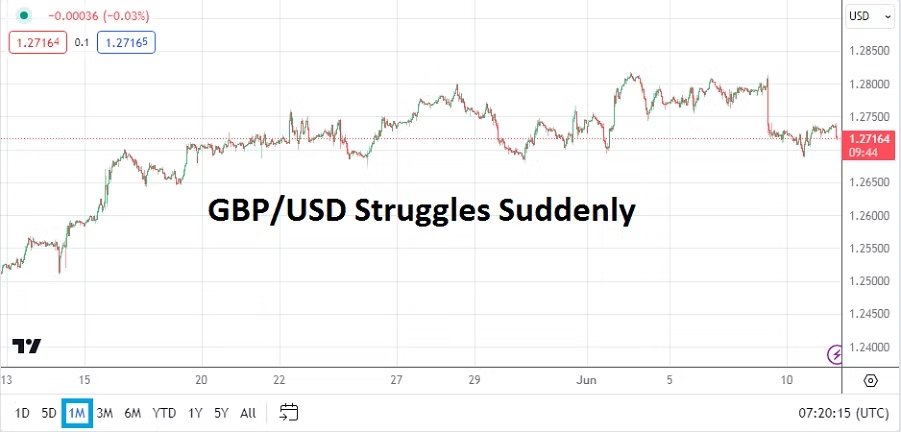
GPB/USD One Month Chart on the 11th of June 2024
EUR/USD Six Month Chart on the 11th of June 2024

Wednesday – 12th of June, U.S Consumer Price Index – the inflation reports will be watched by all market participants in the financial world. The broad monthly CPI result is expected to come in at 0.1%, which would be below the previous months’s outcome, but the Core monthly statistic is anticipated to match the previous result of 0.3%. The CPI numbers will certainly set the tone for the price action to come in Treasuries, equity indices and Forex. Weaker numbers could spark a selloff of the USD. Stronger numbers could create more bullish ability in the USD. No matter the outcome of these CPI numbers, the U.S Federal Reserve will be standing in the shadows and ready to take center stage a handful of hours later.

Wednesday – 12th of June – U.S Federal Reserve’s FOMC Statement and Federal Funds Rate – unless there is a massive surprise tomorrow, there will be no interest rate cut from the Fed. Anyone who was holding onto the idea of a cut, had these wrong thoughts killed off this past Friday because of the ‘better’ jobs numbers report. The Fed’s monetary policy statement is likely to try and sound cautiously optimistic and will certainly include the residuals of the CPI reports filed earlier in the day. However, financial institutions will want to hear if the Fed is leaning into the notion of cutting the Fed Funds Rate late in the summer as a possibility, or if the Fed sounds so cautious that they suggest a rate cut will not happen until later this year. Let’s remember this is an election year. Yes, the Fed is supposed to be an independent body, but like the Treasury there have been signs developing that the ironclad independence of Fed rhetoric can be influenced by U.S government influences from higher up the ladder. Or perhaps it is just all a happy coincidence and the White House, Treasury and Fed all simply agree on policies which remains rather questionable in the eyes of financial institutions and analysts.

EUR/USD Consideration into Wednesday

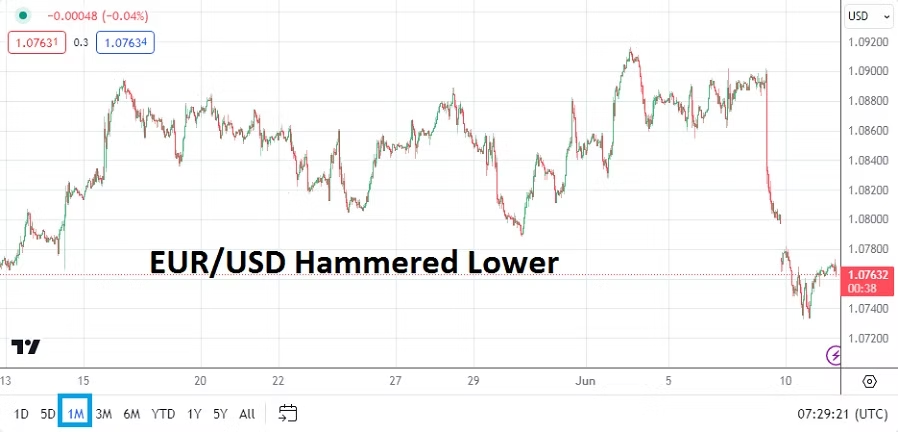
On this note, price action in the EUR/USD is a good representative of behavioral sentiment and the different ways it can be interpreted. EUR/USD will need attention during and after the U.S Federal Reserves’s policy rhetoric. The ECB cut its interest rate last week. However the ECB refused to say it will cut rates more – leaving the EUR/USD in a neutral position. The EUR/USD sold off on Monday, this after selling off strongly this past Friday after the U.S jobs numbers.

The Fed was looked on as having to become more dovish this Wednesday, but that is now in question because of the suspiciously strong U.S jobs numbers this past Friday. And then there is the outcome of the European Parliament voting this past weekend and a turn towards the right which many in the media seem to believe is the end of the democracy, but may simply represent that some citizens of Europe want a return to law and order, solid economic practices, and respect for their historical and cultural heritage.

Meaning that financial institutions aren’t likely to be too scared about the voting outcomes regarding the European Parliament and are likely more focused on the coming U.S inflation report and FOMC meeting results. However, as much as Forex traders are considered to be sophisticated and financially astute, they still reacted to the stronger selling which was sparked yesterday. Perhaps the EUR/USD results the past couple of days will prove to be like the reaction in the India markets, this when the Nifty 50 selloff occurred early last week upon election results being in question, only to experience a reversal later.

Thursday, 13th of June, U.S Producer Price Index – these inflation reports will be watched, but the reaction to the outcome is likely to be muted because of Wednesday’s dynamics from the U.S and behavioral sentiment which will have already been stirred.

Friday, 14th of June, Bank of Japan – the BoJ is expected to keep its Policy Rate at 0.10%. The BoJ will certainly have been paying attention to the USD/JPY this week, this before they make their public announcements. The Bank of Japan like the Fed is in a difficult spot. The BoJ is trying to fuel a stronger Japanese economy with a weaker Japanese Yen, while trying to sound vigilant in order to stop speculative buyers of the USD/JPY who are trying to take advantage of the trend higher. The threat of intervention should be a concern for day traders, even though the BoJ likely doesn’t want to take this avenue because it is costly and they know the only real way to make the Japanese Yen stronger is by increasing the BoJ Policy Rate which they seemingly do not want to do for the moment.

postR196

AMT Top Ten Miscellaneous Politicos for the 7th of June 2024

AMT Top Ten Miscellaneous Politicos for the 7th of June 2024

10. Three P’s: Pragmatic and populist politicians are clashing in a world that seeks to try and sell utopian visions from all sides, instead of admitting realities that should be understood and defined, thus creating a more dangerous world. It would be funny if it weren’t so serious.

9. Investment: Pasqal, a quantum tech company located in France founded in 2019, and IBM have announced a collaboration to integrate efforts on creating quantum centric supercomputing architecture. The quest for fully functioning applications appears to be years away as theories such as neutral atoms are studied and applied, and cooling systems are pressed to their limits. However, a transition into working research continues to build momentum. Accelerated investment paths for those seeking the quantum golden goose are flourishing.

8. Three C’s: Cocoa, Coffee and Copper are creating speculative storms for traders as volatility has seen apex values, then dramatic drops, followed by violent reversals higher in the commodities. Cocoa is back above 10,100 USD per metric ton as of this writing, and Coffee Arabica and Copper have been delivering huge profits and staggering losses for large players and day traders who continue to wager.

7. India: Narendra Modi has retained power after a hard fought voting outcome has diminished some of his power. However, fears that turned the Nifty 50 index sharply lower earlier this week, also created a market discount for long-term investors. Foreign investors continue to have a positive economic outlook for the nation. It will not be a surprise to see the Nifty 50 back to pre-election levels and challenging record highs soon, yet again delivering a lesson for day traders who are speculating on the short-term instead of being patient.

6. South Africa: Coalition government discussions are ongoing and will grow in noise in the coming days as a deadline to conclude an agreement approaches. The ANC is said to be talking seriously with the Democratic Alliance, but the Congress of South African Trade Unions which is strongly aligned with the ANC is against the move. It has recently been reported that South Africa’s ports are among the least dependable in the world by the Container Port Performance Index. Poor infrastructure, corruption and a lack of transparency are hurting South Africa. The ANC decision in the coming week regarding a coalition is vitally important. Either it will decide to make concessions and bring the DA in as a working government partner and hopefully build a bridge towards a better South Africa, or the ANC will decide on a hard-left coalition which could potentially bring it to a Venezuela or Zimbabwe type of outcome. The USD/ZAR will react.

5. Conservatives: The U.K election is less than one month a way, and Labour appears set to take power and control Parliament with a large majority. The failure of the Tories to create the perception of successful economic, foreign, and social polices that resonated with the public, appears to be easing the way for a ruling Labour government which has not been seen since since 2010.

4. Carry Trade: The EUR/USD will become an interesting test ground for carry trade fundamentals in the coming weeks and months. The ECB cut its Main Refinancing Rate as anticipated yesterday by 0.25%, but said it is neutral about more cuts. The ECB explained it was able to cut interest rates yesterday, because current inflation levels have dropped enough that a modification of interest rates was needed, but that it remains cautious about inflation in the future. This statement and policy could potentially allow for the Federal Reserve to become the more dovish central bank over the mid-term and lead to a stronger EUR/USD. How much will financial institutions wager on this notion in the near-term?

3. USD/JPY: Serenity now should be the new mantra for the BoJ. The Bank of Japan seems to be waiting on the Fed to sound more dovish, which could stop the need for the BoJ to intervene again. The USD/JPY remains high and is currently testing the 155.000 to 156.000 range in a fairly steady manner. The Bank of Japan will release its Monetary Policy Statement on the 14th of June. While Forex tranquility has been demonstrated the past couple of days, conditions may change rapidly later today and day traders should brace for price velocity.

2. U.S Indices: Equity values have recovered in the Nasdaq and S&P indices, and while the Dow 30 is below apex highs it is still within sight of the 40,000 level touched on the 20th of May. Treasury yields have traded slightly lower this week which has ignited risk appetite again. Gold is trading below the 2,400.00 USD ratio, but still comfortably above 2,300.00 for the moment. If Treasury yields continue to experience a downturn, institutional investors are likely to funnel cash into the stock market.

1. Data: U.S jobs numbers via the Non-Farm Employment Change and Average Hourly Earnings figures will be published today. The result will certainly set the path for the Federal Reserve’s June 12th FOMC meeting. Yesterday’s weekly Unemployment Claims came in weaker (more claims filed) than expected and other jobs data was weaker the past few days via JOLTS and the ADP statistics. All financial assets will react to the U.S data today. Weaker jobs numbers would create more confidence among institutional investors that the Fed will have to sound dovish rhetoric regarding potential cuts to the Federal Funds Rate in the coming months. Fast trading conditions are coming today.

postR164.1

USD/ZAR and EUR/USD as South Africa and ECB Create FX Shadows

USD/ZAR and EUR/USD as South Africa and ECB Create FX Shadows

Risks for day traders will abound this week in Forex. Taking advantage of trends in the days to come will rely on interpretations of behavioral sentiment, which may become rather reactionary from financial institutions if they feel existing positions are vulnerable. For the moment there is calm but day traders should not expect this to last.

USD/ZAR Three Month Chart on the 3rd of June 2024

The results from the South Africa election have delivered the need for a government coalition. The USD/ZAR will certainly move according to degrees of nervousness being generated in South Africa. While the African National Congress has publicly called for unity and openness to achieve a working government, there are legitimate fears the ANC may consider a left wing coalition known as the Doomsday approach, which could include political parties that are not seen as being pro-business or inclusive for the entire population. Financial institutions in South Africa and abroad will have their trust of the ANC tested in the days ahead.

South Africa political concerns may cause the USD/ZAR to step out of line and not correlate to the broad Forex market. The ANC has two working weeks to reach a coalition deal. The ANC has never been in such a weak position before, and if the ANC makes a political deal which is interpreted as being against free enterprise it will not be welcomed by many businesses. Will the ANC be able to admit a new path can be followed in South Africa that creates a space for more transparency regarding fiscal policy and oversight, or will the ANC become stubborn and make a deal with a political party that moves the nation backwards economically and causes more strain via geopolitics?

EUR/USD Three Month Chart on the 3rd of June 2024

From Europe, the ECB will step into the spotlight this coming Thursday. Following last week’s lower than expected Consumer Price Index data from Germany, the ECB is widely anticipated to cut its Main Refinancing Rate by 0.25%. Day traders need to be aware of this, because on Thursday if and when the ECB does cut the interest rate, the reaction in the EUR/USD may not move the market as much as small retail speculators anticipate.

Instead the volatile reaction could come from the inspection and understanding of the published Monetary Policy Statement, and the Press Conference which will follow half an hour later. The EUR/USD it should be noted jumped higher last Wednesday on the weaker than expected inflation report from Germany, which may mean some of the EUR/USD bullishness has already been bought into the currency pair.

The thought that the ECB has seemingly stood in the shadow of the Fed for the past year and largely reacted only after the U.S central bank is important. If the ECB actually goes out on a limb and cuts its interest rate this week, and says it is considering another later this summer it will cause a reaction. The differentiation between the Main Refinancing Rate from the ECB and the Fed’s Federal Fund Rate will cause momentary headaches too.

However, this might ignite thinking within financial institutions that the Fed has given the ECB a quiet ‘green light’ and assured the ECB that the Federal Reserve will become dovish over the mid-term. However, the Fed is not expected to cut the Federal Funds Rate next week. What should happen is that the Fed delivers a December 2023 repeat performance on the 12th of June, in which it expresses a rather dovish perspective – but this time delivers, but there are no guarantees.

The U.S jobs numbers this Friday will play into the EUR/USD sentiment too and all other Forex pairs. Importantly, traders do not want to see a retraction from the Fed again in the coming months and cautious talk about inflation. While higher prices may be the reality for the moment, financial institutions appear to be hoping on proactive actions from the ECB and Fed combined. If dovish rhetoric isn’t seen Forex choppiness will become intense again.

Political rhetoric and its influence on Forex will not only come from South Africa and Europe, but India as its election results are finalized tomorrow and Mexico after the outcome of its vote held this past weekend. The results in India and Mexico have produced the anticipated outcomes, so the USD/INR and USD/MXN should expect to become calmer in the days ahead.

After the anticipated U.S Fed FOMC meeting rhetoric on the 12th of June, and the Bank of Japan’s policy tidbits on the 14th perhaps things will become relatively tranquil. However, financial institutions will be busy over the next ten business days as they try to make sure they have balanced Forex positions, which take into account their commercial transactions and cash forward outlooks for clients which could add to the potential for volatility.